
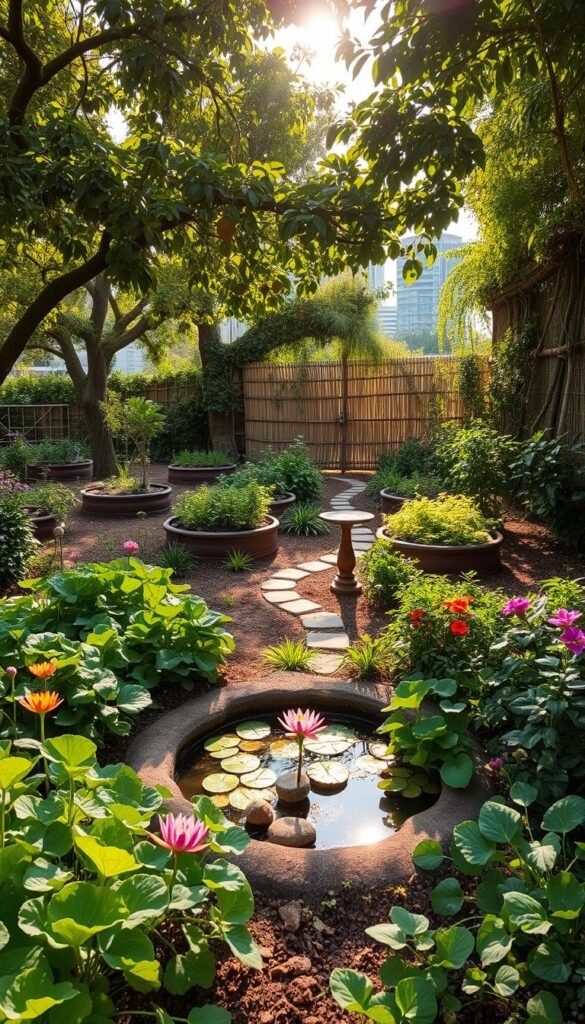
Imagine transforming your outdoor space into a living system that thrives with minimal effort while supporting local wildlife. This approach combines ancient wisdom with modern ecological understanding, focusing on harmony between plants, soil, and water systems.
Developed in the 1970s by Bill Mollison and David Holmgren, this method builds on traditional land management practices. It emphasizes observing natural patterns rather than fighting them – a philosophy that reduces maintenance while boosting productivity. You’ll discover how sustainable garden design principles help create relationships where each element supports multiple functions.
Your space becomes more than just a plot for growing food. It evolves into a network that manages rainwater, enriches earth quality, and provides habitat. Whether you’re working with a balcony or acreage, these strategies adapt to your unique environment through smart planning and biological partnerships.
The key lies in mimicking forest ecosystems where plants work together naturally. You’ll learn to select species that improve soil health, attract pollinators, and create microclimates. Over time, these carefully designed spaces become increasingly self-sufficient, requiring fewer inputs while yielding greater abundance.
Welcome to Your Self-Sustaining Garden Journey
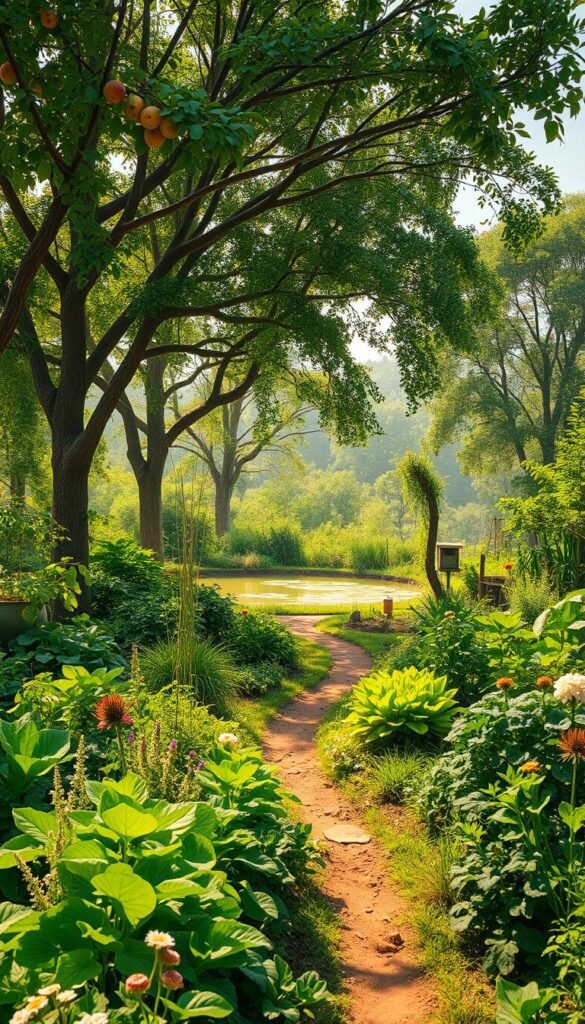
Your outdoor space is about to become a thriving ecosystem where every plant and structure serves multiple roles. This method blends ancestral knowledge with modern ecology, teaching you to collaborate with natural cycles rather than disrupt them. You’ll create a living network that nourishes itself while supporting local biodiversity.
Think of your plot as a puzzle where each piece connects. Fruit trees might shade delicate herbs, while rain barrels feed irrigation channels. By studying how food forest guide layouts work, you’ll design spaces where plants share resources naturally. Over time, these partnerships reduce weeding, watering, and pest control chores.
Three key shifts will transform your approach:
- Viewing “waste” as potential mulch or compost
- Choosing plants that attract beneficial insects
- Designing structures that harvest rainwater
You’ll tap into methods perfected by indigenous communities, like intercropping beans with corn to boost soil nitrogen. Your garden becomes a classroom where chickadees teach pest management and earthworms demonstrate soil health. The result? A resilient space that grows more abundant each season while giving back to the environment.
Understanding the Core Principles of Permaculture

At the heart of every thriving ecosystem lie twelve guiding principles that shape how elements work together. Experts like Amy Stross recommend spending nearly half your garden time observing – a practice Bill Mollison championed for understanding land dynamics before taking action. These ideas teach you to see your space as interconnected relationships rather than isolated parts.
Observe, Interact, and Think Holistically
Start by watching sunlight patterns and water movement during different seasons. One pro tip? For every 15 minutes you spend tending plants, dedicate seven to simply noticing where butterflies gather or how rain pools. This awareness helps you make choices that benefit the whole system, like placing strategic plant pairings where they’ll naturally thrive.
Design from Natural Patterns and Details
Nature’s blueprints – branching tree canopies, winding streams – reveal efficient ways to arrange your space. Mimic these patterns when laying out garden beds or rainwater channels. A three-step approach works best:
- Map existing wind directions and sun exposure
- Identify microclimates where certain plants excel
- Create resource loops (like compost feeding soil)
| Principle | Action | Outcome |
|---|---|---|
| Observe First | Track seasonal changes | Better plant placement |
| Store Energy | Install rain barrels | Reduced watering needs |
| No Waste | Compost scraps | Rich soil amendments |
| Diverse Systems | Mix plant types | Natural pest control |
By letting nature guide your decisions, you’ll create spaces where every element serves multiple roles. Fruit trees might shade delicate herbs while their fallen leaves feed nearby vegetables. This thoughtful approach builds resilience season after season.
Conducting a Comprehensive Site Analysis
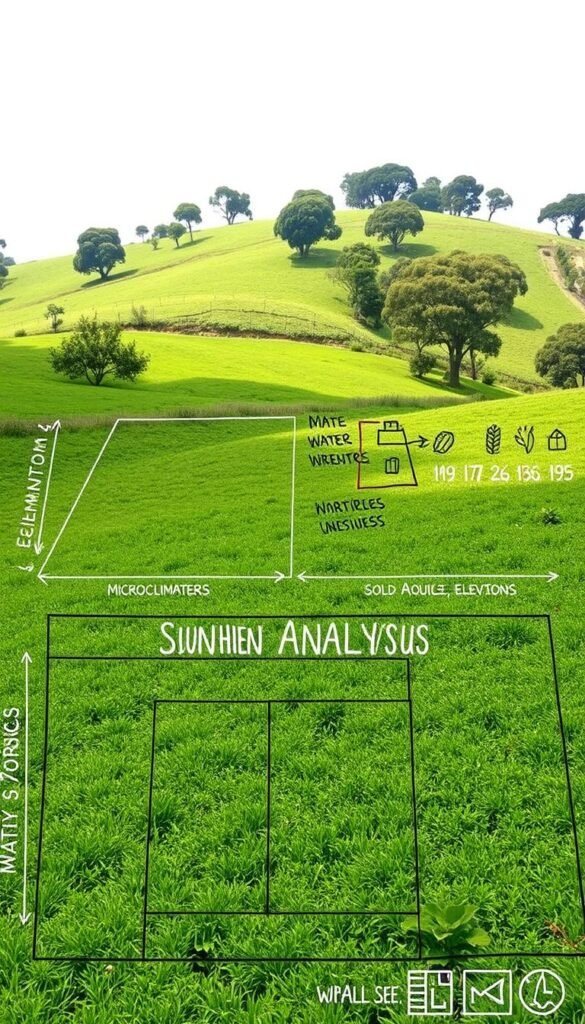
Your journey begins with a magnifying glass approach to your outdoor area. Grab a notebook, measuring tape, and phone camera to document sunlight patterns, wind behavior, and existing plants. This groundwork helps you work with nature’s blueprint rather than against it.
Evaluating Zones of Use and Microclimates
Bill Mollison’s fuzzy slippers test makes zoning practical: “If your slippers get wet fetching herbs, you’ve walked too far.” Organize your space like concentric circles:
- Daily-use herbs near doorways
- Berry bushes along frequent paths
- Orchard trees requiring weekly checks
Microclimates surprise beginners. That south-facing wall? It’s a citrus haven. The damp corner? Perfect for elderberries. Map these hidden gems using temperature checks at dawn and noon.
Assessing Topography, Climate, and Soil Structure
Water tells stories. After rainstorms, track where puddles form and paths erode. Use PA Yeoman’s method starting with permanent features:
| Scale | Focus | Impact |
|---|---|---|
| Climate | Rainfall patterns | Plant selection |
| Landform | Slope direction | Water flow |
| Soil | Texture test | Amendment needs |
| Access | Path placement | Maintenance ease |
Combine digital tools with hands-on checks. Google Earth reveals yearly shade patterns, while a simple jar test shows soil composition. Remember, successful seasonal changes start with understanding these fundamentals.
Mastering Water Management and Enhancing Soil Health
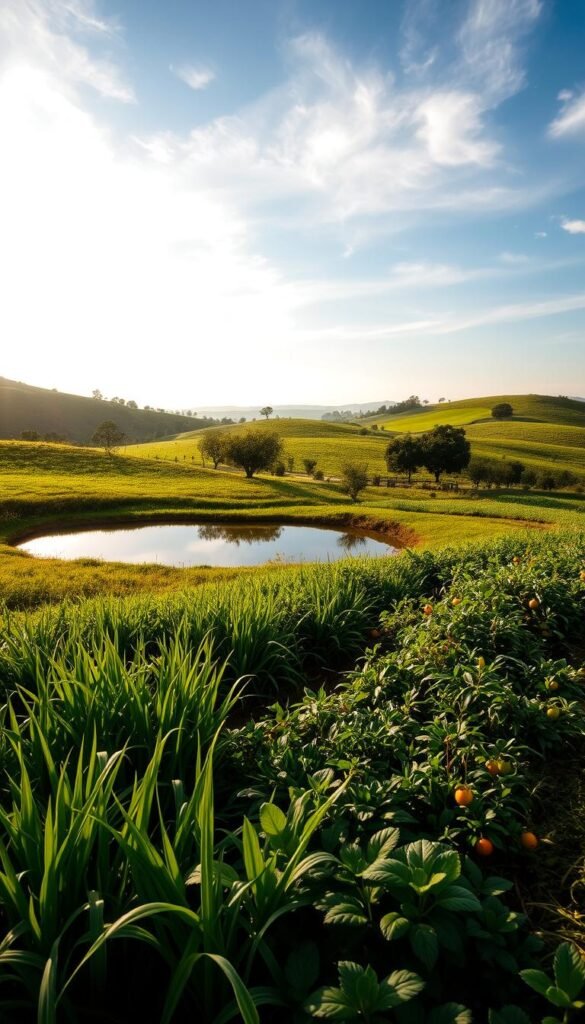
What if every raindrop could nourish your plants instead of washing away nutrients? Smart water use and vibrant earth form the foundation of any thriving green space. Let’s explore how to work with nature’s rhythms to create resilient growing systems.
Channeling Water Efficiently in Your Landscape
Transform runoff into a resource using three simple steps: slow it, spread it, sink it. Swales—shallow ditches along contours—capture rainfall while mulch blankets prevent evaporation. During storms, grab your boots and note where puddles form. These observations help position rain barrels and redirect downspouts effectively.
One gardener reported:
“After redirecting roof water to my berry bushes, yields doubled without extra watering.”
Implementing Composting and Organic Soil Amendments
Healthy earth teems with life. Start by mixing kitchen scraps with yard waste in layered piles. Worms accelerate decomposition, creating rich humus in weeks. This “black gold” improves texture and stores moisture like a sponge.
| Technique | Purpose | Benefit |
|---|---|---|
| Swales | Capture runoff | Recharges groundwater |
| Compost | Feed microorganisms | Boosts plant immunity |
| Mulch | Retain moisture | Reduces watering |
Pair these methods with chemical-free practices for maximum impact. Over time, you’ll notice fewer pests and lusher growth as your system becomes self-renewing.
Implementing “Permaculture Gardening Basics: Designing a Self-Sustaining Landscape”
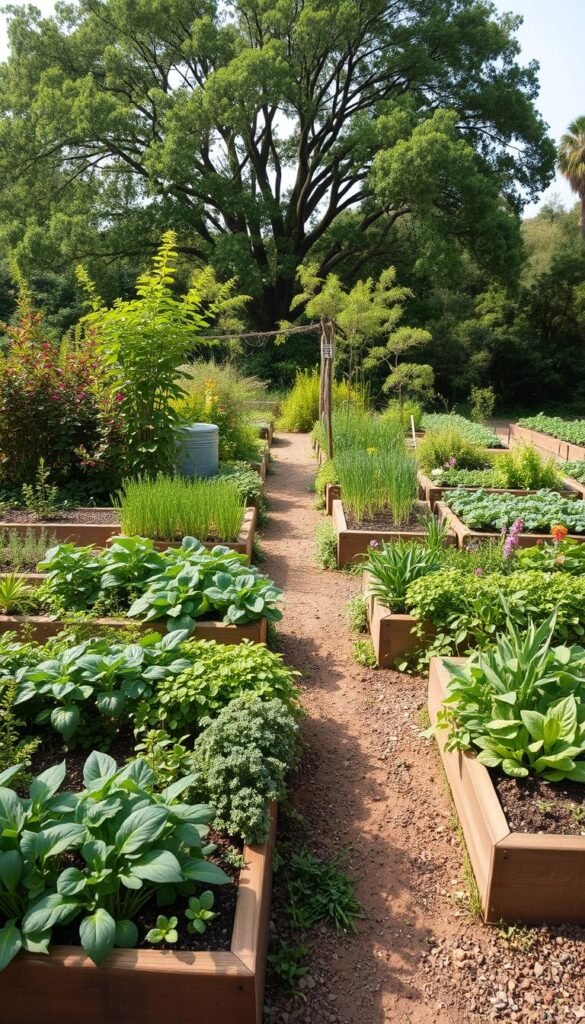
Turn your backyard plans into reality by mapping nature’s patterns onto your space. Start with a master blueprint that connects water flow, sun exposure, and plant partnerships. This living map ensures each element—from compost bins to fruit trees—serves multiple roles in your system.
Choose multi-tasker plants that work overtime. Legumes like clover enrich soil while suppressing weeds, and mint deters pests while flavoring teas. Layer these helpers with berry bushes and shade-tolerant greens to create productive stacks. One gardener shared:
“My three-layer bed yields spinach, raspberries, and apples from the same footprint.”
Arrange species based on their water needs. Position thirsty crops near rain barrels or low spots where moisture collects. Drought-resistant herbs thrive on sunny slopes, while wetland plants filter runoff in boggy areas. This strategic placement mimics natural watersheds.
| Plant Type | Role | Benefit |
|---|---|---|
| Comfrey | Nutrient accumulator | Dynamic fertilizer source |
| Sunflowers | Windbreak & trellis | Supports climbing beans |
| Lavender | Pollinator magnet | Boosts fruit production |
| Nasturtium | Pest trap crop | Protects vegetables |
Begin with a manageable area—perhaps a 10×10 foot plot—to test your design. Add curved pathways from repurposed bricks and trellises from fallen branches. As new gardeners discover, small successes build confidence for expanding your edible ecosystem.
Your space will evolve through seasons, with self-seeding flowers filling gaps and fallen leaves nourishing soil. Stay flexible—when a shaded area under trees becomes too dark for veggies, transition it to mushroom logs. This adaptability keeps your garden thriving year after year.
Integrating Companion Planting and Biodiversity
Transform your garden into a vibrant hub where plants team up for mutual success. Strategic pairings create natural defenses while boosting yields—marigolds shield tomatoes from root-knot nematodes, while beans share nitrogen with hungry corn stalks. This living network thrives when you mix textures, heights, and bloom times to confuse pests and welcome helpers.
Nature’s Pest Patrol Squad
Ditch chemical sprays by recruiting plants as bodyguards. Basil’s strong scent masks zucchini from squash bugs, while nasturtiums lure aphids away from broccoli. Diversity is your secret weapon—interplant flowering herbs like dill to attract parasitic wasps that control caterpillars. Even “weeds” like yarrow earn their keep by hosting ladybugs that devour mites.
Building Wildlife Partnerships
Your plot becomes a sanctuary when you include habitat features. Milkweed feeds monarch caterpillars, while sunflowers become bird cafés in winter. Native plant gardening strengthens these bonds—purple coneflowers nourish bees, and aster seeds sustain finches. Leave some leaf litter for overwintering butterflies, and watch frogs move into rock piles to hunt slugs.
Every choice ripples through your ecosystem. Deep-rooted natives break compacted soil, letting rains recharge aquifers. As worms multiply in rich earth, they feed songbirds that return the favor by eating pests. This circle of life grows stronger each season, proving that working with nature yields the sweetest harvests.