

Transforming a backyard into a vibrant retreat starts with smart preparation. Think about how sunlight moves across your yard or which plants thrive in your local climate. These details matter more than you might realize. A well-organized garden doesn’t just happen—it’s built on careful choices that balance beauty and practicality.
Whether you’re growing vegetables or crafting a flower haven, every decision shapes your results. Start by mapping your available space. Measure dimensions, note shady spots, and consider how you’ll use each area. Do you want cozy seating nooks? Room for kids to play? A mix of both?
Your plant picks should reflect what grows best in your region and what you love. Native species often need less water and care, while colorful blooms can boost curb appeal. Don’t forget about soil quality—testing it early saves headaches later. Simple fixes like compost or mulch make a big difference.
Good design isn’t just pretty—it’s functional. Paths should guide visitors naturally, and tall plants shouldn’t block views. By blending creativity with strategy, you’ll create a living space that feels intentional and inviting. Ready to dig deeper? Let’s explore how to turn these ideas into action.
Embrace Your Garden Planning Journey
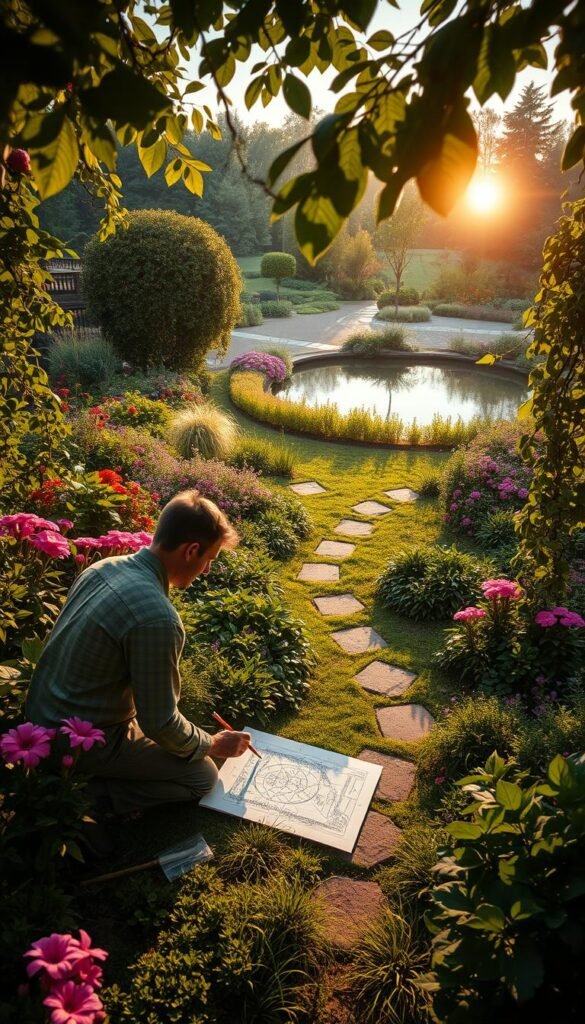
Embarking on your garden journey unlocks endless possibilities. Local experts like master gardeners—certified horticulture pros—offer priceless advice tailored to your region. These passionate individuals complete rigorous training programs just to help neighbors grow thriving plants.
Your local nursery becomes a goldmine during this phase. Staff there know which tomatoes flourish in July heat or which flowers withstand spring rains. They’ve nurtured those seedlings themselves, so their tips come from real experience.
This creative process lets you shape a space that feeds both body and soul. Imagine plucking sun-warmed berries for breakfast or arranging cut flowers from your own yard. Smart prep now means fewer headaches next year.
Your vision might include raised beds for veggies or a shady corner for reading. What matters is designing a garden that fits your home’s rhythm. Maybe you’ll prioritize low-maintenance shrubs or bold floral displays. There’s no wrong answer—just what brings you joy.
Take time to sketch ideas, chat with experts, and adjust as needed. This gardening adventure evolves with every season, growing richer over time. Your perfect oasis awaits!
Assessing Your Available Space and Environment
Great gardens begin with understanding the land beneath your feet. Before choosing plants or decor, study your space like a detective. Grab a notebook and track sunlight hourly—morning rays might hit different areas than afternoon beams. Notice how wind swirls around corners or where rainwater pools after storms.
Evaluating Space Dimensions and Sunlight
Start by sketching your garden boundaries on grid paper—one square equals three feet. Mark existing trees, slopes, and structures. “Plants don’t read labels,” laughs Portland gardener Mara H., “so place sun-lovers where light lingers longest.” Use free apps like Sun Seeker to simulate seasonal light changes without waiting months.
Identify microclimates—those warm brick walls perfect for figs or damp corners ideal for ferns. Flag underground utilities with spray paint or stakes. This prevents costly mishaps when digging beds near gas lines or sprinklers.
Mapping Out Paths and Focal Points
Imagine walking through your future garden. Wide curves feel more inviting than sharp corners. Position seating areas where breezes carry flower scents, not grill smoke. Frame views with arched trellises or cluster bold hydrangeas as living sculptures.
Balance open space with dense plantings. A winding gravel path can lead eyes toward a bubbling fountain or flowering dogwood. Remember: functional design means easy access to hose spigots and compost bins too!
Gathering Essential Tools and Materials
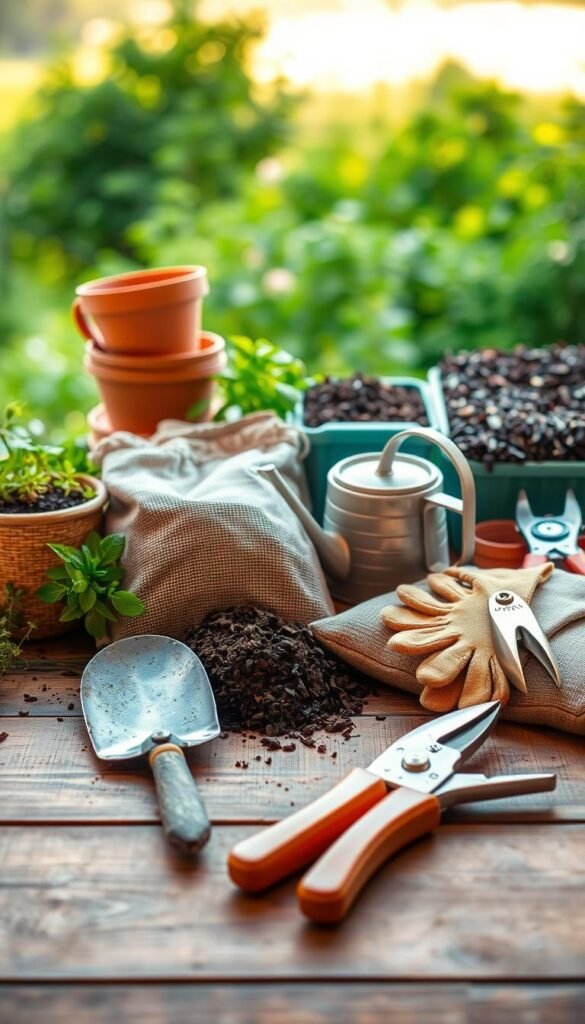
Equipping yourself with the right gear transforms ideas into blooming reality. Start with measuring essentials: a 25-foot tape measure sketches boundaries, while graph paper captures your vision. Portland landscaper Eli T. advises, “Invest in stainless steel tools—they outlast seasons and save money long-term.”
Quality hand tools form your garden‘s backbone. A sharp spade slices through tough soil, while a ergonomic trowel prevents wrist strain. For soil health, mix in compost or peat moss based on local test results. Many U.S. counties offer free pH testing through extension offices—check yours!
| Tool Type | Essentials | Optional Upgrades |
|---|---|---|
| Measuring | Tape measure, graph paper | Laser level |
| Digging | Spade, hand trowel | Electric tiller |
| Soil Prep | Compost, mulch | Soil aerator |
| Watering | Hose with spray nozzle | Drip irrigation kit |
| Transport | Wheelbarrow | Garden cart with sides |
Water access matters most during summer droughts. Choose between lightweight watering cans for patio pots or soaker hoses for vegetable patches. Building raised beds? Cedar boards resist rot better than pine. Keep tools organized in a weatherproof storage bench—you’ll thank yourself later!
Designing Your Garden Layout Step-by-Step
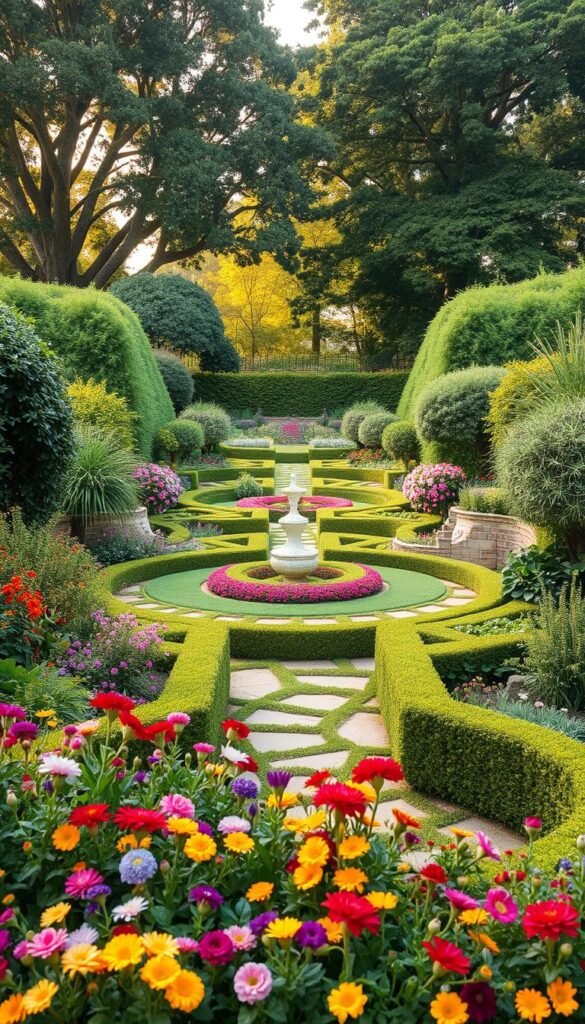
Charting a course for your green paradise begins with playful experimentation. Grab tracing paper or a digital app to explore possibilities without commitment. This phase isn’t about perfection—it’s about discovering what sparks joy in your garden design journey.
Sketching Your Garden Design
Start by laying your measured site plan on a flat surface. Draw rough circles to mark seating areas, vegetable patches, or water features. Landscape architect Nina R. suggests: “Let your pencil dance—you can always erase later.” Use colored markers to differentiate zones: blue for water elements, green for plants, brown for paths.
Utilizing Grid and Bubble Diagram Techniques
Bubble diagrams help visualize flow before locking in details. Draw oversized “bubbles” representing key features like patios or flower beds. This method lets you test radically different layouts quickly—swap a fire pit for a koi pond in seconds!
- Photocopy your base map to try multiple versions
- Place taller elements where they won’t block sunlight
- Ensure paths connect logically between zones
Once satisfied, refine bubbles into precise shapes using a grid. Many find inspiration from designing from scratch guides that emphasize proportion. Remember: your final design should balance dreamy aesthetics with practical access to tools and water sources.
Plan Your Ideal Outdoor Space with Comprehensive Garden Plans Layout Design
Now’s the moment where sketches transform into blooming reality. Finalize your vision by arranging garden beds to serve distinct purposes—maybe herbs near the kitchen or pollinator-friendly blooms by seating areas. Think like a conductor orchestrating seasonal rhythms: spring tulips making way for summer zinnias, then autumn chrysanthemums.
Access matters as much as beauty. Can you comfortably reach every plant for pruning? “Paths should be three feet wide for wheelbarrows,” advises Colorado landscaper Rosa M. Curving walkways create intrigue while connecting functional zones. Mark storage spots for tools to keep your space clutter-free.
Balance bold choices with practical upkeep. A sprawling rose arbor enchants but demands regular care. Swap high-maintenance blooms for native grasses if weekends get busy. Your design should mirror both your dreams and daily life.
Anticipate growth patterns—those cute saplings become shade giants. Leave breathing room between beds for mature plants. Sketch seasonal snapshots to ensure year-round texture: evergreen shrubs for winter structure, flowering vines for summer drama.
This blueprint becomes your green roadmap. Tweak it as plants thrive or conditions shift. With thoughtful layout, every corner feels intentional, every season brings fresh delight.
Creating Functional Garden Beds and Raised Bed Options
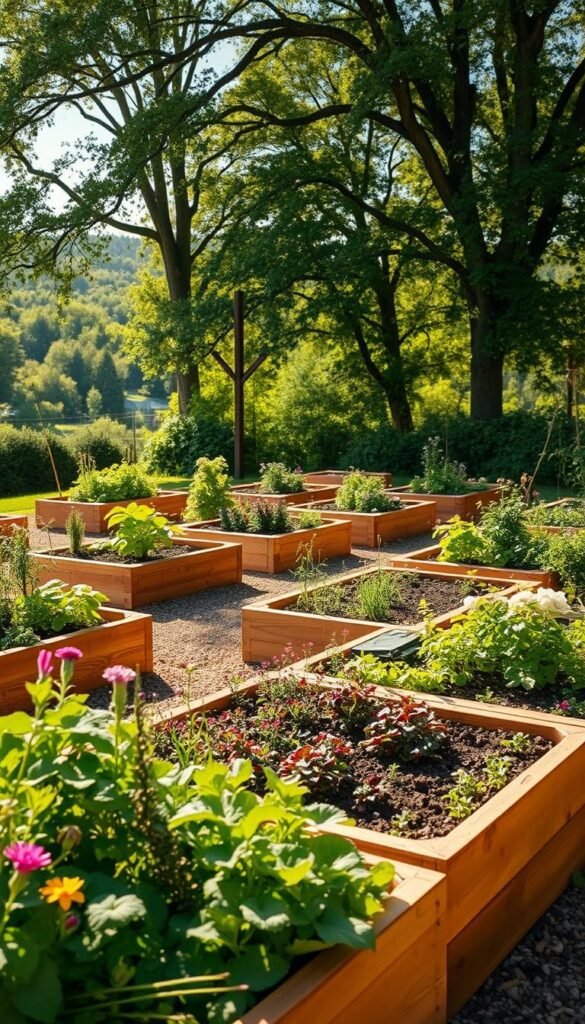
Crafting productive growing areas begins with smart spatial decisions. Think like a chef organizing their kitchen—every ingredient needs easy access. Raised beds offer neat solutions for tricky terrain while boosting soil control and drainage.
Choosing the Right Size and Shape for Your Beds
Keep garden beds narrow enough to reach across without strain. “Four feet wide is the sweet spot,” shares California grower Luis S. “You’ll avoid compacting soil while tending plants.” Rectangular 4’x8’ boxes work well for veggies, while circular designs suit flower clusters.
Height impacts comfort and plant health. Twelve-inch walls let carrots stretch deep roots, while 18-inch versions ease back bending. Match bed depth to what you’re growing—shallow herbs need less soil than thirsty tomatoes.
Leave 30-inch walkways between beds for kneeling or moving tools. Wider paths? Perfect for lawnmowers if bordering grass. Curved edges soften formal landscapes, while tiered setups add visual drama on slopes.
Remember: Your garden evolves. Start small with two raised beds, then expand as confidence grows. Smart size choices today prevent sore muscles tomorrow!
Integrating Trellises for Vertical Growth
Elevate your growing potential by thinking upward. Vertical structures transform how plants thrive while maximizing every square foot. Trellises aren’t just functional—they’re sculptural elements that add depth to your garden’s personality.
Why Vining Plants Love Vertical Support
Climbing varieties like tomatoes and pole beans reach new heights with proper guidance. By training them upward, you prevent soil-borne diseases and create better air flow. “Vertical growth lets leaves dry faster after rain,” notes Maryland gardener Clara P. “Fewer slugs, happier plants.”
| Plant Type | Recommended Trellis Style | Yield Increase |
|---|---|---|
| Cucumbers | A-frame lattice | 40-60% |
| Peas | Wire grid | 35-50% |
| Gourds | Arched metal | 70%+ |
| Flowering vines | Obelisk | N/A (aesthetic boost) |
Living Architecture Ideas
Turn plain walls into blooming masterpieces with climbing roses or clematis. Frame entryways with fragrant jasmine on wrought-iron structures. For vegetables, try DIY trellises for small spaces using bamboo poles and twine.
Seasonal flexibility keeps things interesting. Grow morning glories in summer, then swap for ornamental kale in fall. Sturdy designs withstand winter winds while providing structure for spring’s first tendrils.
Mastering Companion Planting and Strategic Plant Placement
Unlock your green space’s full potential through smart plant partnerships. Like neighbors sharing resources, certain plants boost growth or repel pests when grouped thoughtfully. This natural teamwork reduces chemical use while creating vibrant, self-sustaining ecosystems.
Nature’s Perfect Matches
Tomatoes thrive alongside basil—the herb’s scent confuses pests eyeing your juicy fruits. Carrots grow sweeter near chives, while corn stalks become natural poles for climbing beans. Explore classic trios like the “three sisters” method, where corn supports beans that fix soil nitrogen for squash.
Check companion plant pairings before placing peppers near fennel (they’re frenemies). Even flowers play roles—marigolds emit root chemicals that deter nematodes attacking tomatoes.
Guardian Plants & Smart Spacing
Nasturtiums act as sacrificial traps, luring aphids away from your kale. Rosemary and thyme’s strong oils repel cabbage moths and carrot flies. Cluster these protectors near vulnerable vegetables for a fragrant defense system.
Consider mature sizes when arranging plants. Sunflowers might shade shorter peppers unintentionally. Group thirstier herbs like mint together, separate from drought-tolerant lavender. As noted in pro plant placement guides, strategic spacing ensures every leaf gets its moment in the sun.
Optimizing Soil, Compost, and Nutrient Management
Healthy soil acts as your garden’s hidden superpower. Mel Bartholomew’s famous blend—equal parts vermiculite, peat moss, and compost—creates a fluffy base that feeds plants while saving water. This mix eliminates heavy digging, letting roots breathe easily as they grow.
Test your dirt first. Simple kits reveal pH levels and missing nutrients. Aim for soil that drains well but holds moisture—like a wrung-out sponge. Billions of microbes in rich earth help plants absorb food better than any fertilizer.
Compost works magic year-round. Mix it into beds when replanting an area to boost structure and nutrients. Those using no-dig methods often see bigger harvests with less work over time. Undisturbed soil holds 30% more water during dry spells too!
Refresh beds annually with a thin compost layer. Earthworms will do the mixing for you. This slow-release buffet keeps plants thriving without chemical additives. Your garden becomes a self-sustaining ecosystem where every scoop of dirt pulses with life.
Remember: Good dirt means fewer problems later. Invest time now, and you’ll reap the rewards season after season. Your garden’s success literally grows from the ground up!