

Creating an eye-catching outdoor space filled with vibrant color starts with smart choices. Modern roses have evolved to be tougher and more adaptable than ever, making them ideal for both beginners and seasoned growers. Whether you want a single statement plant or a full garden showcase, these blooms offer endless possibilities.
This guide helps you craft a space that balances beauty and practicality. Discover how to arrange plants for maximum visual impact while ensuring healthy growth. Learn why placement matters—strategic design prevents overcrowding and boosts flowering potential.
From assessing sunlight patterns to selecting complementary textures, every detail contributes to success. You’ll explore how to blend classic elegance with modern resilience, using varieties bred for disease resistance. Even small yards can become stunning displays with thoughtful planning.
Transform your landscape into a living work of art that evolves through the seasons. With the right approach, your rose garden will thrive as a focal point or a charming backdrop. Let’s dive into the essentials of creating a space that delights the senses year after year.
Introduction to the Art of Designing a Rose Garden

Roses transform spaces into living art, blending color and fragrance effortlessly. These iconic blooms adapt to various settings, from cozy cottage borders to structured formal displays. Modern hybrids combine disease resistance with captivating scents, ensuring your efforts yield lasting rewards.
Understanding the Beauty and Benefits of Roses
Beyond their visual charm, roses serve multiple roles in outdoor spaces. Climbing types create natural privacy screens, while shrub varieties anchor beds with lush foliage. Many newer cultivars maintain attractive branching patterns even after flowering ends, providing winter interest.
The intoxicating fragrance of certain breeds turns any area into a sensory retreat. Imagine evenings spent surrounded by petals that perfume the air – a luxury easily achieved with thoughtful selection. Plus, their versatility addresses common challenges like masking unattractive walls or defining property lines elegantly.
Setting Your Garden Goals
Before planting, consider how you’ll use the space. Do you want a cutting garden for bouquets or a serene escape for relaxation? Matching rose types to your lifestyle prevents overwhelm. Low-maintenance options thrive with minimal care, perfect for busy homeowners.
Balance ambition with reality by assessing time and resources. Start small if you’re new to growing these blooms. Prioritize disease-resistant varieties to reduce spraying needs while enjoying bountiful blooms. This practical approach ensures your vision grows sustainably over time.
Choosing the Ideal Site and Preparing the Soil
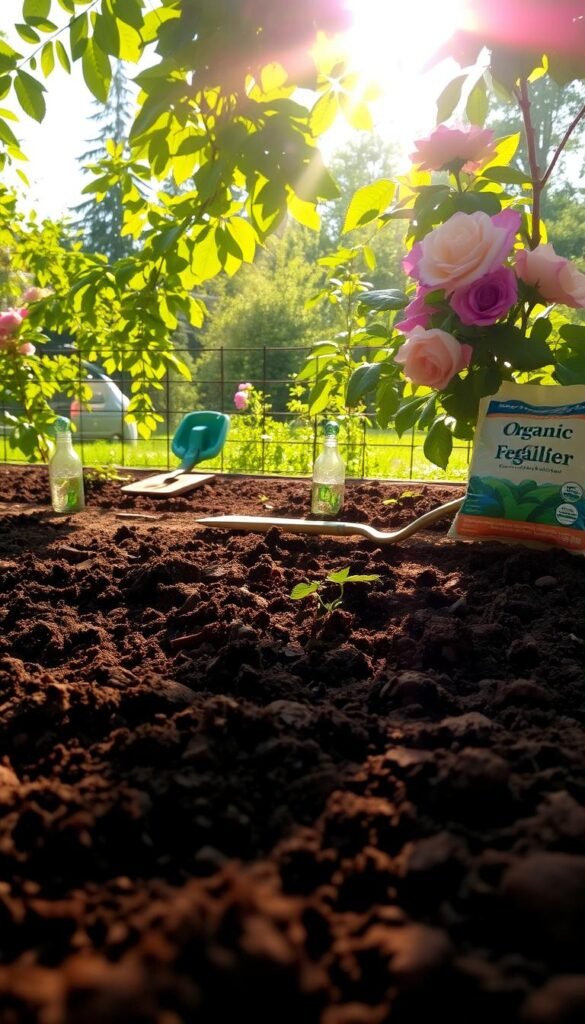
Location determines whether your roses flourish or fight to survive. Sunlight acts like a performance enhancer – the more they get, the better they bloom. Aim for spots receiving 6-8 hours of daily light, avoiding areas shaded by buildings or trees after noon.
Evaluating Sun Exposure and Air Circulation
Morning sun dries dew quickly, reducing fungal risks like black spot. Space plants 3-4 feet apart to let breezes flow freely between them. This simple step prevents moisture buildup, a common trigger for disease.
Soil Amendments and Drainage Tips
Roses crave soil that’s rich but not soggy. Test your ground’s pH – 6.0 to 7.0 is ideal. Mix in compost or aged manure to improve texture and nutrients. For heavy clay, add gypsum; sandy soils benefit from peat moss.
Containers need drainage holes and quality potting mix. Remember, plan your rose garden around these fundamentals, and you’ll avoid years of corrective care. Healthy roots start with thoughtful preparation.
Step-by-Step Guide: Plan Your Perfect Bloom with a Rose Garden Design Layout for Flower Beds
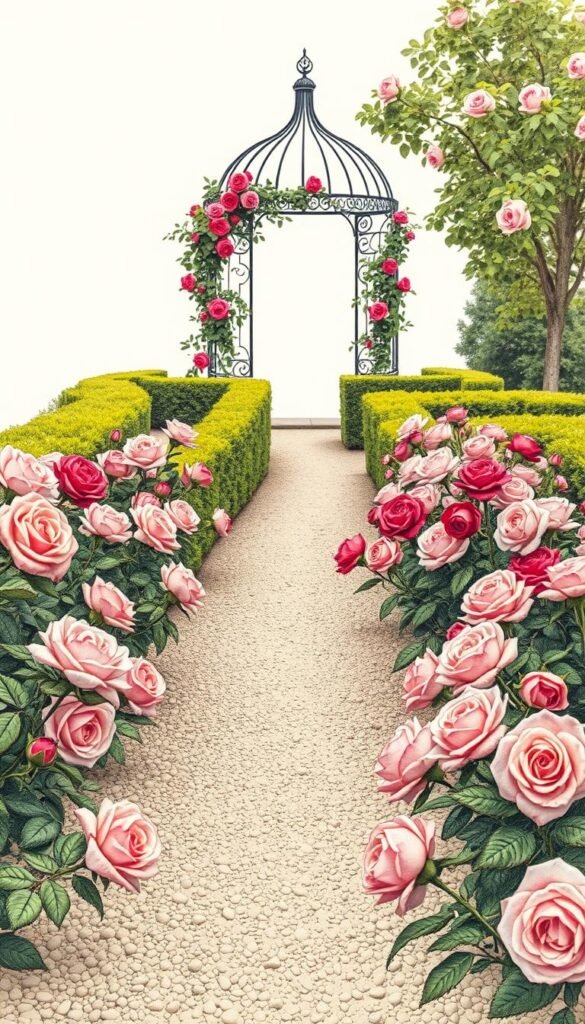
Begin by translating inspiration into action. Collect ideas from gardening blogs, books, or local landscapes. Jot down textures, color schemes, and structural elements that catch your eye. This foundation shapes your unique vision.
Grab graph paper to sketch bed shapes and pathways. No artistic skills needed – simple lines show spacing and flow. Keep beds under 4 feet wide for easy planting and pruning access. Curved edges add softness, while straight lines suit formal designs.
Mark where roses will anchor the space, leaving room for growth. Use circles to represent mature bush sizes. Add arches or trellises near seating areas to frame fragrant blooms. Pathways 2-3 feet wide let you navigate without crushing stems.
Create a phased timeline if budgets are tight. Install main structures first, then add garden beds in stages. This approach builds momentum while keeping the area tidy. You’ll avoid overwhelming projects and enjoy progress along the way.
Review your sketch at different times of day. Notice shadow patterns and adjust placements as needed. This proactive step saves costly moves later. With a clear roadmap, your rose garden evolves from dream to reality, one intentional choice at a time.
Selecting the Right Rose Varieties for Your Garden

The secret to a thriving floral display lies in matching plant traits to your landscape’s personality. Modern roses come in forms that solve design challenges while delivering months of color. Focus on growth habits and resilience to create a low-fuss paradise.
Exploring Climbing, Shrub, and Groundcover Roses
Climbing roses turn blank walls into living tapestries. Train them over pergolas or fences for vertical drama. Shrub types like ‘Knock Out’ form dense mounds perfect for borders. Their relaxed shape blends naturally into cottage-style spaces.
Groundcover varieties spread gracefully, suppressing weeds in tricky slopes. ‘Flower Carpet’ roses thrive with minimal care, blooming nonstop from spring to frost. Mix these types to layer textures and maximize visual interest.
Considering Disease Resistance and Bloom Time
Newer varieties like Oso Easy® roses outshine older hybrids. They resist black spot and mildew, cutting spray routines by half. Check plant tags for ARS ratings – 8.5 or higher indicates top performers.
| Type | Best Use | Bloom Frequency | Maintenance Level |
|---|---|---|---|
| Climbing Roses | Vertical accents | Spring + repeat | Moderate |
| Shrub Roses | Hedges/borders | Continuous | Low |
| Groundcover Roses | Slopes/containers | Nonstop | Very low |
Stagger bloom cycles by mixing early, mid, and late-season types. This strategy ensures color from May through October. Pair early bloomers like ‘Carefree Beauty’ with fall stars like ‘Icecap’ for seamless transitions.
Designing Your Garden Layout and Structure
Blending architectural harmony with nature’s spontaneity creates spaces that feel both intentional and inviting. Start by choosing between crisp geometric lines or flowing organic shapes to match your home’s character. A Victorian-era house might demand symmetrical beds, while a ranch-style property could embrace wilder plantings.
Balancing Formal and Natural Styles
Formal layouts thrive on repetition and symmetry. Think paired rose bushes flanking a stone fountain or boxwood hedges framing hybrid tea varieties. These designs demand precise pruning but deliver timeless elegance.
For a relaxed vibe, mix shrub roses with perennials like lavender or catmint. Curved borders soften edges, letting colors spill naturally. This approach hides minor imperfections and encourages pollinators to visit.
Incorporating Pathways and Hardscape Elements
Crushed gravel or flagstone walkways guide visitors through your floral showcase. Keep paths at least 30 inches wide for comfortable access. Position benches where climbing varieties frame scenic views – perfect spots to enjoy evening fragrances.
Add vertical interest with arched trellises supporting rambling roses. A simple arbor draped in ‘New Dawn’ blossoms transforms a plain entry into a romantic gateway. Remember: hardscape materials should echo your home’s exterior for cohesion.
Incorporating Climbing and Container Roses for Versatility
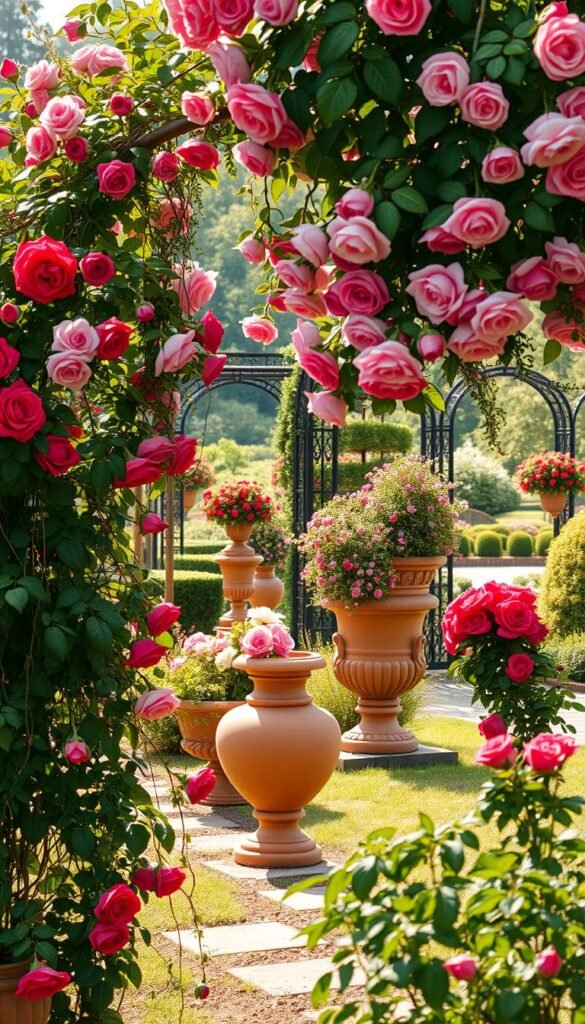
Elevate your garden’s charm by harnessing vertical spaces and portable planters. These methods let you grow roses where traditional beds aren’t practical while adding dynamic height to your landscape.
Maximizing Vertical Impact with Trellises and Arbors
Train climbing roses horizontally along fences or DIY trellises to encourage more blooms. This technique spreads growth evenly, preventing bare stems at the base. Pair ‘Zephirine Drouhin’ roses with purple clematis for a striking contrast that blooms from spring to fall.
Tips for Successful Container Planting
Choose pots 18-24 inches deep for healthy roots. Miniature varieties like ‘Sun Sprinkles’ thrive in 12-inch baskets. Use premium potting mix and feed monthly during growing season. Rotate containers weekly for even sun exposure.
| Container Size | Rose Type | Best Location |
|---|---|---|
| 15-20″ diameter | Shrub roses | Patios |
| Half whiskey barrel | Climbing roses | Entryways |
| 12″ hanging basket | Miniature roses | Balconies |
Water container roses when the top inch of soil feels dry. Add mulch to retain moisture in hot climates. With proper care, potted plants can live 5+ years before needing repotting.
Creating Stunning Borders and Mixed Plantings
Strategic partnerships between roses and their neighbors turn ordinary beds into living masterpieces. The right companions amplify color, fill seasonal gaps, and create layered textures that keep borders lively even when blooms fade.
Building Thriving Plant Communities
Choose perennials that match your roses’ needs: 6+ hours of sun, weekly watering, and rich soil. Lavender adds silvery foliage and summer spikes that contrast beautifully with pink or red blooms. Alliums provide early spring interest with purple globes before most roses flower.
| Plant | Height | Bloom Time | Key Benefits |
|---|---|---|---|
| Salvia | 18-24″ | Summer-Fall | Attracts pollinators |
| Catmint | 12-18″ | Late Spring | Drought-tolerant |
| Lady’s Mantle | 10-12″ | Early Summer | Foliage catches dew |
| Phlox | 24-36″ | Mid-Summer | Fragrant groundcover |
Time your planting for continuous color. Speedwell blooms in early summer, while autumn sedum takes over as roses slow down. This staggered approach keeps borders vibrant for months.
Mix foliage shapes for visual depth. Spiky iris leaves contrast with rounded rose bushes. Silver-toned artemisia makes crimson blooms pop. These combinations work even when no flowers are present.
Leave 18 inches between plants for air circulation and easy access. Position shorter varieties at bed edges, taller ones behind roses. This layout simplifies care while showcasing every layer.
Essential Maintenance and Pruning Practices
Proper care keeps your roses vibrant and healthy year after year. While some varieties need regular attention, others thrive with minimal effort. Understanding each plant’s needs prevents overworking while ensuring lush growth and continuous blooms.
Seasonal Pruning Techniques
Hybrid teas and floribundas demand precise pruning – cut ¼ inch above outward-facing buds at a 45-degree angle. This opens the plant’s center, reducing disease risk. Climbing types get trimmed in late autumn, while ramblers need summer cuts after flowering.
Maintaining Soil Moisture and Fertility
Enrich soil by mixing compost into the top 6 inches every spring. Apply 2-3 inches of mulch around the base three weeks after leaves emerge. For container roses, use slow-release fertilizer to avoid nutrient spikes.
Stick to a seasonal schedule: spring feeding, summer deadheading, and fall cleanup. In cold zones, mound soil around graft unions before frost. With smart maintenance, even high-maintenance varieties become manageable showstoppers.