
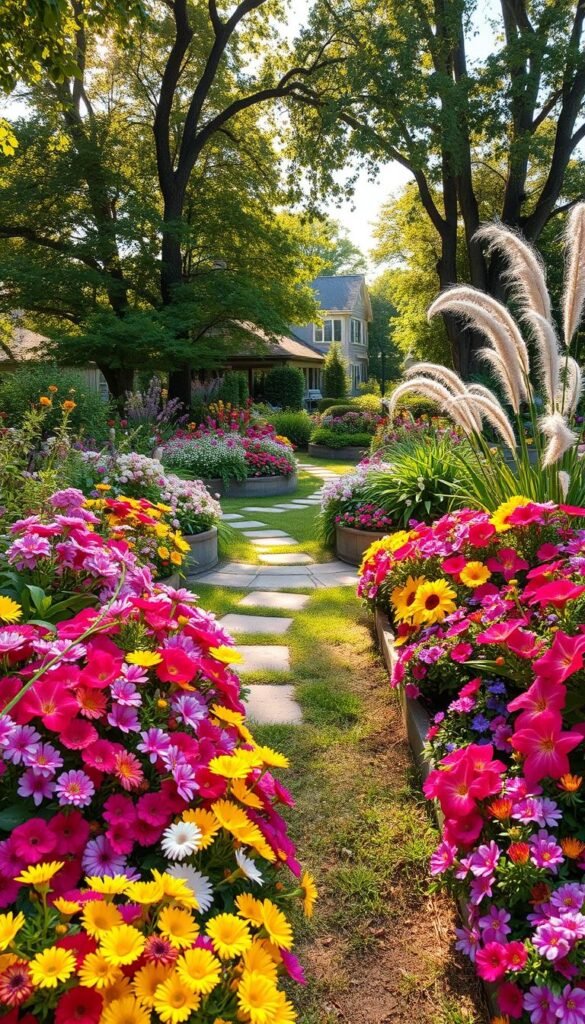
Imagine stepping into a space where colorful blooms mingle with fragrant herbs, and every corner feels like a living painting. This is the magic of cottage-style gardening—a timeless approach that blends beauty with purpose. Originating in rural England, these gardens were designed as low-effort retreats where plants could thrive naturally. Today, they’ve evolved into vibrant spaces that nourish both people and pollinators.
You don’t need a sprawling yard to capture this charm. Modern adaptations focus on layered textures and strategic plant pairings, creating that signature “wild yet intentional” look. Think edible flowers beside heirloom roses, or native perennials supporting local bees. The secret lies in balancing structure with spontaneity—a skill you’ll master through this guide.
We’ll show you how to design a space that grows lovelier each season. From selecting plants that complement your home’s aesthetic to arranging them for visual flow, every step builds toward an effortless oasis. You’ll learn to combine annuals for quick color bursts with perennials that return year after year, ensuring lasting impact.
Ready to transform your outdoor area into a sanctuary that feeds the soul and the senses? Let’s dig into the essentials of crafting a garden that feels both nostalgic and refreshingly new.
Understanding the Cottage Garden Aesthetic
Picture a space where foxgloves tower over thyme, and daisies peek through cracks in aged stone. This is the heart of cottage-style design—a blend of practicality and enchantment that invites exploration. Unlike manicured landscapes, these spaces prioritize joy over perfection, letting nature guide their shape.
What Makes a Garden Cottage Style?
True cottage charm comes from embracing imperfections. Winding paths replace straight edges, while edible and ornamental plants grow side by side. Think hollyhocks leaning against a weathered fence or rosemary spilling onto stepping stones. It’s about creating layers that surprise and delight at every turn.
These gardens thrive on diversity. By mixing heights, textures, and bloom times, you craft a living tapestry that changes daily. Vegetables might share soil with fragrant lavender, proving beauty and purpose coexist effortlessly.
Key Elements of Rustic Beauty
Natural materials anchor the look. Reclaimed wood planters, flagstone pathways, and vintage tools add character without fuss. As one expert notes, “The magic happens when you let plants tell their own story.” This philosophy reduces upkeep while boosting visual interest.
Strategic chaos reigns here. Allow self-seeding blooms like poppies to wander, and let climbing roses scramble freely. For those tight on space, practical tips for outdoor living show how to adapt these principles to patios or balconies. The result? A sanctuary that feels both wild and welcoming.
Planning Your Garden Layout and Hardscaping
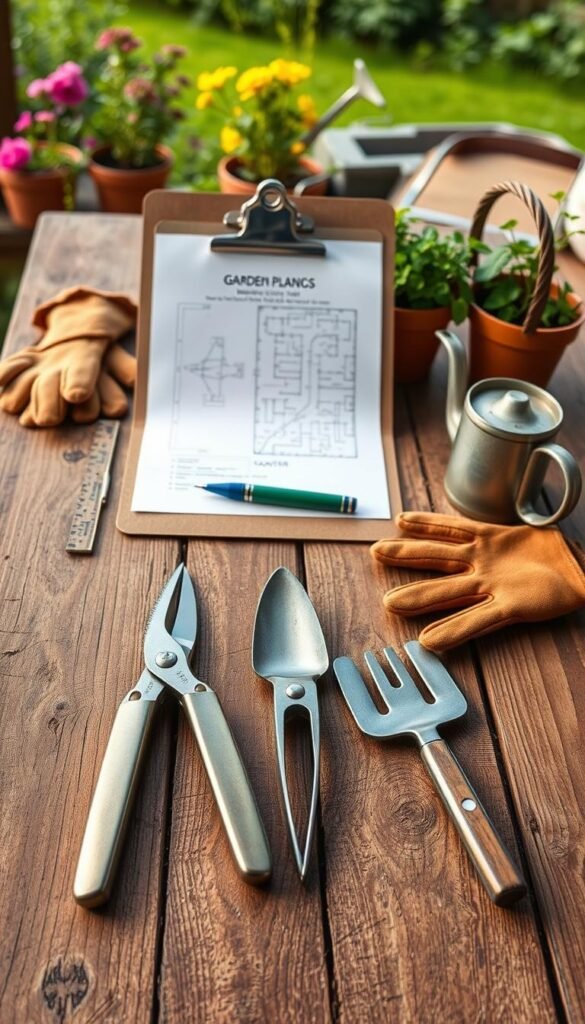
Envision your outdoor area as a blank canvas where creativity meets practicality. Thoughtful design turns ordinary yards into enchanting retreats. Start by mapping your space using free tools like Plan-a-Garden. These platforms let you drag-and-drop plants and structures, revealing how sunlight patterns affect growth zones.
Using Online Tools to Visualize Your Space
Digital planners help test layouts without breaking a sweat. Try grouping plants by height: low-growing thyme near paths, medium-height coneflowers in clusters, and tall hollyhocks as backdrops. One gardener shared, “Seeing my garden in 3D helped me spot overcrowding risks early.” Export shopping lists from these tools to stay organized during nursery visits.
Selecting Hardscape Elements on a Budget
Affordable materials add structure without sacrificing charm. Search Facebook Marketplace for:
- Flagstone pieces ($0.50/sq ft vs. retail $3)
- Gently used trellises
- Vintage birdbaths
For raised beds, use clearance paving stones. One creative DIYer built retention walls for $65 using mismatched slabs. Add river rock between planting zones to define beds naturally. Remember: hardscaping can evolve over seasons as your garden grows into its personality.
Choosing the Perfect Annuals and Perennials
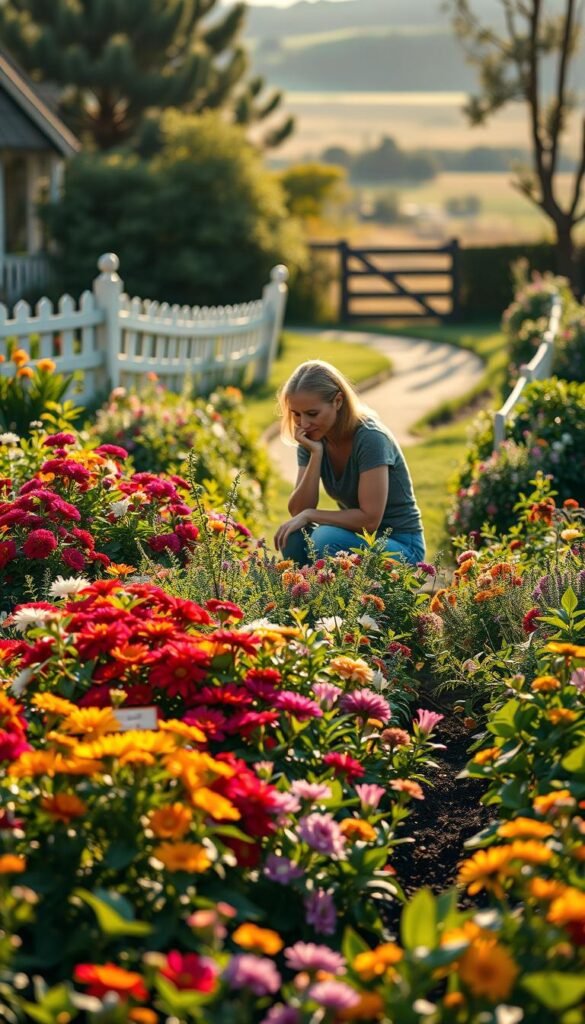
Transform your outdoor space into a living tapestry by blending perennials that anchor your design with annuals that spark joy each season. Start with reliable bloomers like coneflowers and foxgloves—these hardy performers return bigger and bolder yearly, giving your beds lasting structure.
Balancing Color, Texture, and Function
Group similar hues for bold impact. Try pairing purple lupines with lavender spikes, or let orange calendula pop against yellow coreopsis. Mix feathery dill fronds with broad-leafed hostas to create eye-catching contrasts. As one gardener puts it: “Texture is nature’s confetti—it keeps the eye dancing.”
Tips for Complementary Plant Pairings
Choose multi-taskers like nasturtiums—their edible blooms brighten salads while repelling pests. Plant tall sunflowers behind low-growing thyme to maximize vertical space. Remember:
- Check mature sizes to prevent overcrowding
- Pair early-bloomers with late-season stars
- Let self-seeding annuals like cosmos wander freely
This approach creates layers that delight pollinators and people alike. By combining purposeful plants with artistic flair, your garden becomes both a sanctuary and a storybook.
Planting a Cottage Garden Bed: Easy Steps to Layering Annuals and Perennials
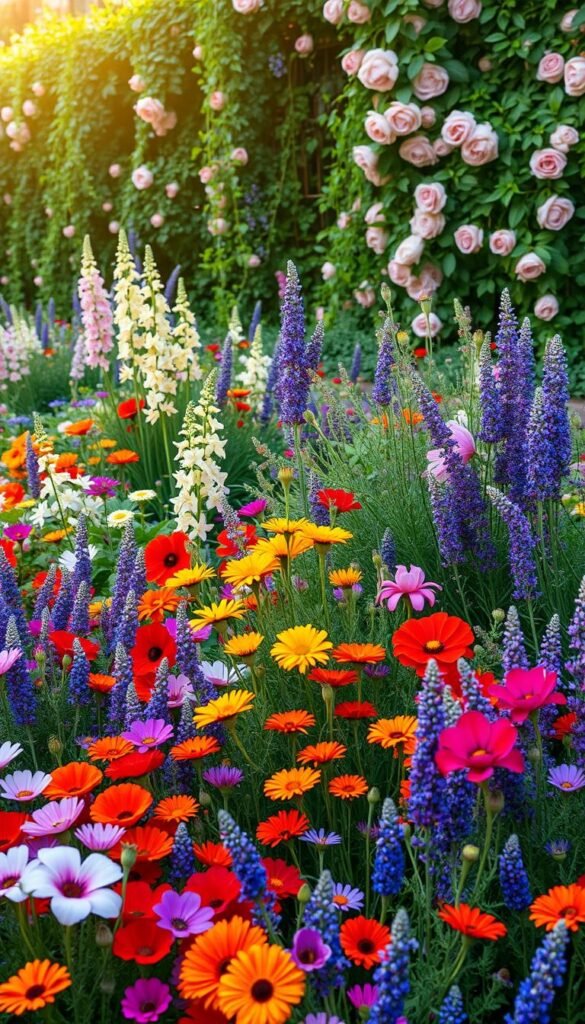
Visualize a tapestry of blooms where every plant plays its part in nature’s theater. The secret to that lush cottage charm lies in strategic stacking—like building a floral sandwich where each layer enhances the next.
Step-by-Step Guide for Beginners
Start at your pathways with creeping phlox or lamium. These ground covers act as living mulch, suppressing weeds while softening edges. Let them spill onto walkways for that “lived-in” charm. As one gardener advises: “Plants should hug paths like old friends—close enough to greet, but not trip over.”
Behind these, cluster medium growers like dianthus and yarrow. Their 12-24″ height creates a colorful midriff that hides leggy stems of taller neighbors. Space them 18″ apart—close enough for fullness but with breathing room for air circulation.
Anchor your design with structural elements like boxwood or juniper. These evergreen shrubs frame the space year-round, making summer blooms appear more vibrant. For vertical drama, add hollyhocks whose towering spikes attract hummingbirds.
Remember:
- Check nursery tags for mature spreads
- Leave 6″ between plants and path edges
- Rotate bloom times for continuous color
This tiered approach ensures each plant shines while creating depth. You’ll craft a space that feels wild yet intentional—the hallmark of cottage garden magic.
Integrating Functional Elements and Accents
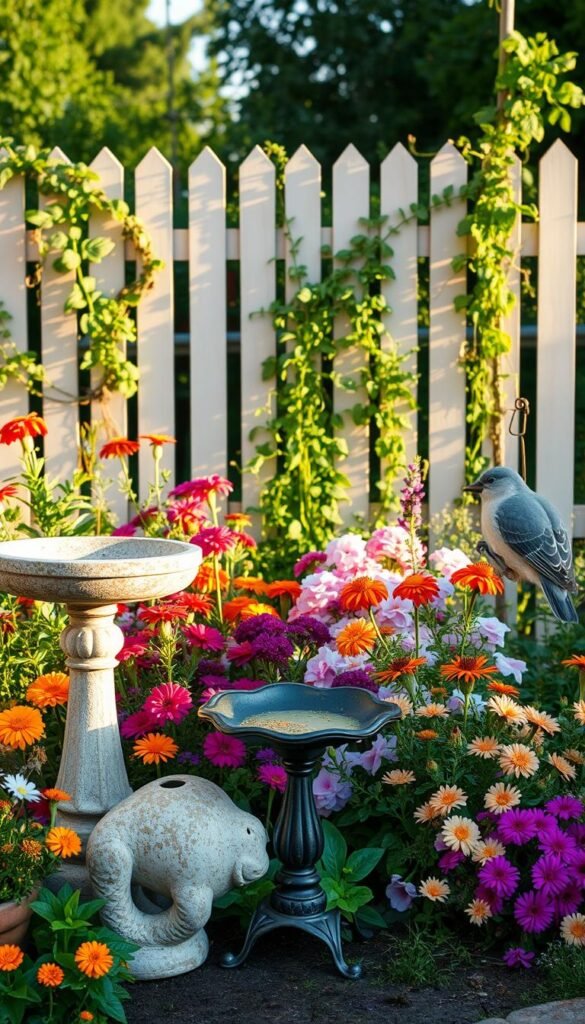
Think of your outdoor space as a storybook where every chapter reveals new delights. Strategic accents turn flower beds into interactive experiences, blending practicality with wonder. They guide visitors through your living masterpiece while keeping the wild spirit intact.
Enhancing Your Space with Flagstone Paths and Lighting
Flagstone walkways carve mystery into dense plantings. Their irregular shapes create a “follow-me” effect, inviting exploration. Pair them with creeping thyme between stones for fragrance underfoot—nature’s welcome mat.
River rock clusters act as visual pauses. Place them where blooms collide, letting eyes rest between color explosions. One gardener notes: “Stones are the punctuation marks in my garden’s poem.”
Modern solar lights now cast warm glows rivaling wired systems. Bury fixtures along paths for safe navigation, or hang lanterns in trees to silhouette favorite plants. They extend your enjoyment long after sunset.
Choose accents that grow with your design. A weathered bench becomes part of the scenery when surrounded by climbing roses. Birdbaths double as focal points if positioned near buzzing pollinator zones. Remember—structure should whisper, not shout, in cottage-style spaces.
These touches make your garden feel lived-in yet magical. They’re the secret way to balance wild beauty with home-centered charm.
Maximizing Garden Productivity with Edible and Medicinal Herbs
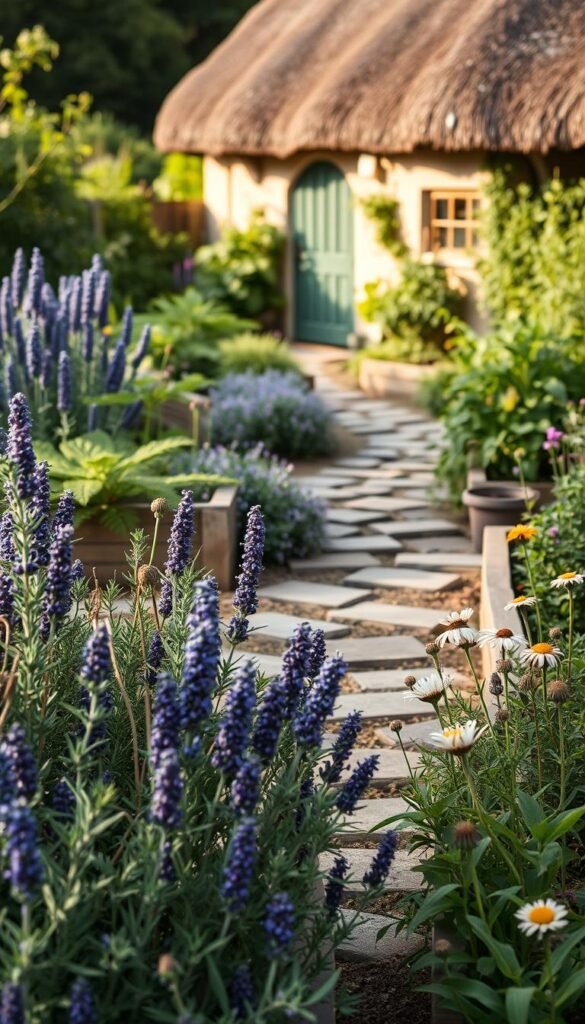
What if your flower beds could nourish both body and soul? By blending herbs and veggies with ornamental charm, you create spaces where beauty meets utility. These multitasking plants offer fresh flavors, natural remedies, and visual delight—all while supporting pollinators.
Blending Culinary, Medicinal, and Ornamental Goals
Start with fragrant workhorses like thyme and sage. Their silvery leaves contrast beautifully with vibrant flowers, while their oils repel pests naturally. You’ll love how thyme releases its aroma when brushed against paths—a sensory bonus for gardeners.
Medicinal stars like lemon balm thrive in partial shade. Its heart-shaped leaves make soothing teas, while clusters of white flowers attract beneficial insects. Pair it with chamomile for a calming corner that doubles as a pollinator pitstop.
| Plant | Culinary Use | Medicinal Benefit | Ornamental Feature |
|---|---|---|---|
| Lavender | Baking, cocktails | Stress relief | Purple spikes |
| Rhubarb | Pies, jams | Digestive aid | Bold red stems |
| Cherry Tomatoes | Salads, snacks | Vitamin C source | Cascade of red fruits |
Perennial vegetables like asparagus add vertical interest. Their feathery fronds create airy backdrops for shorter herbs. For quick snacks, tuck cherry tomato plants between rosemary bushes—their red fruits pop against evergreen needles.
Remember: “A productive garden isn’t separate from beauty—it’s the heart of it.” Let rhubarb’s crimson stalks anchor your design, or train nasturtiums over arbors for cut-and-come-again blooms. When every plant serves multiple roles, your space becomes as practical as it is picturesque.
Embracing Natural Growth with Group and Drift Planting
Nature thrives in clusters, not straight lines—let your cottage garden embrace this truth. Grouping plants in flowing drifts creates the illusion of wild abundance while guiding the eye through your space. This technique reduces bare spots and gives pollinators clear feeding zones.
Harnessing the Charm of Self-Seeding Annuals
Let cosmos dance where they please, and watch poppies paint unexpected corners. These self-sowers fill gaps with zero effort, evolving your garden’s story each year. Pair them with forget-me-nots for a sky-blue carpet that complements taller blooms.
Managing Weeds for a Lush, Natural Look
Not all green intruders are foes. Clover nourishes soil with nitrogen, while dandelion roots mine nutrients deep underground. Allow chickweed to carpet shady edges—its tiny white flowers feed early bees. Just pull invaders that crowd your stars.
For spaces needing structure, consider square-foot gardening layouts to balance wild beauty with order. Your plants will reward you with textures that feel both intentional and free—the ultimate natural harmony.