
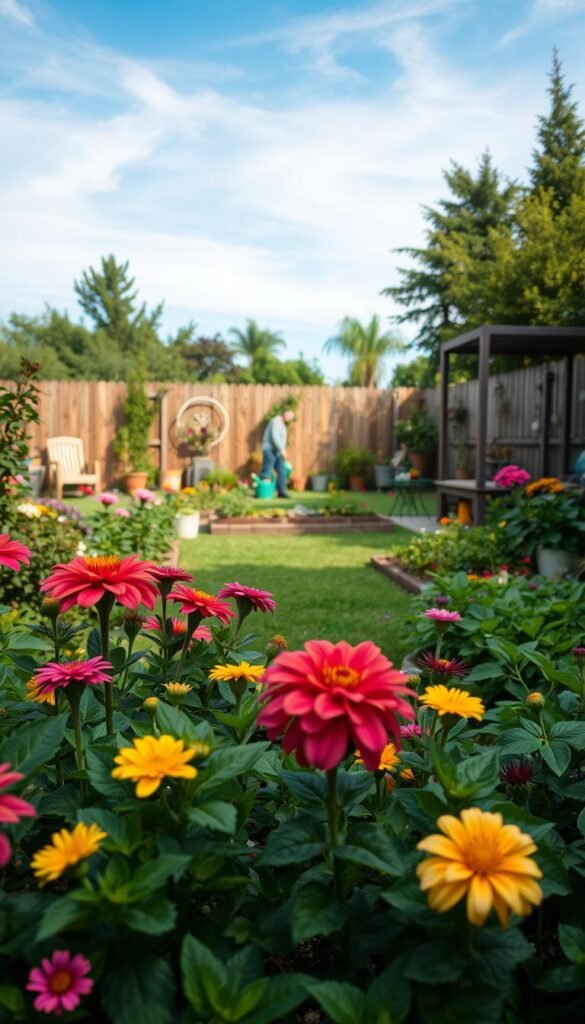
Your outdoor space transforms with the changing weather, and keeping it vibrant demands a strategy that evolves month to month. Understanding seasonal rhythms isn’t just about planting schedules—it’s about nurturing soil, protecting plants, and setting up systems that work smarter, not harder.
Each part of the year brings distinct tasks. Spring might focus on clearing debris and testing soil pH, while summer requires consistent watering and pest management. When autumn arrives, mulching and prepping beds become priorities. Winter shifts attention to insulation and planning—like using thermal mass techniques or exploring greenhouse gardening to extend your growing season.
What ties these efforts together? Anticipation. By staying one step ahead of frost dates, heat waves, or heavy rains, you create resilience in your landscape. Simple tools—like drip irrigation timers or compost refreshes every eight weeks—build a foundation for success.
This guide walks through practical steps to adapt your routine, whether you’re hardening off seedlings or shielding roots from freezing temps. With thoughtful care, your plot becomes a dynamic space that thrives no matter what the forecast brings.
Understanding Seasonal Gardening Challenges and Benefits
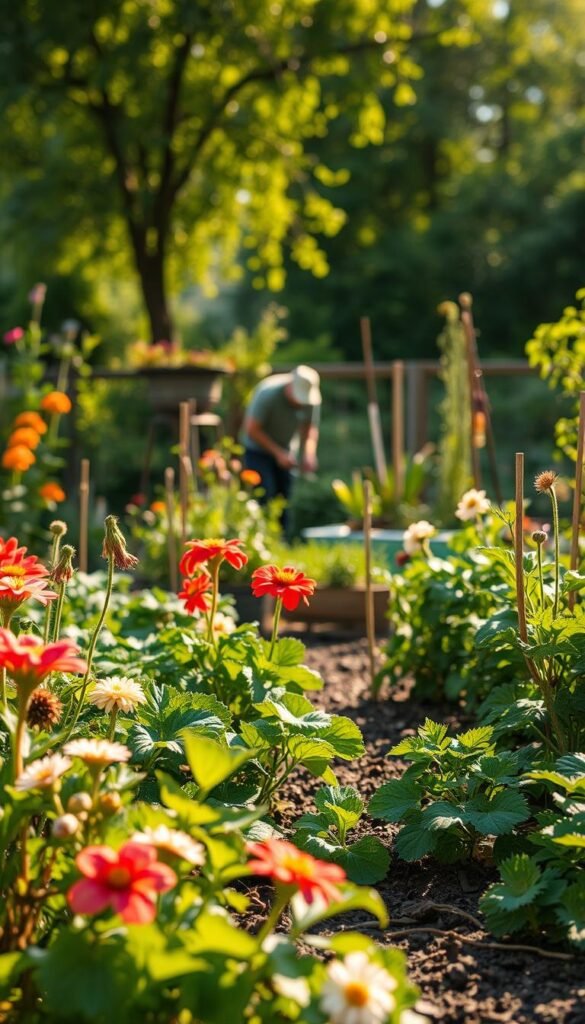
Gardening through the year feels like dancing with nature—each step changes with the rhythm of the seasons. Plants respond differently as temperatures swing from summer’s peak to winter’s chill, demanding tailored care strategies. Whether you’re nurturing perennials or annuals, recognizing these patterns keeps your green space thriving.
Weather’s Role in Plant Health
Summer heat tests hydration routines, while frosty nights challenge root survival. You’ll notice pests multiply during warm spells, then vanish when cold arrives. By tracking local weather trends, you can time watering schedules and pest controls effectively.
Why Consistency Pays Off
Regular care builds resilient plants that bounce back from stress. Those weekly check-ins? They help spot early signs of disease or nutrient gaps. Over time, this attention leads to deeper roots, fuller blooms, and tastier harvests.
Think of winter as your planning phase—it’s the perfect time to research cold-hardy varieties or improve soil structure. When spring returns, your groundwork translates into vigorous growth. This cycle of action and reflection turns seasonal hurdles into stepping stones for a lush, lively landscape.
Spring Revival: Cleaning, Soil Preparation, and Planting
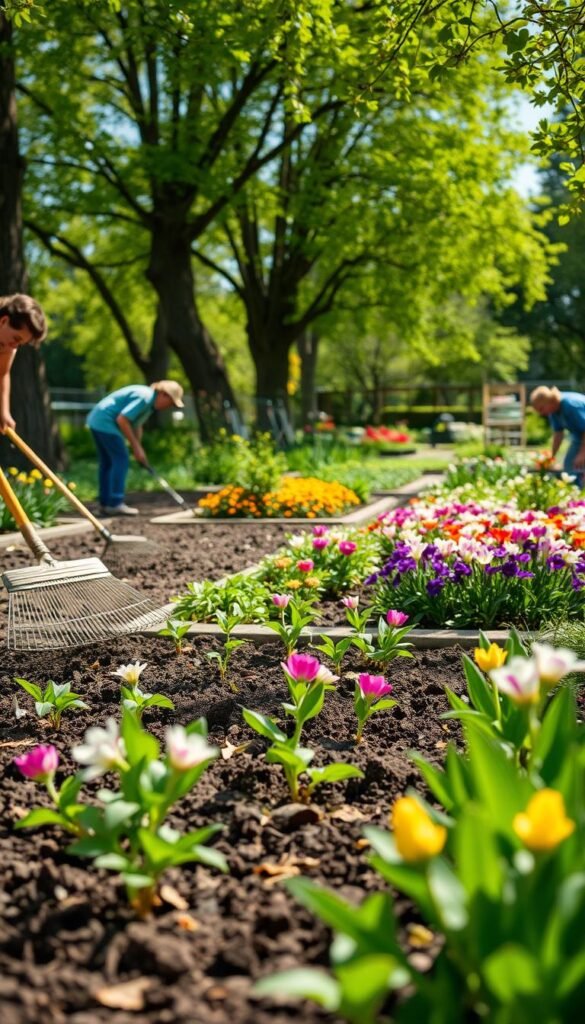
As winter’s grip loosens, your garden stirs to life, ready for renewal. This seasonal shift demands focused efforts to clear away remnants of colder months and create ideal conditions for emerging plants. A well-executed spring routine sets the stage for months of lush growth and abundant harvests.
Clearing Debris and Dead Leaves
Begin by raking up matted leaves and broken branches that accumulated under snow. These materials can trap moisture and host fungal spores, putting new shoots at risk. Use sharp pruners to trim dead stems from perennials, cutting just above healthy buds to encourage bushy growth.
Testing and Enriching Your Soil
Healthy plants start with nutrient-rich earth. Test your ground using a home kit or through local extension services to identify pH imbalances or deficiencies. Most vegetables thrive in slightly acidic soil (6.0-6.8), while flowers like hydrangeas prefer different ranges.
Mix 2-3 inches of compost into the top 6 inches of earth once it’s dry enough to crumble in your hand. This boosts drainage in clay soils and helps sandy soils retain moisture. Avoid tilling when the ground feels soggy—compacted dirt suffocates roots and reduces yields.
With debris cleared and soil revitalized, you’re ready to sow cool-weather crops like peas and spinach. These early plantings capitalize on moist spring conditions, giving your garden a productive head start before summer heat arrives.
Summer Maintenance: Watering, Mulching, and Pest Management
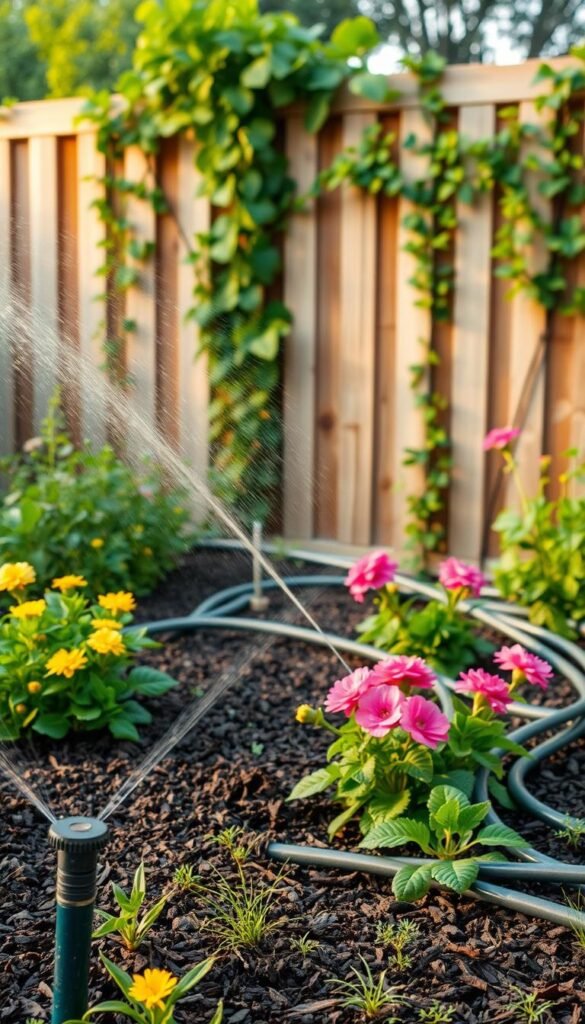
Summer’s heat brings both bounty and challenges to your green space. Balancing hydration needs while defending against pests requires smart strategies that work with nature, not against it. A few thoughtful adjustments keep your plot thriving even during scorching days.
Efficient Irrigation Techniques
Water deeply before 10 a.m. or after 4 p.m. to minimize evaporation. Drip systems deliver moisture straight to roots, cutting waste by 60% compared to sprinklers. Pair this with moisture sensors to avoid overwatering—your plants will show gratitude through vibrant growth.
Controlling Pests with Natural Remedies
Spot aphids or mites? Spray diluted neem oil weekly to disrupt their life cycle. Introduce ladybugs to handle infestations naturally—they devour up to 50 pests daily. Companion planting adds another layer: marigolds repel nematodes, while basil confuses tomato hornworms.
Layer 3 inches of straw or wood chip mulch around flowers and veggies. This locks in moisture and blocks weeds competing for resources. For more seasonal care tips, explore techniques that adapt to shifting weather patterns.
Autumn Strategies: Harvesting, Pruning, and Composting
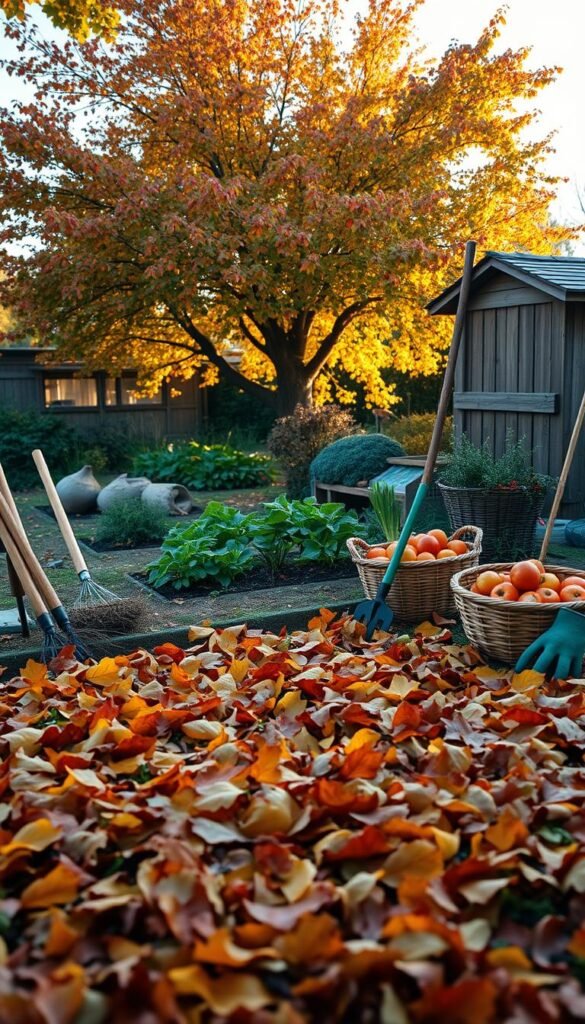
As summer fades, your garden enters a critical transition phase. Cooler temperatures signal time to protect plants, replenish soil, and set the stage for next year’s growth. This season balances cleanup with preparation—a dance between tidying up and laying groundwork.
Proper Leaf Management and Cleanup
Hold off trimming perennials until their foliage turns brown. This lets plants store energy in roots before winter. Rake fallen leaves into piles—shred them with a mower to create nutrient-rich mulch or add to compost bins.
Discard diseased stems or leaves to prevent spreading fungi. Leave seed heads on coneflowers and sunflowers—they’ll feed birds through colder months.
Adding Organic Matter to Prepare for Winter
Mix 2-3 inches of compost into the top 6 inches of ground. This feeds earthworms and improves soil structure. For no-till gardening methods, layer compost directly on beds—it’ll break down naturally by spring.
| Fall Task | Purpose | Timing Tip |
|---|---|---|
| Cutting back perennials | Prevents rot & disease | After first frost |
| Shredding leaves | Creates free mulch | Before heavy rains |
| Adding compost | Boosts soil nutrients | 4-6 weeks before freeze |
Layer shredded leaves around trees and shrubs—they’ll insulate roots while decomposing into organic matter. Your soil will thank you come planting season!
Winter Protection: Mulching, Frost Prevention, and Equipment Care
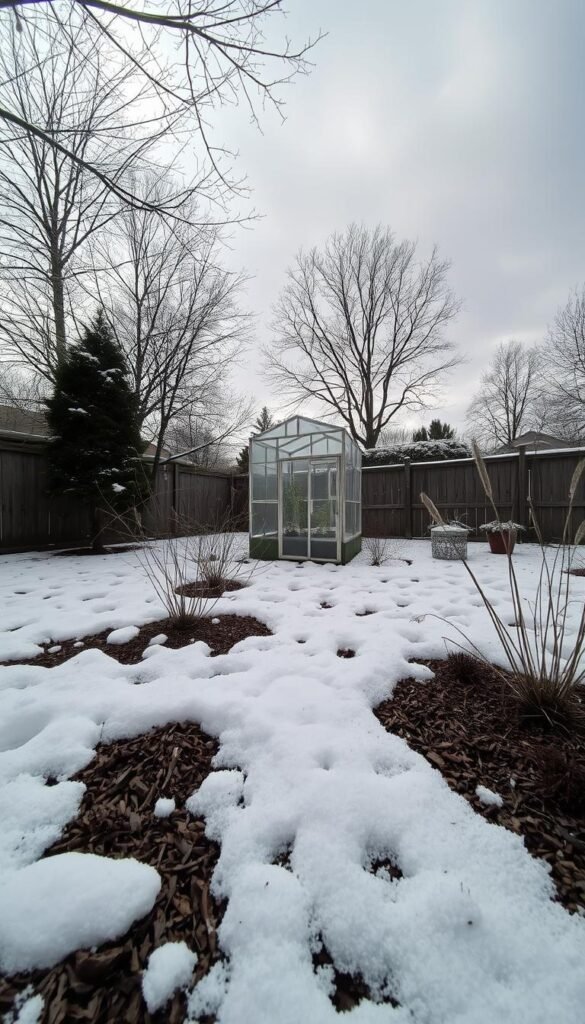
When the mercury drops, your garden’s needs shift from growth to survival. Harsh conditions test even hardiest plants, making proactive measures essential. A blend of smart insulation and tool maintenance preserves your investments through the coldest months.
Shielding Plants from Frost Damage
Wrap young tree trunks with reflective material to prevent sunscald—those sudden temperature swings crack bark. For tender perennials, pile 4-6 inches of straw mulch after the ground freezes. This locks in cold air, stopping roots from thawing prematurely.
Cover shrubs with burlap screens on windy sides. Avoid plastic sheets—they trap heat during daytime, then freeze overnight. “Airflow is crucial,” notes a USDA horticulturist. “Use breathable fabrics that mimic natural snow insulation.”
Maintaining and Storing Garden Tools
Scrub dirt from pruners and shovels with steel wool. Dry thoroughly, then rub mineral oil on metal parts to block rust. Drain fuel from mowers—stale gas gums up carburetors. Store hoses coiled in a frost-free shed to prevent cracking.
Organize your shed by hanging tools on pegboards. This keeps blades sharp and handles dry. Come spring, you’ll grab what you need without hunting through clutter.
Preparing a Backyard Garden for Every Season: Spring to Winter Care
Mastering year-round gardening success starts with smart planning and local wisdom. Timing tasks strategically while tapping into regional expertise helps your plot adapt smoothly as months shift.
Scheduling Seasonal Tasks Across the Year
Break your care routine into monthly goals. A simple calendar reminds you when to prune roses (late winter) or divide perennials (early fall). Sync these dates with your state university extension’s planting guides—their frost date maps prevent costly timing mistakes.
Fall shines for adding trees and shrubs. Cooler air reduces transplant shock, and many garden centers offer discounts on nursery stock. Mark September-October as prime planting weeks in your area.
Incorporating Local Garden Center Advice
Staff at neighborhood nurseries know which plants thrive in your microclimate. Ask about pest-resistant varieties during summer sales or soil amendments for clay-heavy ground. “Regular customers get first dibs on rare specimens,” shares a Maryland nursery manager.
Partner with your state university’s agricultural program. Their free soil tests reveal pH imbalances, while workshops teach tips like extending harvests with row covers. Many extensions even provide custom planting schedules for your zip code.
Visit garden centers quarterly to spot trends. Spring might showcase new drought-tolerant flowers, while winter displays highlight evergreen shrubs. These trips keep your strategies fresh and effective through every season.
Year-Round Tips for Continuous Garden Growth
A thriving garden isn’t built in a day—it’s cultivated through consistent observation and smart practices that adapt through the months. Whether you’re nurturing vegetables or ornamentals, these strategies help maintain momentum across changing conditions.
Tracking Progress with Purpose
Your gardening journal becomes a roadmap for success. Jot down first frost dates, bloom times, and pest outbreaks. Over time, patterns emerge—like which tomato varieties thrived in wet summers or which fertilizer boosted root development.
Review entries each winter to refine plans. Did basil planted in mid-June outperform May starters? Did squash borers target late plantings? These insights shape smarter choices next year.
Smart Planting for Healthier Soil
Rotate crops annually to disrupt pest cycles. Follow heavy feeders like corn with nitrogen-fixing peas. This natural approach reduces chemical needs while letting soil recover.
| Practice | Benefit | Frequency |
|---|---|---|
| Journaling | Identifies growth patterns | Weekly updates |
| Crop rotation | Improves soil nutrients | Yearly changes |
| Composting | Adds organic matter | Seasonal applications |
Mix compost into beds every spring and fall. Earthworms will multiply, aerating the ground and boosting water retention. Your plants develop stronger roots, better equipped for drought or heavy rains.
Stay flexible when weather surprises you. If an early heatwave hits, use shade cloths to protect seedlings. Record these adaptations—they’ll guide future growing seasons.
Utilizing Resources and Expert Recommendations
Your local agricultural experts hold keys to gardening success that many overlook. State University Extension offices offer free or low-cost tools tailored to your region’s unique needs. These services turn guesswork into actionable plans backed by decades of research.
Learning from State University Extensions
Start with a soil test—most extensions analyze samples for pH and nutrients. You’ll receive specific recommendations for lime or fertilizer based on your area’s geology. One gardener in Ohio corrected acidic soil using extension advice, doubling her tomato yields in a single season.
Extension websites provide planting calendars showing when temperatures drop in your zone. This helps time frost-sensitive crops like peppers. Many offices host workshops on pest control and composting—check their event calendars monthly.
| Service | Benefit | Availability |
|---|---|---|
| Soil Testing | Custom nutrient plans | Year-round |
| Plant Clinics | Disease diagnosis | Growing season |
| Webinars | Latest gardening tips | Winter months |
Connect with extension agents to discuss local climate quirks. They’ll explain why kale thrives in coastal regions but struggles in southern heat. This knowledge helps you choose plants suited to your microclimate.
Bookmark your state university’s gardening portal for quick access to planting guides. Pair their expertise with your observations for a garden that adapts beautifully each year.
Planning Future Garden Projects and Enhancements
Envisioning next year’s growth starts long before sprouts appear. Strategic planning now creates vibrant displays later, blending creativity with practical timing. Grab a notebook—your future self will thank you.
Sketching Your Garden Layout
Map out beds using graph paper or apps to visualize spacing. Note where flowers bloomed strongest last season—rotate crops to prevent soil depletion. Leave room for new additions like trellises or pollinator-friendly zones.
Ordering Seeds and Bulbs in Advance
Secure bulbs for tulips and daffodils by late summer. Plant bulbs 3-4 weeks before ground freezes, allowing roots to anchor. Small varieties like crocus need 3-4 inches depth, while larger ones require 6-8 inches.
Order early to access rare varieties before they sell out. Mix early-blooming crocus with mid-season hyacinths for staggered color. Your efforts this fall transform into bursts of life when early spring arrives.