

Picture a space where wildflowers sway beside sleek stone paths, and vintage charm meets smart irrigation systems. This is the magic of blending traditional cottage garden aesthetics with fresh, functional ideas. You don’t have to choose between history and innovation—this approach lets you honor both.
Why do these gardens remain so popular? They’re flexible. Whether you’re working with a sprawling yard or a cozy patio, the organic beauty of this style adapts effortlessly. You can mix heirloom roses with drought-resistant plants or add geometric raised beds beside rustic fences. The goal? A space that feels lived-in yet intentional.
In this guide, you’ll see how simple upgrades—like using recycled composite materials or solar-powered lighting—can elevate your outdoor area. We’ll focus on practical strategies that preserve the free-spirited vibe while adding modern reliability. Think of it as curating a living scrapbook, where every element tells your story.
Ready to create a retreat that mirrors your personality? Let’s explore how to balance time-honored traditions with today’s best solutions. Your garden will become a sanctuary that grows more captivating with each season.
Embracing the Cottage Garden Charm
Imagine stepping into a vibrant tapestry where history and nature dance in harmonious chaos. This style began over a thousand years ago in rural England, where practicality ruled. Families grew herbs, veggies, and flowers side by side, creating spaces that fed both body and soul.
Defining the Ideal Cottage Garden
Your dream space bursts with roses climbing weathered fences, daisies nodding near stone paths, and lavender scenting the air. Mix in foxgloves and sweet peas for pops of color. Add a bird bath or picket fence to anchor the scene—these touches whisper timeless appeal without feeling staged.
Historical Roots and Rustic Appeal
Centuries ago, these gardens weren’t just pretty—they put food on the table. Think thyme spilling over walkways and kale growing beside peonies. The magic lies in the “organized chaos” approach. Let plants mingle freely, and embrace imperfections like uneven blooms or wild vines. It’s how nature thrives, after all.
Modern Twists in Traditional Design
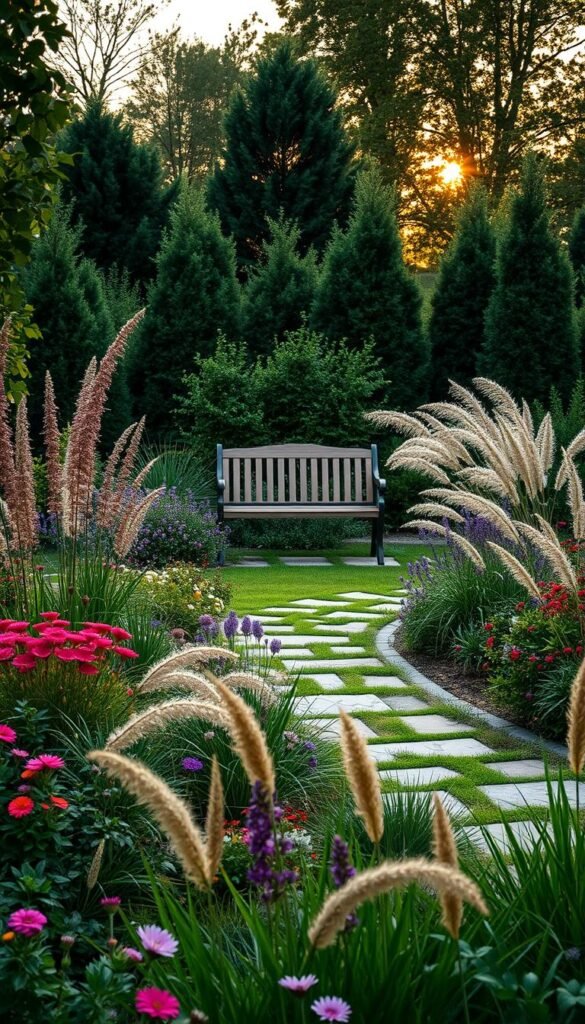
What if your outdoor space could honor the past while embracing today’s innovations? The answer lies in thoughtful updates that respect heritage while solving modern challenges. Start by weaving in subtle tech upgrades—like moisture-sensing irrigation—that keep blooms thriving without disrupting the carefree atmosphere.
Smart Solutions Meet Vintage Vibes
Swap rusty watering cans for discreet drip systems that conserve water. Solar-powered string lights add evening charm without tangled cords. These quality upgrades work behind the scenes, letting flowers and foliage take center stage. For inspiration on balancing eras, explore this guide to revamping classic layouts.
Materials That Bridge Generations
Composite decking mimics weathered wood but withstands decades of foot traffic. Powder-coated steel arches support climbing roses better than rotting timber. You’ll love how these fresh options reduce maintenance while preserving that beloved lived-in feel.
Shape-Shifting Surfaces
Introduce geometric planters near billowing hydrangeas for visual tension. Crisp rectangular paths can guide visitors through drifts of forget-me-nots. The secret? Use modern products sparingly—like punctuation marks in nature’s poetry. For quirky accents, consider repurposed wooden elements alongside sleek new features.
This approach lets you curate a space where heirloom peonies brush against minimalist benches, proving tradition and innovation aren’t rivals—they’re dance partners.
Reinventing Cottage Garden Design with Modern Twists
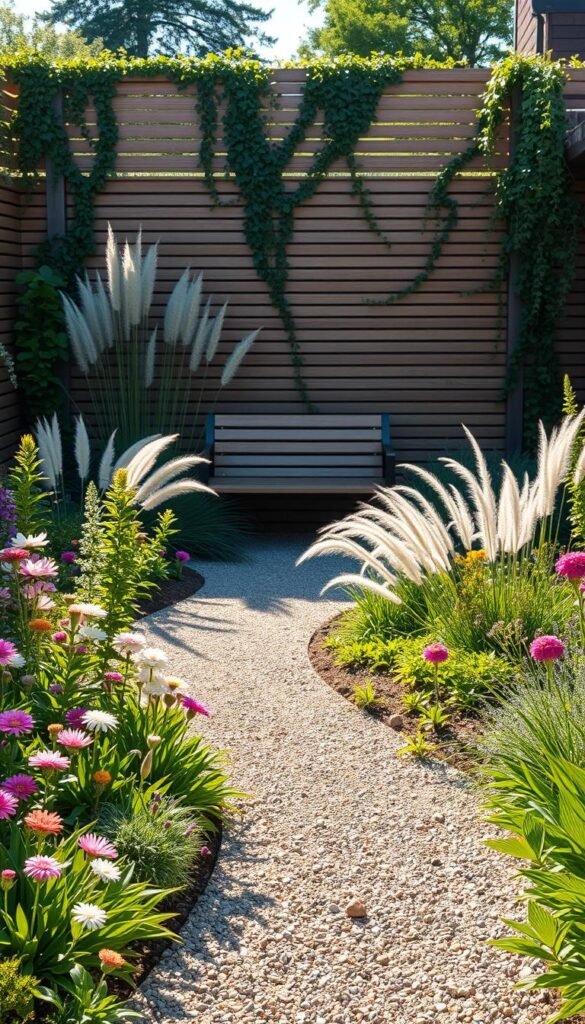
Create a dynamic landscape where orderly hedges meet free-spirited flowers, balancing form and spontaneity. Start by anchoring your space with structural plants like Griselinia Ardmore Emerald. Its glossy leaves form a lush backdrop, while Silver Beauty Boxwood adds crisp edges to soft floral displays.
Innovative Layout Ideas
Think beyond flat beds. Vertical planters let trailing nasturtiums cascade beside upright Fairy Iris, doubling your planting variety. Try raised beds with asymmetrical angles—they create rhythm without rigid lines. For small areas, cluster pots of Escallonia Alice near seating nooks to define intimate zones.
Unique Plant Pairings
Mix classics with surprises. Fuji Apple trees offer spring blossoms and autumn fruit beside feathery grasses. Pair them with spiky Dietes grandiflora for texture contrast. See how these combinations work in different settings:
| Plant | Companion | Purpose |
|---|---|---|
| Griselinia | Fairy Iris | Structure + whimsy |
| Boxwood | Fuji Apple | Form meets function |
| Escallonia | Lavender | Year-round color |
Smart planning lets you guide visitors along meandering paths framed by billowing perennials. Let taller plants like hollyhocks create natural arches, while low-growing thyme spills over stepping stones. The result? A living mosaic that evolves with every step.
Essential Elements of a Cottage Garden
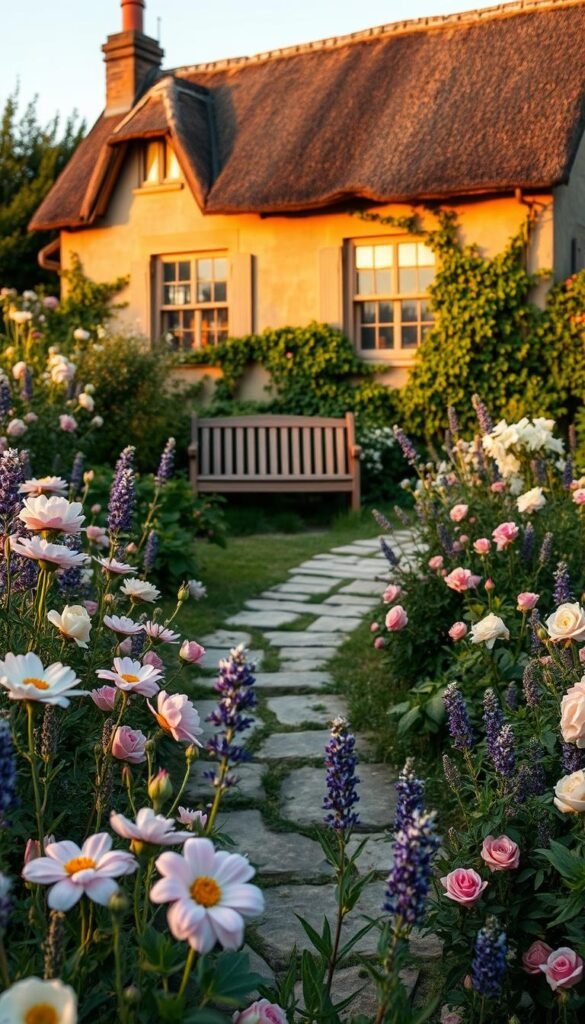
Think of your outdoor space as a living canvas where texture, scent, and movement tell a story. The magic happens when you layer flowers, plants, and handcrafted details that feel both spontaneous and purposeful. Start by choosing elements that invite exploration—a winding path here, a burst of color there—to create moments of surprise.
Key Plants, Flowers, and Foliage
Fill your beds with classics like foxgloves and phlox for vertical drama. Add dahlias and hydrangeas for bold splashes of color, while sweet peas and columbines bring delicate charm. Climbing clematis softens fences, and daylilies offer reliable blooms year after year. For seasonal pops, scatter zinnias or cosmos—they’ll self-seed freely, adding joyful variety.
Rustic Garden Features & Focal Points
Weathered wood benches and stone pathways ground the space in authenticity. Top a vintage crate with coneflowers, or let black-eyed Susans spill from a repurposed trough. An arbor draped in roses makes a perfect entryway—use powder-coated steel for longevity. These touches blend seamlessly with nature, letting your garden feel curated yet wild.
| Element | Role | Example Pairing |
|---|---|---|
| Climbers | Vertical interest | Clematis + Stone Wall |
| Perennials | Consistent structure | Daylilies + Lavender |
| Annuals | Seasonal highlights | Zinnias + Feather Grass |
Repeat key plants in different zones to create rhythm. A cluster of irises near the gate might echo taller blooms by the seating area. This repetition ties your cottage landscape together, making even small spaces feel thoughtfully connected.
Incorporating Modern Home Decor and Garden Structures
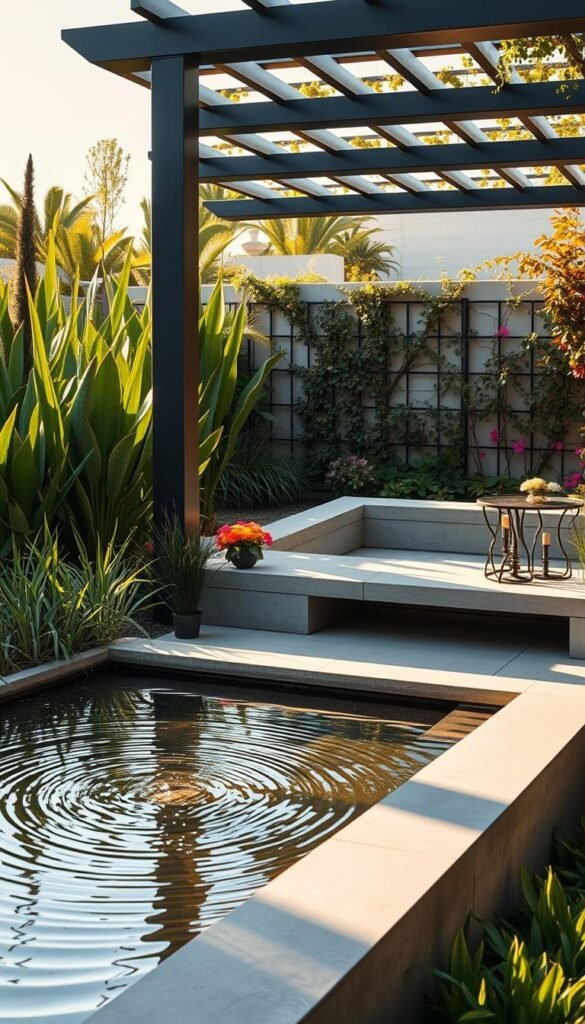
Envision a welcoming nook where sleek design elements blend with lush greenery. Your outdoor area becomes an extension of your home, merging comfort with nature’s spontaneity. By adding purposeful accents and structures, you craft spaces that invite lingering moments—morning coffee under dappled sunlight or evening gatherings bathed in golden hues.
Contemporary Seating and Decor Accents
Choose furniture that whispers modern simplicity without clashing with nature’s charm. Teak benches with clean lines or powder-coated steel chairs offer durability while keeping the style relaxed. Pair them with cushions in earthy tones—think sage or sandstone—to harmonize with your blooms. These pieces create cozy corners perfect for reading or sipping tea.
Stylish Outdoor Structures
Pergolas draped in wisteria transform a simple dining area into a storybook setting. Add a reclaimed wood table beneath for organic contrast, or hang a hammock for lazy afternoons. Sleek fire pits and geometric water features act as focal points, blending function with artistry. For more ideas on elevating your outdoor aesthetic, explore textures that mirror your garden’s wild elegance.
Remember: less is more. Let each structure serve a purpose while leaving room for plants to shine. Your space becomes a sanctuary where modern home decor and untamed beauty coexist effortlessly.
Planning Your Garden Layout for a Seamless Fusion
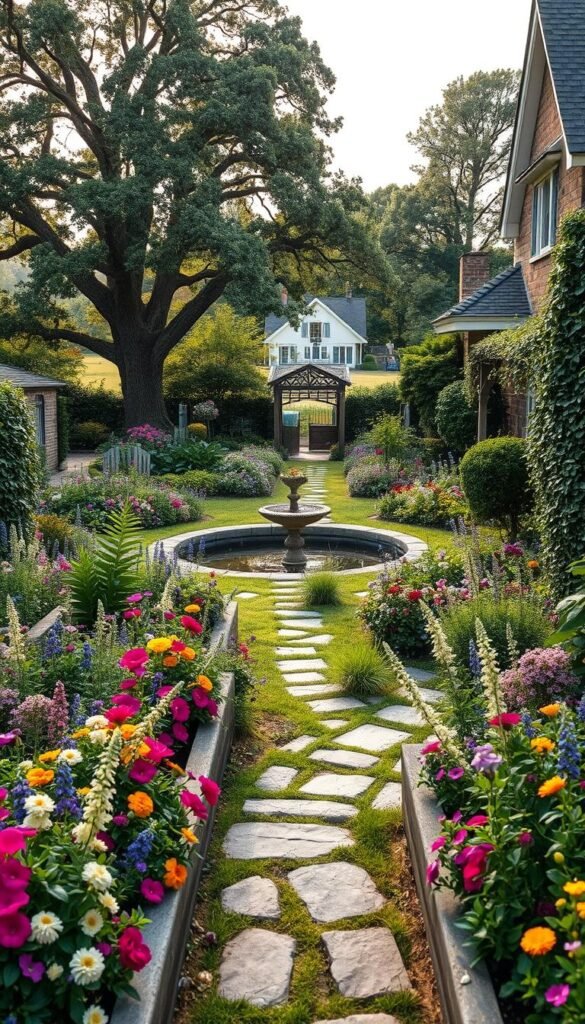
Transform your outdoor area into a living storybook by embracing gradual growth. Instead of overhauling everything at once, focus on small, intentional changes that evolve with your understanding of the space. This approach reduces initial work while letting you discover which plants thrive in your unique conditions over time.
Designing Intimate Spaces
Start by mapping sun patterns and drainage areas. Place seating nooks where morning light filters through trees, and position rain-loving ferns in naturally damp corners. Curved pathways lined with fragrant herbs invite exploration, while partial hedges create cozy pockets for quiet moments.
Consider these elements for a harmonious design:
- Low stone walls that double as informal benches
- Clusters of dwarf shrubs to define “rooms”
- Arched trellises using repurposed materials as focal points
Add one new planting zone each season. Year one: a cutting garden near the kitchen. Year two: a meditation circle under mature trees. This phased planning lets you refine your vision while maintaining balance between wild beauty and purposeful garden structure.
Selecting Quality Plants and Flowers for All Seasons
Your garden’s charm comes alive when blooms thrive in every season. Focus on resilient varieties that adapt to your local climate while offering visual rewards. Smart choices today mean less work tomorrow—and a landscape that stays vibrant year-round.
Seasonal Planting Strategies
Start with spring bulbs like tulips and daffodils for early color. Follow with summer perennials—black-eyed Susans and coneflowers—that handle heat. In fall, asters and sedum add texture, while evergreens like boxwood maintain structure through winter.
| Season | Plant Type | Example |
|---|---|---|
| Spring | Bulbs | Tulipa ‘Angelique’ |
| Summer | Perennials | Echinacea ‘Magnus’ |
| Fall | Shrubs | Hydrangea paniculata |
Practical Care Tips for Lasting Beauty
Divide perennials like hostas every 3-4 years to refresh beds and expand your collection. Choose native species suited to your soil—they’ll establish faster and resist pests naturally. For continuous interest, pick plants like coral bells, whose foliage shifts from plum to crimson across seasons.
Start quality seeds indoors to save costs. Marigolds and zinnias germinate quickly, giving you bursts of color without the nursery price tag. Pair them with self-seeding annuals like cosmos for a garden that reinvents itself yearly.
Benefits of a Cottage Garden for Health and Lifestyle
Ever notice how time slows when you’re surrounded by buzzing bees and blooming peonies? These spaces do more than look pretty—they nurture your health and reshape your daily life. Let’s explore how digging in the soil can become your secret weapon for balanced living.
Enhancing Overall Well-Being
Gardening gets you moving without feeling like exercise. Planting, weeding, and watering burn calories while lowering stress hormones. Studies show 30 minutes outdoors can boost mood by 40%—imagine what weekly sessions could do!
Mix edible plants like basil or kale among your flowers. You’ll snack fresher and connect with your food’s journey. Bonus: herbs like lavender in your environment release calming scents that ease anxiety naturally.
Creating a Personal Outdoor Sanctuary
Your green corner becomes a retreat from screens and schedules. Add a bench under climbing roses or brighten your space with container flowers for instant joy. Birdsong replaces notifications, helping you recharge your energy.
| Activity | Health Benefit | Lifestyle Perk |
|---|---|---|
| Soil Preparation | Builds muscle strength | Teaches patience |
| Flower Arranging | Boosts creativity | Creates gift opportunities |
| Wildlife Watching | Lowers blood pressure | Deepens nature connection |
Butterflies flitting between coneflowers aren’t just pretty—they’re proof you’re sustaining local ecosystems. Each bloom supports creatures that keep our world thriving. Your lifestyle gains purpose as you become a steward of life’s delicate balance.
Budget-Friendly Tips to Reinvent Your Garden
What if your dream outdoor space didn’t drain your savings? Focus your spending on anchor plants like climbing roses or hydrangeas—these become the backbone of your design. Pair them with budget-savvy DIY projects and clever plant choices for a lush look without overspending.
Smart Spending Strategies for Lasting Beauty
Start by building structures from reclaimed wood or leftover bricks. Old ladders become vertical planters, while pallets transform into rustic trellises. For home gardening ideas that save cash, swap pricey annuals for self-seeding cosmos or marigolds.
Grow plants from cuttings or seeds—zinnias and sunflowers sprout quickly. Join local gardening groups to trade perennials like hostas or daylilies. You’ll expand your collection while bonding with fellow enthusiasts.
Shop end-of-season sales for tools and soil amendments. Look for multi-use products like compost tea bags that feed plants and improve soil. Invest in ergonomic pruners—they’ll make weekly work easier on your hands.
Repurpose household items creatively:
- Turn colanders into hanging baskets
- Use mason jars as cloches for seedlings
- Transform broken chairs into plant stands
Mix homemade compost into beds to nourish plants naturally. By blending thrifty options with a few quality investments, you’ll craft a charming retreat that grows richer each year.
Modern Garden Products and Upgrades
Upgrading your green space doesn’t mean losing its soul—it’s about choosing tools that work smarter. Today’s best products blend efficiency with subtlety, keeping your focus on blooms rather than bulky equipment.
Innovative Tools and Smart Irrigation
Swap guesswork for precision with drip systems that target roots directly. These quality setups cut water use by half compared to sprinklers while preventing fungal issues. Pair them with ergonomic hand tools featuring cushioned grips—your wrists will thank you after hours of pruning.
For small spaces, smart drip irrigation kits offer adjustable flow control. They’re perfect for patios or raised beds, delivering moisture exactly where plants need it. Modern options even include soil sensors that alert you when hydration levels drop.
Choose gear that lasts: powder-coated steel trowels resist rust, and UV-stable hoses won’t crack in sunlight. With these upgrades, you’ll spend less time maintaining and more time enjoying your thriving oasis.