
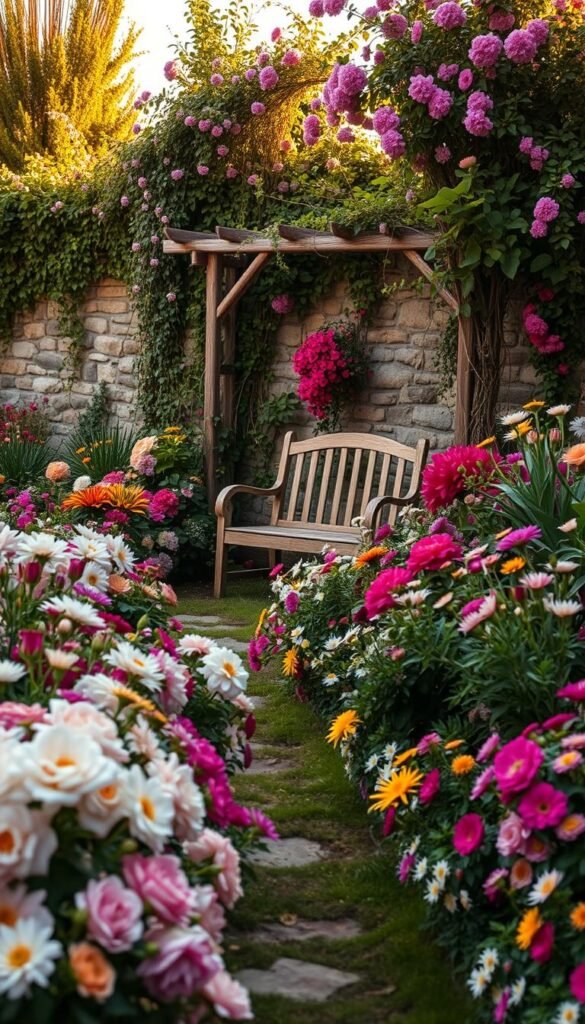
Picture a space where fragrant roses mingle with fresh herbs, and winding paths invite exploration. This is the heart of cottage garden design—a living tapestry blending charm and purpose. These spaces trace their roots to 16th-century England, where workers cultivated compact plots bursting with edible and decorative plants.
What makes these gardens special? They thrive on balance—wild enough to spark wonder yet structured to support growth. Unlike formal landscapes, they embrace nature’s quirks while delivering beauty and harvests. You’ll find curved beds overflowing with blooms alongside practical herbs, all working together like pieces of a puzzle.
Maintaining this magic requires understanding its unique rhythm. Every choice—from plant placement to soil care—preserves that storybook feel. By working with nature rather than against it, you create resilient ecosystems buzzing with pollinators and bursting with color.
Ready to nurture your own slice of this tradition? Let’s explore how thoughtful practices keep these spaces flourishing through changing weather and seasons. You’ll learn simple strategies to enhance both visual appeal and plant health, ensuring your garden remains a joyful retreat year-round.
Understanding Cottage Gardens and Their Charm

Imagine stepping into a living patchwork where history whispers through every petal and vine. These spaces blend practical roots with artistic flair, offering lessons in resilience and beauty. Let’s uncover what makes them timeless.
From Survival to Sanctuary
Centuries ago, English workers transformed small plots near their homes into food sources. Vegetables grew beside medicinal herbs, while fruit trees provided shade and snacks. This resourcefulness birthed a style that values function as much as form.
Design Secrets That Delight
Modern versions keep that spontaneous spirit. Curved pathways invite strolls, while climbing roses frame entryways. Dense plantings create surprises—a burst of lavender here, a cluster of daisies there. Materials like weathered wood or mossy stones add rustic character.
| Traditional Elements | Modern Adaptations |
|---|---|
| Mixed edible/ornamental beds | Pollinator-friendly flower choices |
| Rough stone boundaries | Decorative metal edging |
| Wild self-seeding plants | Native species for low maintenance |
Notice how textures play together—feathery grasses against velvety sage, crunchy gravel paths beside soft thyme carpets. These contrasts engage touch and sight, making spaces feel alive.
Seasonal care tips for cottage garden borders to keep them thriving

As the earth cycles through its annual rhythm, your garden’s needs shift like the colors on an artist’s palette. Successful cultivation means tuning into these changes—knowing when to nurture growth, defend against stress, or let nature take its course. Let’s break down the year into actionable steps that honor your space’s unique character.
Working With Nature’s Calendar
Spring wakes your garden with gentle demands. Refresh soil with compost, and set up irrigation before summer heat arrives. Early-blooming perennials like lupines benefit from divided attention—trim winter damage while leaving new shoots untouched.
When temperatures rise, focus on hydration. Water deeply at dawn to reduce evaporation, especially for young plants. A layer of shredded leaves or bark mulch keeps roots cool and suppresses weeds. For expert guidance, adjust feeding schedules based on bloom cycles—roses crave nutrients during flowering, while herbs prefer lighter meals.
Autumn calls for protection. Collect seeds from hardy varieties like coneflowers, and wrap delicate shrubs in burlap before frost. Enrich beds with organic matter to recharge the soil. Winter? It’s a quiet dance of monitoring mulch depth and planning spring additions. Even dormant months offer chances to strengthen your garden’s foundation.
Remember: local weather patterns shape these rhythms. Coastal areas might extend summer watering, while mountain zones prioritize early frost prep. Tools like seasonal adjustments for compact spaces can inspire creative solutions. By observing and adapting, you’ll create a resilient ecosystem that celebrates every season’s gifts.
Creating a Cottage Garden Design Plan

Envision pathways that curve like a winding brook, guiding visitors through your living masterpiece. Designing these spaces begins with pencil sketches that honor their free-spirited roots while ensuring practicality. Let’s transform your vision into a roadmap that balances wild beauty with smart organization.
Sketching Your Layout and Pathways
Start by drawing swooping lines that mimic natural contours. Curved walkways soften edges and create mystery—you’ll want to see what’s around each bend. Place low-growing thyme or chamomile along borders, then build upward with mid-height lavender. Tall hollyhocks or sunflowers anchor the back rows, framing your canvas.
| Traditional Design Elements | Modern Adaptations |
|---|---|
| Irregular stone pathways | Crushed gravel with metal edging |
| Random self-seeding flowers | Planned succession blooming |
| Mixed-height plant clusters | Tiered vertical structures |
Establishing Garden Zones and Focal Points
Divide your space into functional areas without rigid lines. A circular herb bed near the kitchen door keeps flavors handy. Add an arched trellis draped in clematis as a visual anchor. Consider these zones:
- Scented corner with roses and mint
- Butterfly haven featuring milkweed and zinnias
- Snack station with strawberry plants and bush beans
Use weathered benches or birdbaths to create resting spots. These elements draw the eye while giving structure to your plantings. Remember: good design feels discovered, not forced—let your personality shine through every choice.
Year-Round Maintenance for Vibrant Garden Borders

Maintaining lively garden edges requires smart routines that adapt through the seasons. Think of it as a dance—sometimes leading, sometimes following nature’s rhythm. With simple habits, you’ll nurture healthy plants while keeping that relaxed, cottage-style charm.
Watering, Fertilizing, and Mulching Essentials
Early mornings are golden for hydration. Give new plants extra drinks—their roots need time to settle. Established perennials prefer deep soaking every 5-7 days during heat waves. Pair this with organic fish emulsion or compost tea every 4-6 weeks for steady growth.
| Traditional Approach | Modern Solution |
|---|---|
| Hand-watering with cans | Drip irrigation systems |
| Compost from kitchen scraps | Slow-release granular fertilizers |
| Straw mulch | Shredded bark blends |
Mulch does triple duty: locks in moisture, blocks weeds, and feeds soil. Spread 2-3 inches around plants, leaving space near stems to prevent rot. For beginners, our starter checklist simplifies seasonal adjustments.
Weeding, Pruning, and Pest Control Techniques
Stay ahead of invaders with weekly patrols. Twist weeds gently to remove roots completely—a fork-shaped tool helps in tight spots. Prune spent blooms to encourage new flowers, but leave some seed heads for winter interest.
Invite helpful allies like ladybugs by planting yarrow or dill. If aphids appear, spray them with diluted soap water at dusk. Remember: a few nibbled leaves prove your garden supports life beyond plants.
Balance is key. Let rambling roses spill over paths, but trim branches blocking sunlight. Choose tough perennials like coneflowers that thrive with minimal fuss. Your cottage garden will reward you with color and texture that shifts beautifully through the year.
Integrating Edibles and Ornamentals in Your Cottage Garden

Think of your garden as a living pantry where ruby-red strawberries peek through lavender spikes and snap peas climb antique trellises. This harmonious mix defines the cottage garden spirit—every plant earns its place through beauty and purpose.
Blending Beauty with Practical Edibles
Choose varieties that multitask. Lemon balm offers citrus-scented leaves for tea while repelling mosquitoes. Nasturtiums spill vibrant blooms over pathways, their peppery flowers spicing up salads. Consider these combinations:
- Hollyhocks (tall blooms) + bush beans (compact snacks)
- Climbing roses (fragrant arches) + runner beans (vertical harvests)
- Purple basil (colorful foliage) + calendula (skin-soothing petals)
| Multi-Purpose Plants | Key Benefits |
|---|---|
| Holy Basil | Culinary herb, stress relief, pollinator magnet |
| Marshmallow | Showy flowers, medicinal roots, drought-tolerant |
| Cherry Tomatoes | Sweet snacks, vibrant color, vertical growth |
Attracting Pollinators with Colorful Choices
Bees flock to blue borage flowers, while butterflies adore zinnia rainbows. Interplant cosmos with thyme—their airy stems support ground covers. For night interest, add moonflowers that release fragrance at dusk.
Prioritize staggered blooming periods. Early-blooming crocuses feed hungry spring bees, while autumn sedum sustains migrating monarchs. This approach ensures your garden hums with life from first frost to last.
Wrapping Up Your Garden Journey
Your journey into cottage gardening begins where you are—no countryside required. Whether your home is a townhouse balcony or a suburban backyard, these lush spaces thrive through smart plant choices and joyful experimentation. Forget perfection; success lies in mixing textures, colors, and scents that make your heart sing.
What makes this style endure? It adapts. Modern design principles blend with time-tested charm, letting you create magic in any setting. Start small—a corner of herbs and daisies proves even busy schedules can nurture beauty.
Gardening becomes therapy when you embrace the process. Feel soil between your fingers as you plant foxgloves, or watch bees dance among salvias. Each season offers fresh rewards: spring’s first blooms, summer’s fragrant harvests, autumn’s seed-saving rituals.
Remember—your space reflects your story. Let climbing roses frame a city window box. Train nasturtiums over a fire escape. Wherever life plants you, a cottage-style garden grows possibilities.