
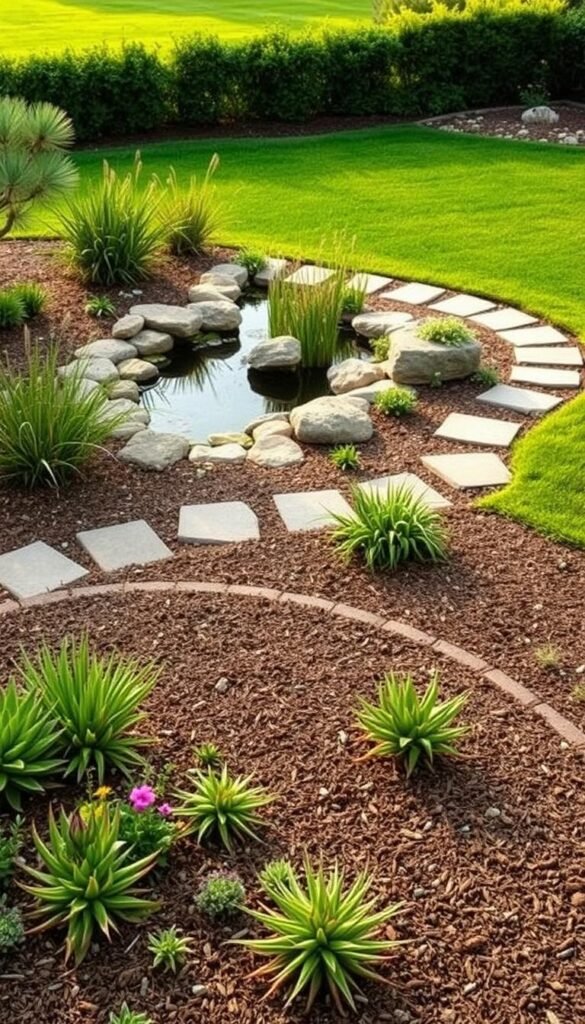
Does your outdoor space feel like a chore instead of a sanctuary? Traditional gardening advice often traps you in endless cycles of watering, weeding, and replacing plants. What if you could break free from these demands while creating a vibrant, self-sustaining landscape?
Many common practices work against nature’s rhythms. Plastic barriers suffocate soil life. Wood mulch layers become weed nurseries. Complex watering systems drain time and money. These methods create more problems than they solve.
The solution lies in partnering with natural processes. By understanding how ecosystems thrive without human interference, you can design spaces that flourish with minimal effort. This approach focuses on strategic plant choices, soil health, and water efficiency.
You’ll learn five core principles that transform how you care for your outdoor area. Discover how proper site analysis prevents future headaches. Explore drought-resistant species that thrive in your climate. See how simple ground covers outcompete weeds naturally.
Ready to trade backbreaking labor for smart planning? Let’s rebuild your relationship with your yard—one that rewards you with beauty while respecting your time.
Benefits of a Low-Maintenance Backyard Garden
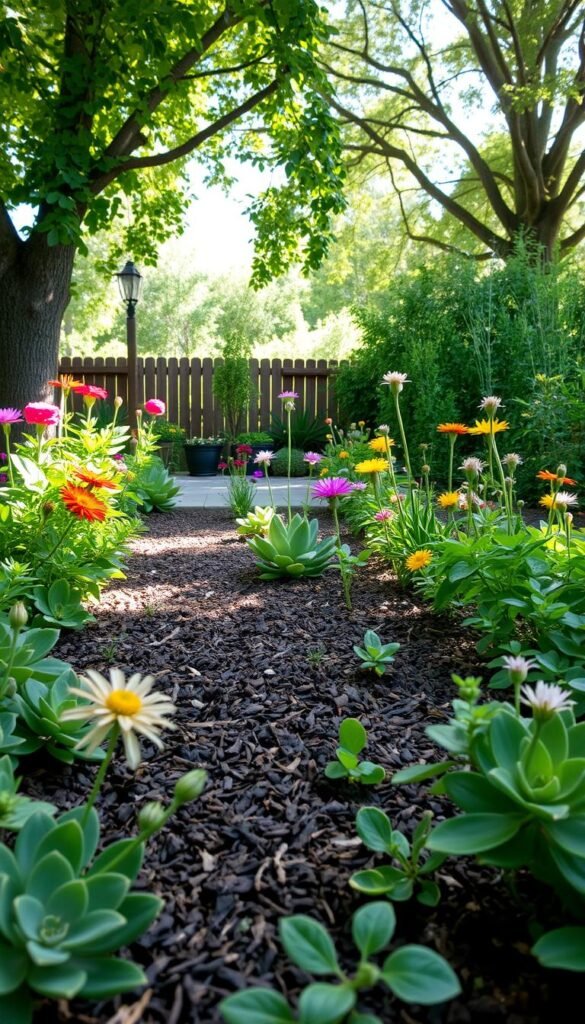
Discover how a thoughtfully designed space can save you hours each week. Instead of battling weeds or watering daily, you’ll reclaim precious moments for relaxation. Picture weekends spent lounging rather than laboring—your outdoor area becomes a true retreat.
Smart plant choices and natural systems slash upkeep demands. You’ll spend less money on replacements and chemicals, since resilient plants adapt to local conditions. Over time, these savings add up—both for your wallet and the environment.
Your physical well-being improves too. No more sore muscles from constant digging or hauling bags of soil. The right species grow stronger each year, creating a self-reliant ecosystem that handles droughts and downpours.
Perhaps the greatest reward? Watching nature thrive through your strategic planning. This approach builds confidence and deepens your appreciation for sustainable living. Your space evolves into a living testament to working smarter, not harder.
Preparing Your Garden Site with Care
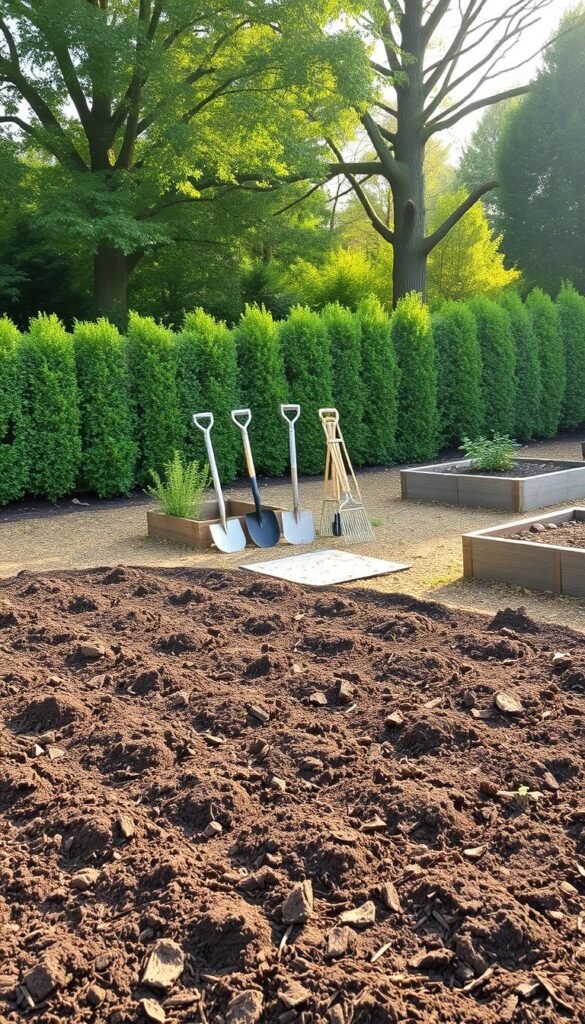
Great gardens grow from smart beginnings. Taking time to prepare your soil and outsmart weeds creates a strong foundation for healthy plants. Let’s explore how to set up your space for success.
Effective Weed Prevention Strategies
Stop weeds before they start. Smother unwanted growth by covering the ground with black tarps for 6 months. This solarization method uses sunlight to bake weed seeds. For faster results, try a sod cutter to remove grass roots in hours.
“Patience in site prep pays off tenfold in reduced maintenance.”
Choosing the Right Mulching Method
The lasagna mulch technique builds fertile soil while blocking weeds. Layer cardboard with compost and wood chips. Earthworms will feast on the cardboard, creating perfect planting conditions. This method works wonders for raised beds or new flower borders.
| Method | Time Required | Weed Control | Soil Improvement |
|---|---|---|---|
| Solarization | 6 months | Excellent | Moderate |
| Sod Cutter | 1 weekend | Good | Low |
| Lasagna Mulch | 2-4 weeks | Superior | High |
Test your site for drainage issues before planting. Fix compacted areas with a broadfork to let roots breathe. Remember: proper prep today means fewer headaches tomorrow.
Essential Mulching Techniques for Easy Garden Upkeep
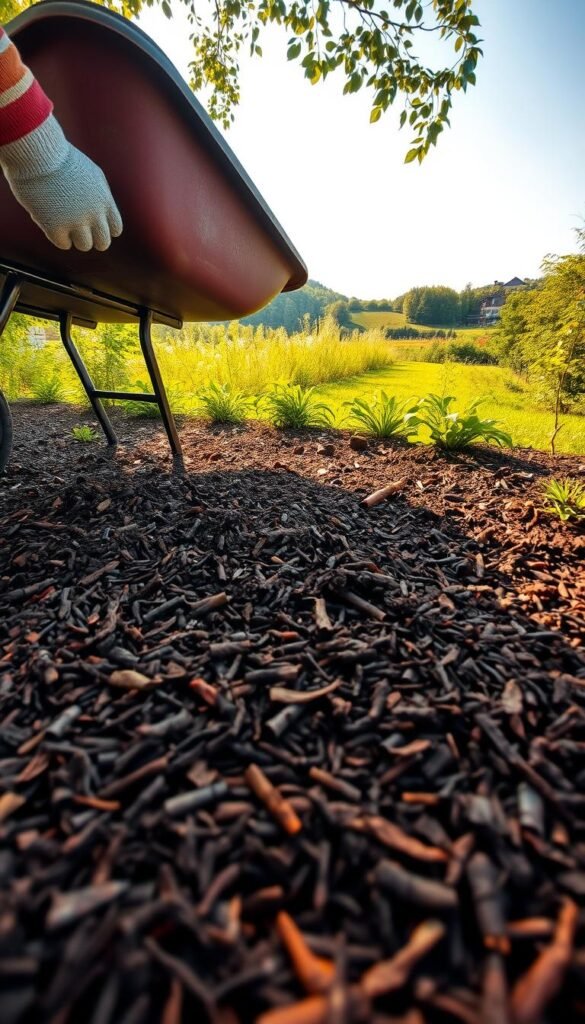
Transform your garden beds into self-sustaining ecosystems with smart mulching strategies. A 3-inch layer of organic material does triple duty: suppresses weeds, retains moisture, and feeds soil life. Forget weekly watering marathons—proper coverage cuts water needs by half while keeping roots cool.
Compost shines as a multitasking mulch, especially for sandy areas. Spread one cubic yard over 125 square feet of perennial beds to boost organic matter naturally. Unlike wood chips, it integrates with the soil as earthworms work their magic below.
Keep materials 2 inches away from plant stems to prevent rot. Hand-spread compost around delicate crowns for precision. This simple step protects your investment in plants while letting beneficial fungi thrive.
Diversify your mulch menu for better results:
- Leaf mold improves clay soils
- Straw cools vegetable patches
- Pine needles acidify berry bushes
Calculate needs using this rule: most bags cover 6-8 square feet at 3-inch depth. Buy bulk materials for large areas—you’ll save money and plastic waste. Refresh layers each spring before weeds emerge, using lighter materials in wet climates to prevent mold.
Understanding Irrigation Options for Minimal Maintenance
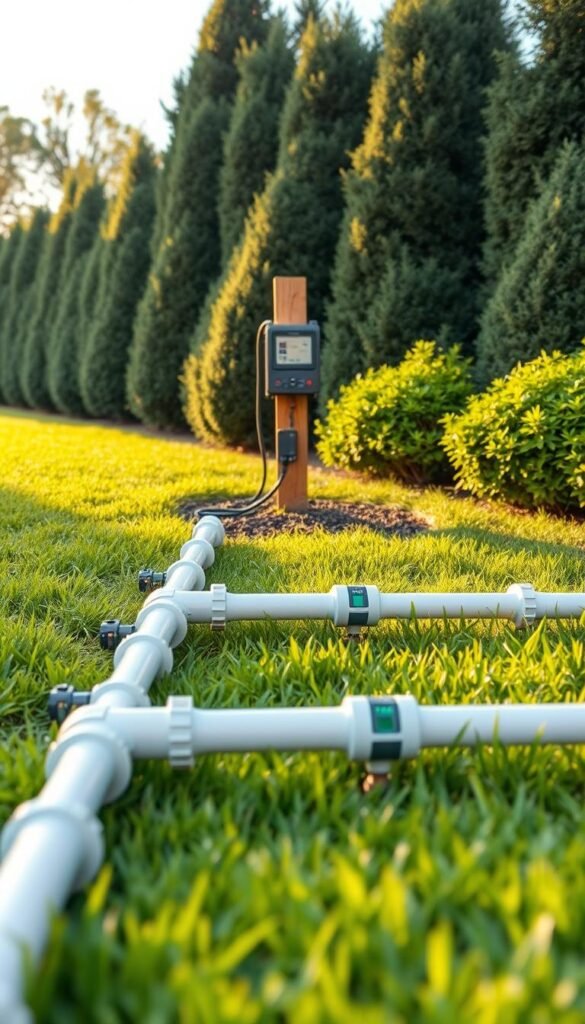
Smart watering practices slash maintenance while keeping plants thriving. Unlike traditional sprinklers that waste resources, modern methods deliver moisture precisely where roots need it most.
Optimizing Soaker Hose Placement
Recycled tire hoses excel in flower beds when warmed in sunlight first—this prevents kinks. Lay them in gentle curves around plants, securing with U-shaped pins every 4 feet. Avoid sharp bends near corners where water flow slows.
Smart Watering System Setup
Run your irrigation system at dawn using low pressure for 60-90 minutes. This mimics natural rainfall, encouraging deeper root growth. In average summers, one session every two weeks suffices—adjust during dry spells.
Pair soaker hoses with drought-tolerant species to cut watering needs further. Rain sensors or smart controllers automatically skip cycles after storms, preventing oversaturation. For uneven terrain, zone your system to deliver 30% more water to elevated areas.
Clear mineral buildup monthly by flushing hoses with vinegar solutions. Check connections for leaks before peak season—a small drip wastes 20 gallons daily. Proper care keeps your irrigation efficient for years.
Secrets to a Low-Maintenance Backyard Garden: Mulching, Irrigation
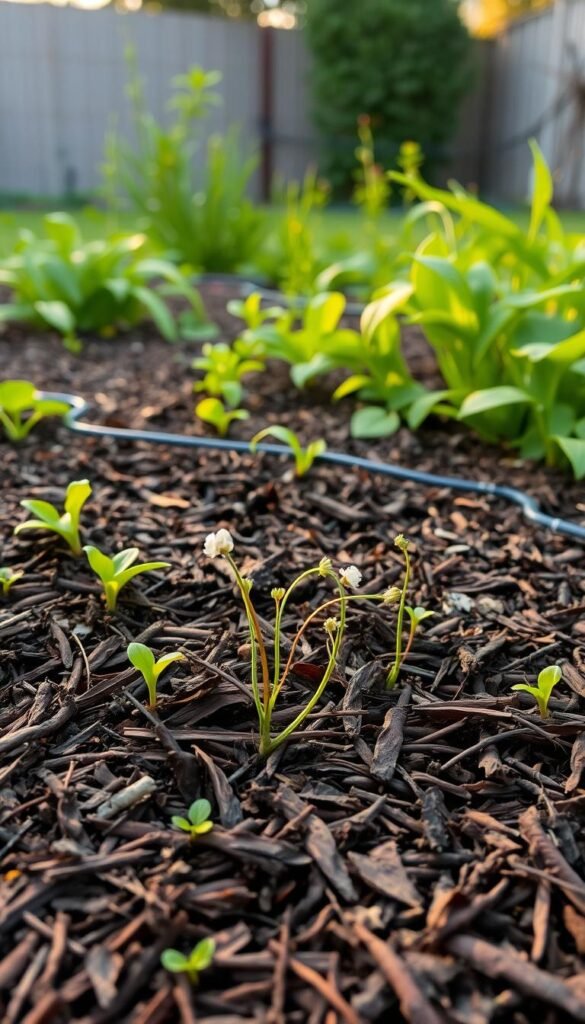
Pairing mulch with smart watering creates a powerhouse duo that cuts upkeep while boosting plant vitality. When these systems work in harmony, they mimic nature’s balance—locking in moisture, blocking weeds, and feeding soil life.
- Moisture control: Mulch acts like a sponge, while drip lines deliver water directly to roots
- Temperature regulation: A 3-inch layer buffers soil from extreme heat or cold
- Weed suppression: Ground cover blocks sunlight, stopping invaders before they sprout
Install irrigation first when setting up beds. Bury soaker hoses 1 inch deep, then add mulch on top. This protects hoses from UV damage and prevents water evaporation. For clay soils, use coarse wood chips—they let water penetrate better than fine mulch.
Timing matters. Refresh mulch in early spring after testing your watering system. Check for leaks by running it before covering. Sandy areas thrive with compost layers over drip lines, while stone mulch pairs well with bubbler systems in dry climates.
Maintenance becomes effortless once established. Just rake mulch annually to prevent compaction and flush irrigation lines with vinegar monthly. You’ll spend 70% less time watering and weeding compared to traditional methods.
Choosing the Right Plants for Your Environment
The key to effortless gardening lies not in constant care, but in smart plant selection from the start. Matching species to your land’s natural rhythms eliminates 80% of maintenance struggles. Plants that belong in your space grow like they’re on autopilot.
Soil and Sunlight Synergy
Conduct a 4-part site analysis before buying anything:
- Track sunlight patterns for 3 days
- Test soil texture using the jar method
- Map areas where water pools after rain
- Note existing native species thriving nearby
This detective work reveals your garden’s true personality. Clay soil baking in afternoon sun? Prairie grasses and coneflowers will outperform thirsty impatiens. Shady spots with damp earth? Ferns and wild ginger laugh at those conditions.
“Native plant communities are nature’s blueprint—they already know how to thrive here.”
Create a targeted list using resources like:
- Your state’s extension service plant database
- EPA ecoregion maps
- Local nature preserve species inventories
This research prevents impulse buys that wither. Instead, you’ll choose plants that multiply yearly, outcompeting weeds naturally. Your garden becomes a self-repairing tapestry of textures and colors.
Embracing Dense Planting for Natural Weed Control
Why fight nature when you can work with it? Bare earth acts like a flashing “vacancy” sign for weeds. Professional landscapers use a simple trick: pack your garden with carefully chosen plants that leave no room for invaders. This approach mimics how forests naturally crowd out unwanted growth.
Layer your space like ecosystems do. Combine tall perennials with creeping groundcovers and mid-height shrubs. Their roots form a living net that stabilizes soil and blocks weed seeds from taking root. This method works 4x better than wood mulch alone.
| Plant Type | Height Range | Key Function | Spacing |
|---|---|---|---|
| Groundcovers | 2-6 inches | Soil protection | 8-12″ apart |
| Mid-Layer | 1-3 feet | Visual interest | 18-24″ apart |
| Tall Specimens | 4+ feet | Canopy coverage | 3-5′ apart |
Try these powerhouse pairs for year-round coverage:
- Sedum + ornamental grasses
- Wild ginger + ferns
- Thyme + dwarf conifers
Groundcover plants like creeping phlox serve as living mulch. They spread steadily without choking neighbors when paired properly. For shaded areas, consider chemical-free gardening methods using native violets or barrenwort.
Dense planting reduces weeding by 60% within two years. You’ll create a self-regulating system where desirable plants crowd out invaders naturally. Just remember: start small and let species fill the space over time.
Changing the Way You Approach Weeding
Those endless hours pulling invaders might actually be making your problem worse. Many common weeds thrive in disturbed soil, using traditional digging as a signal to sprout new generations. By switching tactics, you can break this cycle permanently.
Low-Disturbance Techniques for Root Removal
Sharp tools become your secret weapon against persistent plants. For biennials like burdock, slide a spade into the soil at a 45-degree angle. This severs taproots without flipping earth full of dormant seeds.
Annual invaders like lamb’s quarters demand different tactics. Snip stems just below the surface using floral scissors. This precision prevents regrowth while leaving surrounding soil structure intact.
| Weed Type | Tool | Success Rate |
|---|---|---|
| Biennials | Sharp spade | 94% |
| Annuals | Stem cutters | 89% |
“Disturb less, control more. Soil remembers every shovel strike.”
Timing matters most with perennial weeds. Strike during their energy-low phases—early spring for dandelions, late fall for thistles. Always bag seed heads, but compost non-flowering plants safely in hot piles.
Adopting a Nature-First Gardening Mindset
Imagine your garden as a living tapestry that evolves with each season. Traditional gardening often fights against natural rhythms, but embracing change unlocks effortless beauty. When you stop battling falling leaves or shifting plant colonies, you create space for resilient ecosystems.
Natural landscapes teach us valuable lessons. Allow self-seeding flowers like coneflowers to find their ideal spots. Watch how milkweed relocates to sunnier areas over time. These subtle shifts create healthier plants that thrive without constant replanting.
“A garden isn’t a sculpture—it’s a conversation with the land.”
Seasonal transformations become features, not flaws. Spring’s bare ground gives way to summer’s lush growth, while autumn’s decay feeds next year’s blooms. This cycle reduces maintenance and increases biodiversity.
| Aspect | Traditional Approach | Nature-First Method |
|---|---|---|
| Plant Placement | Fixed locations | Dynamic migration |
| Weed Control | Weekly pulling | Natural competition |
| Seasonal Changes | Viewed as problems | Celebrated features |
Implementing low-maintenance backyard landscaping principles starts with observation. Notice where volunteers sprout naturally. Protect these areas while gently editing overcrowded spots. Your role shifts from director to curator.
This approach rewards patience. Within three years, native species often outcompete weeds. Beneficial insects return, and soil health improves visibly. You’ll spend less time working and more time enjoying your ever-changing oasis.
Seasonal Strategies to Optimize Garden Maintenance
Does your garden’s needs shift like the weather? Aligning tasks with nature’s calendar saves time while keeping plants thriving. By syncing your efforts with seasonal rhythms, you’ll work smarter—not harder—throughout the year.
Guidelines for Planting and Weeding Each Season
Spring calls for cool-weather crops like peas and spinach. Test soil after frost lifts, then add compost. For summer heat, wait until soil hits 60°F before planting tomatoes or peppers. Productive vegetable gardens thrive with succession planting—swap quick-growing radishes for beans as temperatures rise.
Autumn is prime time for garlic and leafy greens. Apply 3 inches of straw mulch to protect roots from early frosts. Winter demands soil care: plant cover crops like clover to replenish nutrients naturally.
Weed strategically—target invaders in early spring before they flower. Use landscape fabric under raised beds for tough perennial weeds. Rotate crops yearly to prevent disease, and always remove seed heads to stop future growth.
With these seasonal tweaks, your space becomes a low-effort haven that evolves beautifully through the year. Nature handles the heavy lifting while you enjoy the view.