
Your backyard holds more potential than you might realize. Like a blank canvas waiting for direction, thoughtful space organization turns random patches of grass into purposeful areas that grow with your needs. The secret? Start by walking your property with fresh eyes – notice sunlight patterns, existing features, and natural traffic flow.
Many homeowners jump straight into planting without considering how spaces connect. Strategic pathways solve this by guiding movement while adding visual interest. These walkways do double duty – they make garden care easier and create natural borders between functional zones. Imagine separate areas for dining, growing vegetables like in square foot gardens, and quiet relaxation, all working together seamlessly.
Proper planning prevents common pitfalls. A 3-foot-wide path between beds allows comfortable access, while grouping plants by size prevents overcrowding. This approach mirrors how distinct zones create balance in larger layouts. You’ll discover that dividing your yard into “outdoor rooms” makes maintenance simpler and entertaining more enjoyable.
Beyond practicality, smart designs boost curb appeal and property value. Whether you’re crafting cozy corners or expansive entertainment hubs, every choice should reflect how you want to live outdoors. The best part? You don’t need professional training – just clear vision and step-by-step guidance to transform ordinary land into extraordinary spaces.
Understanding the Fundamentals of Landscape and Garden Design
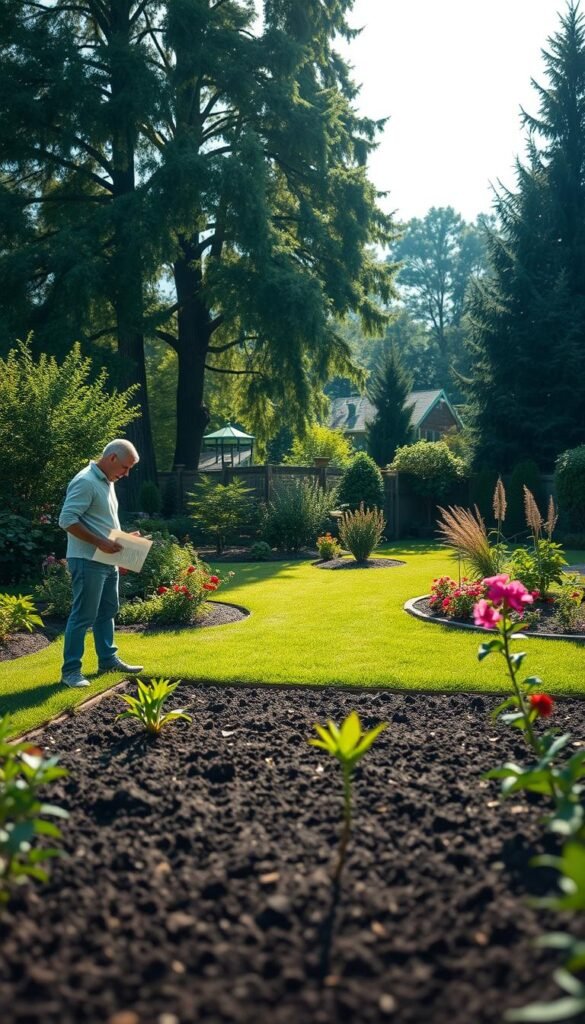
Great outdoor spaces begin with careful observation. Before sketching layouts or choosing plants, you need to understand your property’s unique personality. Think of it as getting to know a new friend – what makes your land special?
Assessing Your Yard’s Attributes
Grab a notebook and walk your space at different times. Notice where sunlight lingers and where shadows dominate. Check soil texture by squeezing a handful – does it crumble or clump? These clues determine what plants will thrive.
Watch how rainwater behaves during storms. Puddles in certain spots reveal drainage needs. Existing trees and slopes aren’t problems – they’re free design features waiting to be highlighted. Document stone paths or weathered fences that could become character elements.
Integrating Hardscape and Natural Elements
Balance is key when mixing built structures with nature. A mossy boulder makes perfect seating beside a curved gravel path. Use this simple table to match materials with your yard’s style:
| Material | Best For | Maintenance |
|---|---|---|
| Flagstone | Rustic areas | Low |
| Poured Concrete | Modern spaces | Medium |
| Wood Chips | Play zones | High |
Remember, good design works with the land’s natural flow. Steep slopes become terraced flower beds. Rocky patches transform into rock gardens. Your yard’s quirks are its greatest assets when you know how to use them.
Defining Garden Zones to Enhance Your Outdoor Space
Your property becomes more useful when divided into intentional spaces that match daily life. Start by listing activities you enjoy – morning coffee spots, kids’ play corners, or vegetable harvesting stations. Each zone should solve specific needs while complementing neighboring areas.
Match Spaces to Daily Activities
Designate areas based on how you actually use your yard. A sunny patio works for meals, while shaded nooks suit reading. Keep noisy play zones away from quiet meditation spots. Pro tip: Sketch rough circles on paper showing desired locations before measuring.
Consider seasonal changes too. Position fire pits where winter winds won’t blast guests. Place rain gardens where spring puddles form naturally. “Your land already shows you where things belong,” notes master gardener Linda Whitmore. Work with these clues rather than against them.
Let Nature Draw the Lines
Existing trees make perfect room dividers. A sloping hill becomes seating terraces. That perpetually damp corner? Ideal for moisture-loving plants. Use this simple guide:
- Sun-baked areas: Herb gardens or stone patios
- Shady spots: Fern displays or cool retreats
- Rocky terrain: Succulent beds or gravel pathways
This approach reduces construction while boosting eco-friendliness. You’ll spend less fighting the land’s natural flow and more enjoying your personalized oasis.
Choosing and Installing Pathways in Your Garden
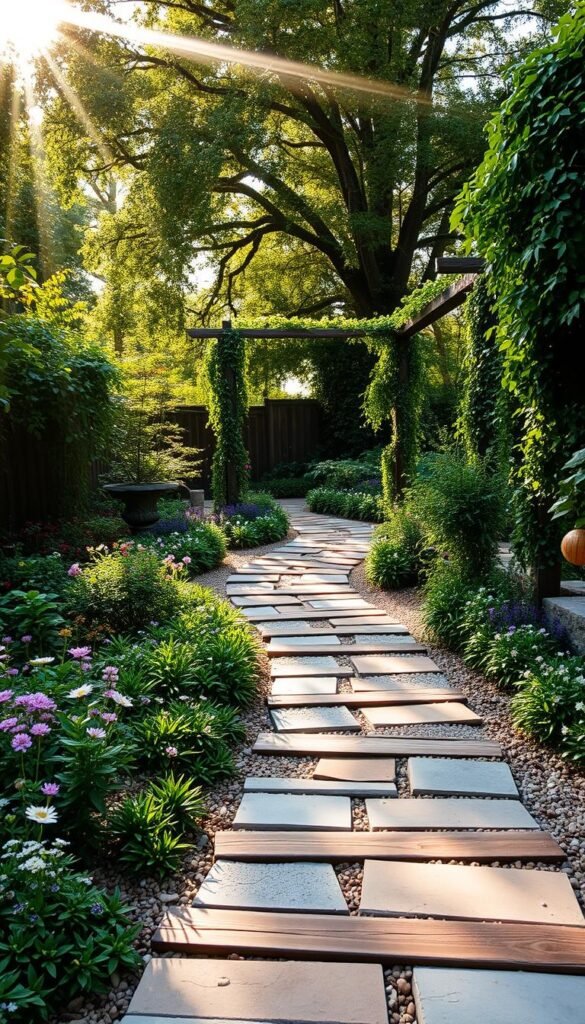
Paths do more than connect points A and B—they shape how you experience your outdoor space. The right walkway materials and layout turn functional routes into design statements that withstand daily use. Start by asking: Will this path handle strollers and wheelbarrows, or is it a quiet route for evening strolls?
Selecting Materials and Styles
Match path surfaces to their purpose and your home’s character. Sturdy stone or concrete works best for main routes near entryways, while gravel adds crunch to cottage gardens. Consider this comparison:
| Material | Best Use | Maintenance |
|---|---|---|
| Flagstone | High-traffic areas | Low |
| Stamped Concrete | Modern designs | Medium |
| Wood Chips | Play zones | High |
| Crushed Granite | Casual walkways | Medium |
Curved paths using irregular stones feel natural, while straight brick lines suit formal spaces. Pro tip: Test materials by walking on samples—rough textures prevent slips, smooth surfaces simplify snow removal.
Considering Traffic and Safety Measures
Wider paths (36-48 inches) accommodate two people walking side by side, while 18-inch trails work for solo adventures. Add solar lights along frequently used routes and edging to keep gravel in place. For slopes, install handrails and choose materials like scored concrete that grip shoes.
Drainage matters too. Slope paths slightly away from buildings, and use permeable bases under gravel to prevent puddles. Remember: A well-planned path lasts decades with minimal upkeep, letting you focus on enjoying your garden’s beauty.
Structuring Your Landscape with Defined Garden Zones and Pathways
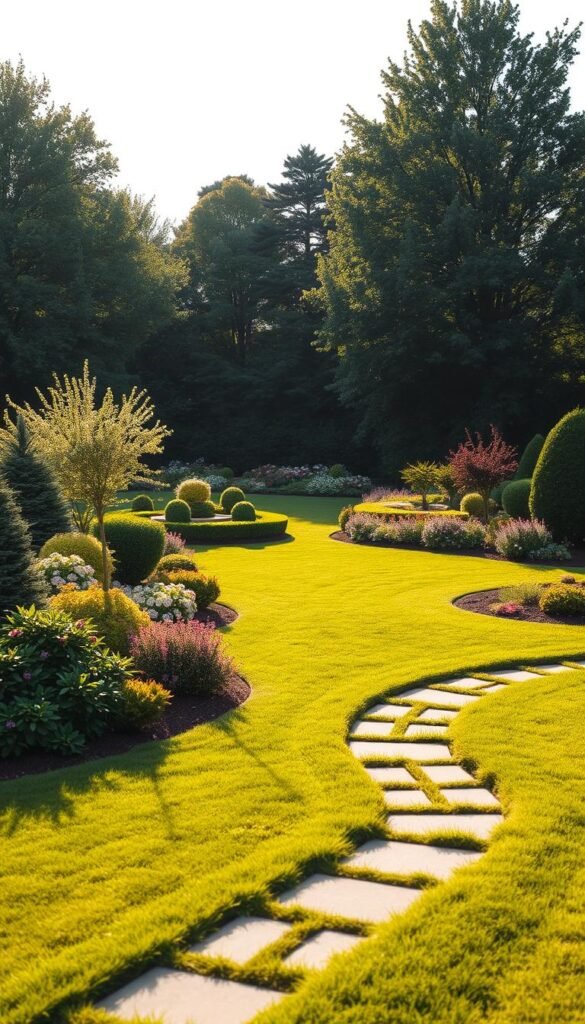
Great landscape layouts work like well-choreographed dances – every element moves in harmony. Start by sketching your space using the 1:10 scale rule (1 inch = 10 feet) to visualize proportions. This technique helps avoid overcrowding while ensuring features like seating walls or water elements fit naturally.
Key Principles Behind Effective Layouts
Path shapes act as visual magic tricks. Straight routes lend formal elegance but can make narrow spaces feel longer. Curved walkways solve this by creating playful discovery zones. Pro tip: Use circular paths around specimen trees to highlight their grandeur while improving traffic flow.
Consider these design impacts:
- Zigzag stone trails make small yards appear 20% larger
- Winding gravel paths reduce perceived noise from nearby streets
- Angled stepping stones direct attention to focal points
Real-World Examples and Inspiration
English country estates showcase structured layouts with boxwood-lined brick paths leading to rose arbors. For modern twists, try these combinations:
| Style | Path Material | Border Feature |
|---|---|---|
| Cottage | Irregular flagstone | Lavender hedges |
| Contemporary | Stamped concrete | Linear water channels |
| Woodland | Bark mulch | Fern clusters |
Landscape designer Mara Sanchez suggests: “End each path with a reward – a cozy bench under a maple tree or ceramic pots bursting with color.” This approach turns functional routes into engaging journeys that invite exploration.
Incorporating Hardscape and Natural Elements
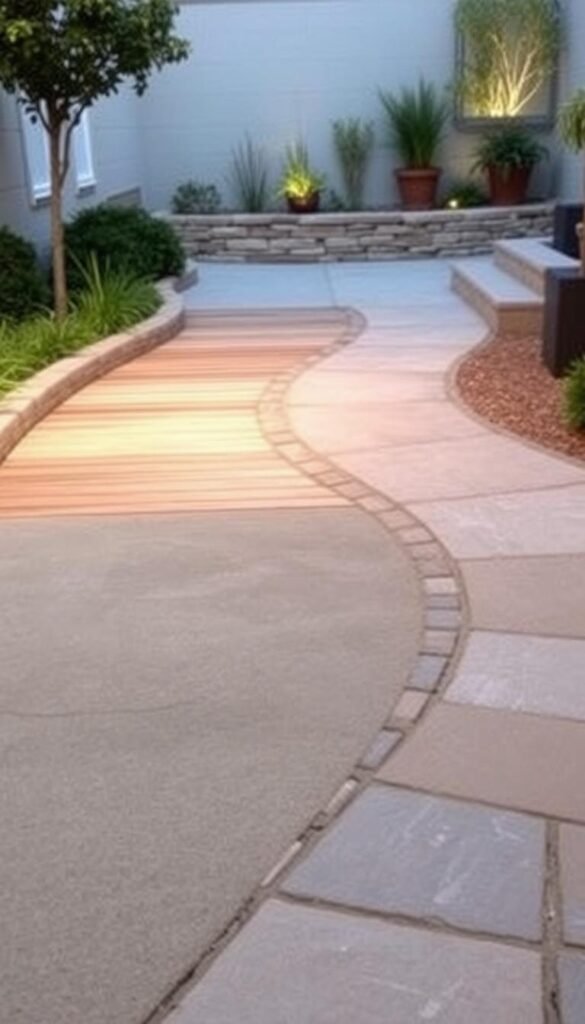
Blending different textures creates visual harmony while serving practical needs. The magic happens when stone meets organic materials, forming transitions that guide visitors through your space. Material combinations do more than look pretty—they define boundaries and reduce maintenance through smart design choices.
Mixing Stone, Mulch, and Other Materials
Try pairing pavers with gravel for main pathways—the stone provides stability, while pebbles add drainage. Stepping stones nestled in bark mulch create woodland charm. For playful flair, alternate concrete squares with creeping thyme in checkerboard patterns. These fragrant plants thrive underfoot while softening edges.
| Material Combination | Best Use | Maintenance Level |
|---|---|---|
| Paver & Gravel | Main pathways | Low |
| Stepping Stones & Bark | Woodland trails | Medium |
| Brick & Grass | Casual borders | High |
Edging matters as much as surface materials. Metal strips keep gravel contained, while brick borders add rustic charm. “Your edging should whisper boundaries, not shout them,” advises designer Elena Martinez. Use contrasting colors to make paths pop—dark basalt against light mulch works beautifully.
Balance permanent hardscape features with temporary organic elements. Stone benches anchor seating areas, while seasonal mulch refreshes planting beds. For DIY garden art integrations, place ceramic sculptures where materials change to highlight transitions.
Water elements enhance material pairings naturally. A pebble-lined stream complements flagstone stepping pads. Always match drainage needs—permeable bases under gravel prevent puddles near patios. Test combinations in small areas first to ensure they weather your local climate gracefully.
Using Planting and Color to Define Spaces
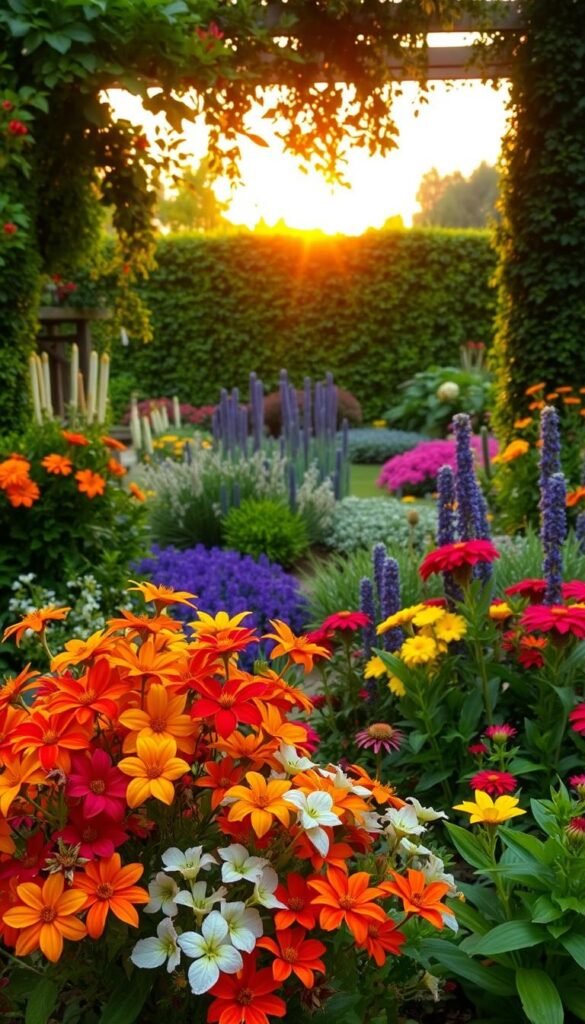
Plants become your paintbrush when shaping outdoor rooms. Strategic placement of foliage and blooms guides movement while adding personality to each zone. The right combinations turn functional borders into living art that evolves through seasons.
Smart Plant Selection Strategies
Choose plants that work smarter, not harder. Durable perennials like lavender and hosta return yearly with minimal fuss. For instant color, pair them with annuals like sweet alyssum that bloom all summer. This table helps match plants to your needs:
| Plant Type | Best Use | Care Level |
|---|---|---|
| Boxwood | Formal edges | Low |
| Creeping Phlox | Rocky slopes | Medium |
| Lamb’s Ear | Soft textures | Low |
| Dwarf Zinnia | Color pops | High |
Fragrant choices like rosemary do double duty – they smell amazing and deter pests. Multi-season stars like sedges keep interest year-round with evergreen foliage and winter seed heads.
Color and Texture Playbook
Combine bold hues and varied surfaces for maximum impact. Try purple salvia spikes against silver artemisia leaves. Pro tip: Use warm colors (reds, oranges) near seating areas to energize, cool tones (blues, purples) in relaxation zones to calm.
Texture mixing adds depth without clutter. Pair spiky ornamental grasses with velvety lamb’s ear. For shady spots, combine glossy hostas with lacy ferns. “Contrast creates visual drama,” says garden designer Mia Torres. “But repeat leaf shapes in different sizes for harmony.”
Time blooms for nonstop color. Early crocuses give way to summer coneflowers, followed by autumn sedum. This approach keeps pathways framed with interest from spring frost to fall leaves.
Effective Layout Techniques and DIY Planning
Smart planning transforms ordinary yards into personalized retreats. Start by mapping your space—this visual blueprint becomes your roadmap for success. Whether sketching on grid paper or using digital tools, capturing your property’s true dimensions prevents costly mistakes later.
Sketching a Property Map and Base-line Design
Grab a tape measure and plot key features: house edges, trees, and slopes. Free apps like Google Earth offer instant aerial views. Mark sunny vs. shady areas—this affects plant choices and seating spots. Pro tip: Use tracing paper overlays to test different layouts without erasing.
Budget, Timeline, and Project Management Tips
Break projects into phases. Tackle urgent tasks like drainage first. Set a realistic timeline—maybe build paths in spring and plant in fall. Track expenses with a simple spreadsheet. Remember: Quality materials save money long-term.
Pair your design with seasonal garden care routines for year-round beauty. Small steps today create big impacts tomorrow. Your dream yard isn’t a race—it’s a rewarding journey shaped by thoughtful choices.