Imagine stepping into an outdoor space that radiates warmth and energy through carefully curated hues. Whether you’re new to gardening or refining your green thumb, strategic color choices can turn ordinary plots into living masterpieces. This guide reveals how to harness nature’s palette to craft a vibrant retreat that thrives in every season.
Color harmony transforms random plantings into cohesive designs. Pairing bold shades like crimson poppies with softer lavender tones creates visual balance, while textures from herbs like rosemary add depth. For inspiration, explore how cottagecore-inspired layouts blend edibles and ornamentals for sensory appeal.
Light plays a crucial role in how hues pop. Morning sun intensifies yellows, while dusk softens pinks into ethereal glows. Regional natives, such as East Texas coneflowers, offer low-maintenance brilliance. Discover proven combinations that work with your climate, like pairing daffodils’ early-spring cheer with summer hibiscus blooms.
Your garden should evolve with the seasons. Evergreens anchor designs year-round, while self-seeding varieties like poppies ensure effortless charm. By balancing 60% decorative plants with 40% functional herbs, you’ll create spaces that delight and serve practical needs. Ready to paint your paradise?
Embracing a Vibrant Garden Aesthetic
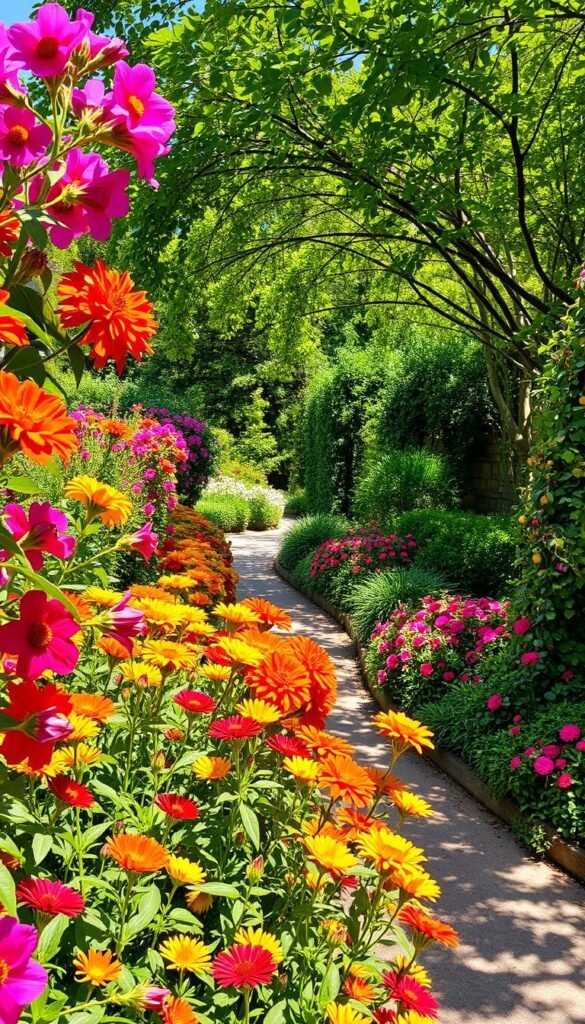
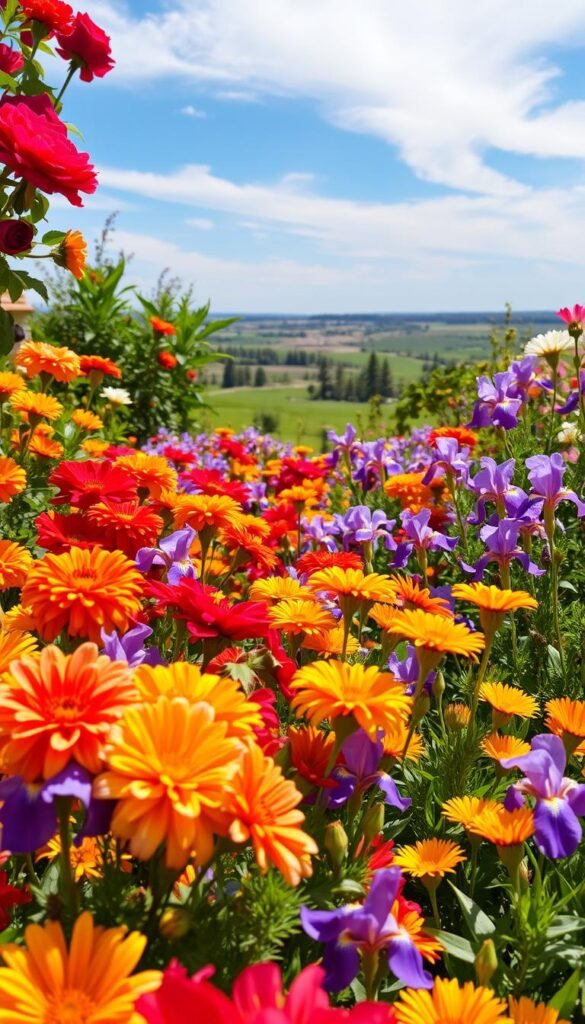
Transform your outdoor area into a lively retreat using nature’s boldest pigments. Deep ruby reds and sunset oranges don’t just catch the eye—they create spaces that buzz with energy. These intense shades naturally pull people toward seating areas and pathways, making your yard feel welcoming.
Professional landscapers often use fiery tones strategically. A cluster of marigolds near a patio or crimson roses along a fence line can guide movement through your space. Bonus? Hummingbirds and butterflies love these shades as much as you do.
Consistency matters when planning your palette. Repeating similar hues in different planters or beds ties separate zones together. Try pairing spiky salvia with round zinnias in matching colors—the contrast in shapes adds interest while keeping the design cohesive.
Don’t forget about leaves and hardscaping. Silver-toned artemisia leaves make purple coneflowers pop, while terracotta pots enhance warm tones. Your space will feel polished when every element works together—from petal shades to stone pathways.
As seasons shift, your living canvas evolves. Spring tulips give way to summer dahlias, then autumn chrysanthemums. By choosing plants with staggered bloom times in your chosen palette, you’ll maintain that vibrant charm from frost melt to first snowfall.
Choosing the Perfect Color Palette for Your Garden
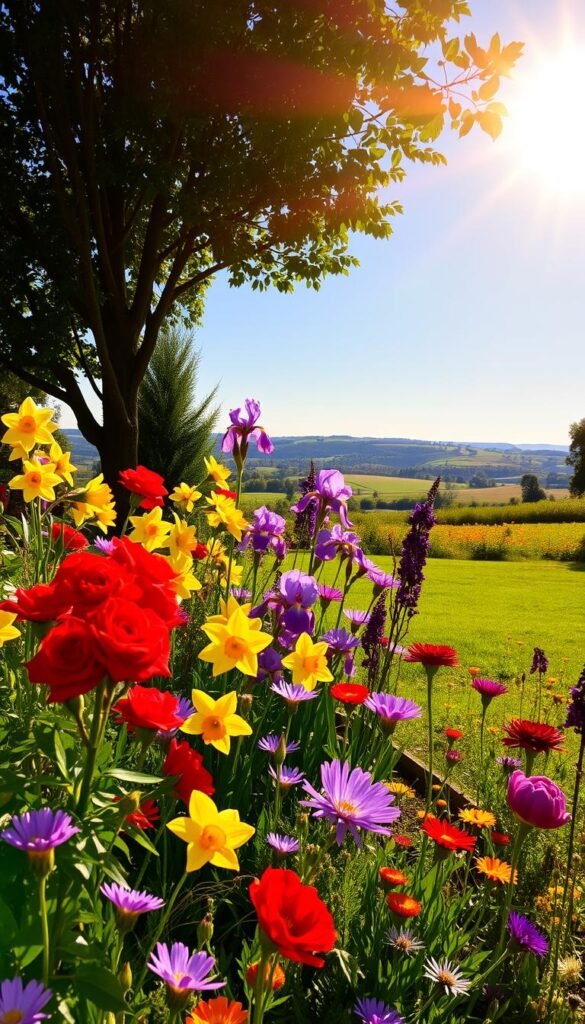
The secret to a stunning outdoor retreat lies in the colors you choose. Like a painter’s toolkit, your plant selection creates moods—from energetic gatherings to peaceful hideaways. Start by observing how light interacts with your space throughout the day.
Understanding Warm and Bold Hues
Fiery reds and golden yellows act like sunshine in plant form. These tones energize seating areas and draw attention to focal points. Marigolds or daylilies near walkways create instant cheer, while deeper rust tones in sedum add autumn warmth.
Mixing and Matching for Harmony
Balance bold choices with softer companions. Pair coral roses with lavender spikes for contrast that doesn’t clash. Cool blues from hydrangeas can temper orange poppies, creating visual equilibrium. Pro tip: Use foliage textures like silvery lamb’s ear to bridge different shades.
| Tone Family | Mood Created | Plant Examples |
|---|---|---|
| Warm (reds/oranges) | Energetic, inviting | Zinnias, marigolds |
| Cool (blues/purples) | Calming, serene | Salvia, lavender |
| Neutral (whites/greens) | Balancing, fresh | Shasta daisies, hostas |
Lighting dramatically shifts color perception. Morning sun intensifies yellows, while twilight softens pinks. For year-round cohesion, select 3-5 core hues that complement your home’s exterior. Explore design principles that help colors work with hardscaping elements like stone paths or wooden fences.
Mediterranean Sunset Inspiration
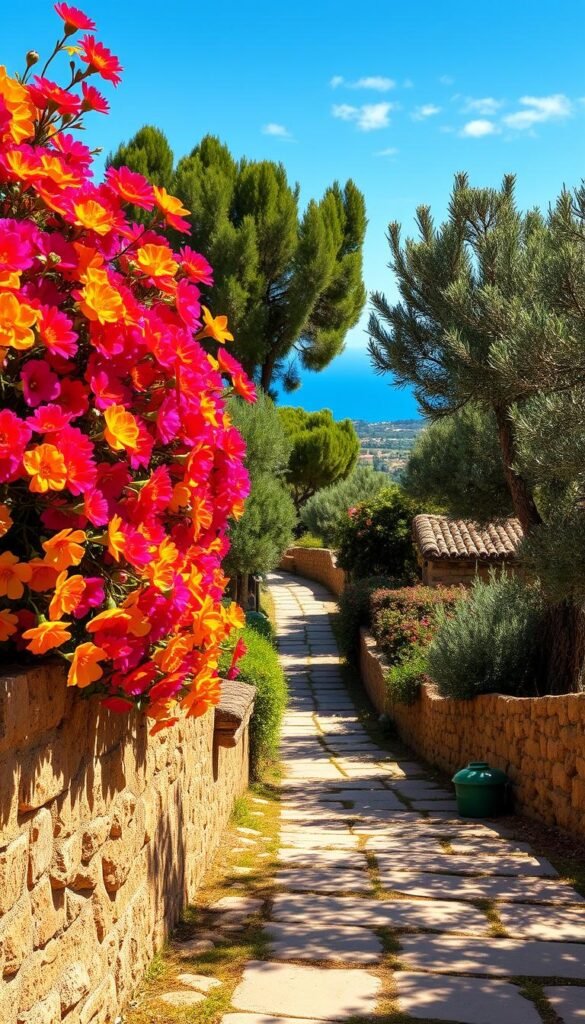
Capture the magic of dusk with a living canvas that mirrors the Mediterranean’s golden hour. This approach blends fiery tones with cooling accents, creating spaces that transition beautifully from day to night.
Key Colors and Their Impact
Rich jewel tones like coral-orange and lilac transform ordinary beds into sunset masterpieces. These hues intensify under evening light, creating a luminous effect as daylight fades. Blue-green foliage acts as nature’s neutral, preventing warm shades from overwhelming the senses.
Try pairing flame-red crocosmia with purple-blue giant hyssop. The contrast mimics twilight skies while attracting pollinators. For authentic Mediterranean-inspired color schemes, add butterscotch yarrow and red-flowering sage.
Planting Techniques from Lauren Dunec Design
Lauren Dunec’s approach emphasizes naturalistic arrangements. “Group plants in irregular clusters,” she suggests, “as if wind-scattered seeds created the layout.” This method works beautifully with drought-tolerant species like lavender and ornamental grasses.
California gardens showcase this style’s practicality. Red-hot poker kniphofia thrives alongside silvery artemisia, combining vibrant beauty with water-wise resilience. The result? A carefree meadow that evolves with the seasons.
Evening gardens shine brightest when using this palette. As twilight deepens, gold-tipped leaves catch lingering rays while purple blooms create depth. It’s like bottling sunset’s fleeting glow – no passport required.
Rich and Earthy Vibes for Timeless Appeal
What if your yard could channel the untamed beauty of open grasslands? Earthy hues like russet and mustard gold create depth that bright shades can’t match. These natural tones mirror weathered barn wood and sunbaked prairies, offering sophistication without flashiness.
Incorporating Prairie-Inspired Tones
Start with perennials that thrive with minimal care. Tickseed’s red-brown petals pair perfectly with feathery switchgrass, while tawny daylilies echo aged terracotta pots. These combinations create visual harmony between your plants and existing structures.
Ornamental grasses add movement to static layouts. Try pairing buff-colored little bluestem with brick-red coneflowers. Their contrasting textures keep eyes moving across the space. Bonus: these species handle drought better than thirsty annuals.
Strategic placement amplifies your palette’s impact. Position dark-centered rudbeckia where afternoon light filters through their petals. This backlighting technique turns simple blooms into glowing accents. For low-maintenance options, consider sedum’s autumnal rust tones or goldenrod’s late-season cheer.
Your earthy color palette matures beautifully over time. As grasses fade to wheat-gold in fall, they complement evergreen shrubs’ deep greens. This evolution means your space stays captivating long after summer’s peak.
Summer in Provence: A French Garden Escape
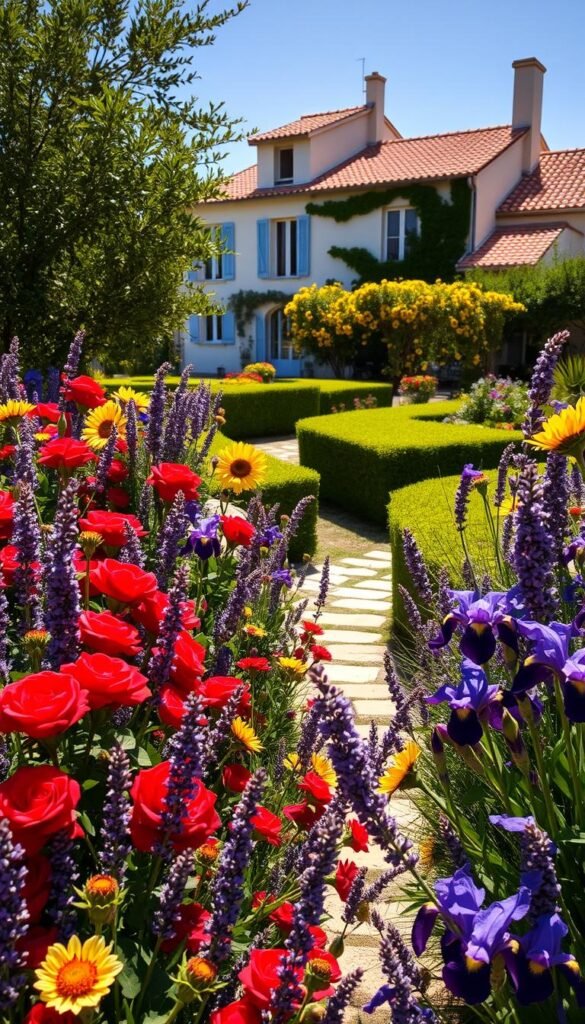
Picture this: rolling hills draped in golden sunlight, where fragrant herbs mingle with jewel-toned blossoms. This iconic French countryside aesthetic thrives through smart color combinations that balance warmth and coolness. Let’s explore how to recreate this timeless charm in your own space.
Essential Flower Combinations
Yellow-gold and purple reign supreme in Provençal designs. These opposites on the color wheel create instant harmony, like sunflowers waltzing with lavender spires. In Oregon’s farmhouse gardens, dark-centered sunflowers anchor beds while petunias spill over edges in violet and lilac hues.
| Flower | Color | Height | Bloom Time |
|---|---|---|---|
| Sunflower | Gold with dark center | Tall (5-8 ft) | Mid-summer |
| Petunia | Deep violet/pale lavender | Low (6-12 in) | Spring to frost |
| Hollyhock | Pastel shades | Medium (4-6 ft) | Early summer |
Add vertical interest with airy hollyhocks in blush tones. Their soft petals catch twilight’s glow, enhancing your garden’s evening magic. For fragrance, interplant lemon-scented herbs like thyme among pollinator-friendly containers of lavender.
Local adaptations keep the look thriving anywhere. Swap sunflowers for black-eyed Susans in humid zones, or use Russian sage instead of lavender in clay soils. The key? Maintain that golden-purple contrast while embracing plants suited to your region.
Designing Your Space with Sun-Kissed Blooms: Backyard Flower Garden Aesthetic with Bright Color Palettes
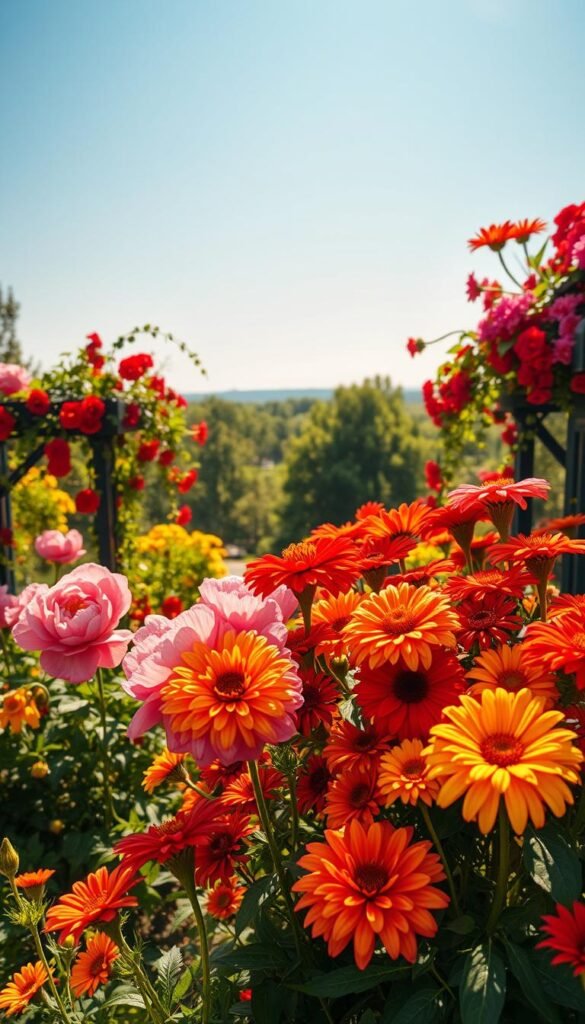
Your outdoor area becomes a living painting when colors collaborate. Strategic placement turns fiery reds and mellow yellows into visual conversations that energize without overwhelming. Let’s explore techniques professional designers use to craft spaces that feel both lively and harmonious.
How to Mix Vibrant Colors Effectively
Warm tones like tangerine daylilies demand attention, while cool lavender adds calm. Separate these opposites with neutral buffers—silver sage or white alyssum work wonders. This prevents eye fatigue and lets each shade shine.
| Cluster Size | Color Combination | Visual Effect |
|---|---|---|
| 3 plants | Red + yellow + purple | Dynamic energy |
| 5 plants | Pink + blue + white | Serene flow |
| 7 plants | Orange + violet + green | Balanced contrast |
Odd-numbered groupings feel organic. Try five coral roses flanked by three blue salvias. The asymmetry tricks the eye into seeing intentional wildness—nature’s signature style.
Creating an Inviting Layout
Place your boldest specimens where eyes land first—near seating areas or gateways. Softer hues then lead visitors through winding paths. This choreography makes small yards feel expansive.
Consider sightlines from house windows. Low-growing purple verbena looks stunning from above, while tall sunflowers frame distant views. Rotate seasonal stars to maintain interest—spring tulips swap places with autumn mums.
Texture plays silent partner to color. Feathery grasses offset glossy magnolia leaves, adding depth. Repeat key tones in different materials: terracotta pots echo rust-colored blooms, tying everything together.
Fresh Flower Bed Ideas for a Dynamic Outdoor Space
Revitalize your landscape with creative beds that balance soft hues and lively textures. Whether you prefer curated arrangements or free-flowing wildscapes, smart plant choices transform ordinary plots into captivating displays.
Pastel Perfection Meets Bold Blooms
Soft pinks and lavenders create serene focal points. Pair pale roses with silvery sage leaves for subtle contrast. Add punches of energy using sunset-orange dahlias at bed edges—their bold forms draw eyes without overwhelming delicate neighbors.
For continuous interest, layer heights. Place low-growing alyssum in front of medium-height daisies, backed by tall foxgloves. This tiered approach maximizes visual impact in compact spaces. New to planting? Try easy-to-grow options like zinnias that thrive in most soils.
Wildflower and Pollinator-Friendly Options
Meadow-inspired beds buzz with life when filled with native species. Scatter poppy and lupine seeds for carefree charm—their loose forms mimic nature’s artistry. Include milkweed and coneflowers to nourish butterflies through summer.
Cluster plants in odd numbers for organic appeal. Three black-eyed Susans beside five purple asters create rhythm. Leave some seed heads standing in fall—birds will thank you while adding winter texture.
Your outdoor space becomes a living tapestry when mixing structured beds with wilder elements. Experiment with color pairings, and watch your yard transform through the seasons.