Imagine stepping into your backyard and hearing the gentle ripple of flowing currents. Outdoor spaces come alive when artful elements blend with nature. Water features act as living sculptures, merging beauty with purpose. They turn ordinary yards into retreats where sights and sounds work together to soothe the mind.
From bubbling fountains to winding streams, these additions create focal points that anchor your landscape. You’ll learn how even small installations—like a tucked-away fountain or minimalist pond—can redefine your property’s character. The trickle of liquid becomes a backdrop for relaxation, while movement adds energy to quiet corners.
In regions like the Pacific Northwest, mild weather lets you install designs year-round. Whether aiming for grandeur or subtlety, options adapt to your space. Discover how to elevate your space using materials that match existing décor, from sleek stone to rustic wood.
Beyond aesthetics, flowing elements offer therapeutic benefits. Studies show their sounds reduce stress, turning gardens into sanctuaries. We’ll guide you through choosing the right type for your lifestyle—proving luxury isn’t required to craft a personal oasis.
Understanding the Value of Water Features in Your Garden
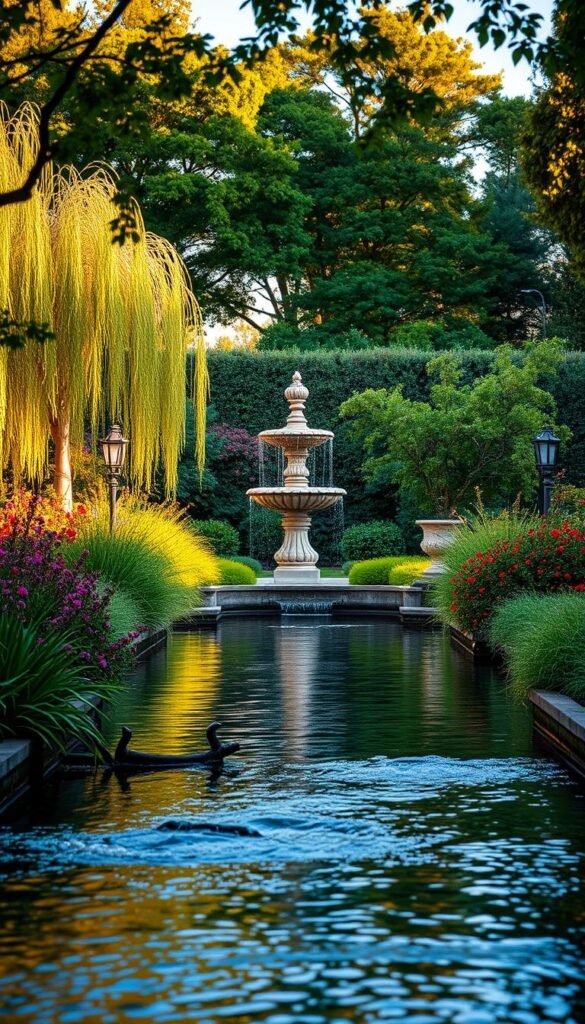
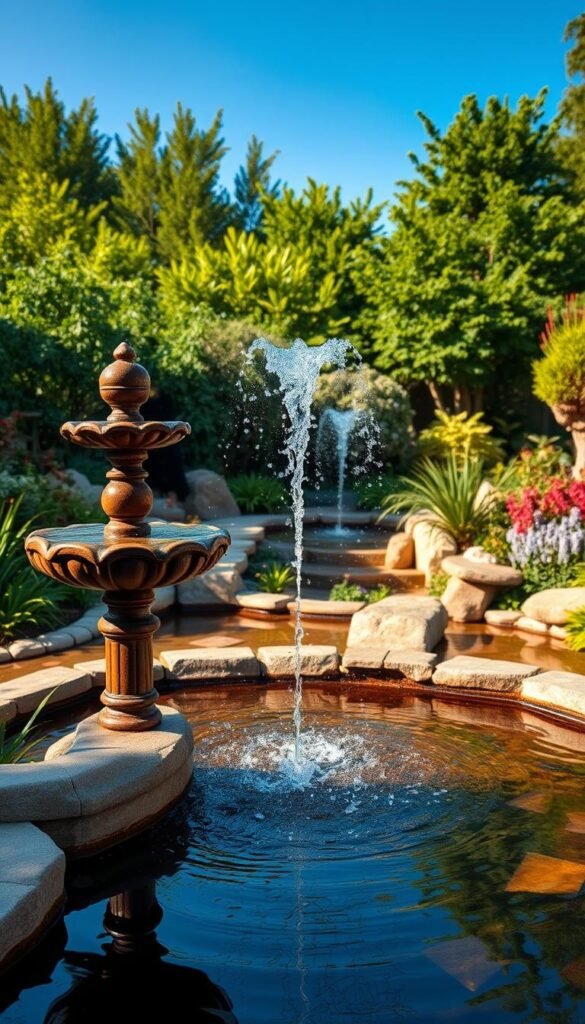
Liquid elements aren’t just decorative—they breathe life into outdoor spaces. Their gentle sounds mask traffic hum or chatty neighbors, wrapping your yard in natural white noise. This creates a peaceful backdrop where stress fades, and calm takes over.
How Water Enhances Outdoor Ambiance
Moving currents add motion to your landscape, reflecting sunlight and doubling the beauty of flowers or skies. Even small installations, like a trickling fountain, create microclimates. Cooler air and added humidity make summer days feel refreshing.
Wildlife thrives near these elements. Birds splash in shallow basins, while dragonflies dart above surfaces. Your space becomes a habitat, blending aesthetics with ecological benefits.
The Role of Natural Sounds and Visual Appeal
The rhythm of flowing liquid isn’t just soothing—it’s transformative. Studies show it lowers cortisol levels, helping you unwind. Pair this with sparkling reflections at dusk, and you’ve crafted a sensory retreat.
For evening charm, consider pairing flowing elements with soft lighting. Discover how to merge these ideas in your magical evening garden. It’s about designing moments, not just spaces.
Exploring Popular Water Feature Designs
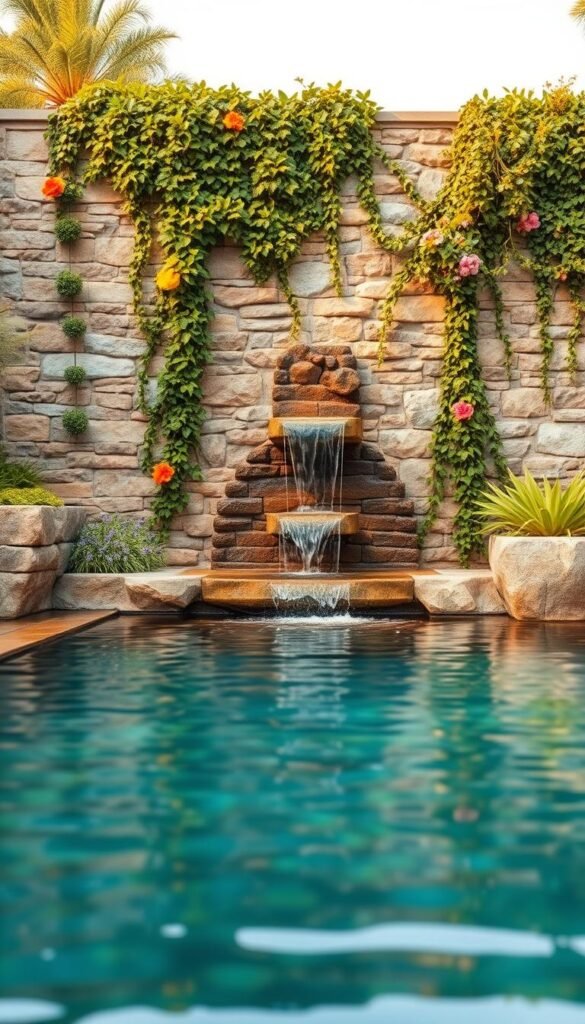
Your outdoor area gains instant character when you introduce flowing elements that match your style. Two standout options—natural pools and wall fountains—offer distinct advantages for different needs. Let’s see how these choices balance practicality with visual charm.
Natural Pools: Flexible & Earth-Friendly
Natural pools blend seamlessly into any yard size. You dig a hole, line it with durable material, and add a pump system. Flexible liners work for curved shapes, while rigid ones last longer. These self-contained ecosystems attract frogs and beneficial insects, reducing mosquito populations naturally.
Maintenance involves checking pumps and skimming debris. Watch for sharp rocks that might puncture liners. Smaller versions fit snugly beside patios, while larger designs become swimming spots.
Wall Fountains: Space-Smart Elegance
Got a narrow balcony or tiny courtyard? Wall fountains mount vertically, saving precious square footage. Many models plug into standard outlets—no complex plumbing needed. Choose from cascading tiers or sleek metal sheets that mimic rainfall.
Adjustable flow controls let you switch between gentle trickles and energetic streams. Hidden basins recycle liquid, making them water-efficient. Just wipe mineral deposits monthly to keep surfaces sparkling.
Innovative Ideas: Container Ponds, Streams, and More
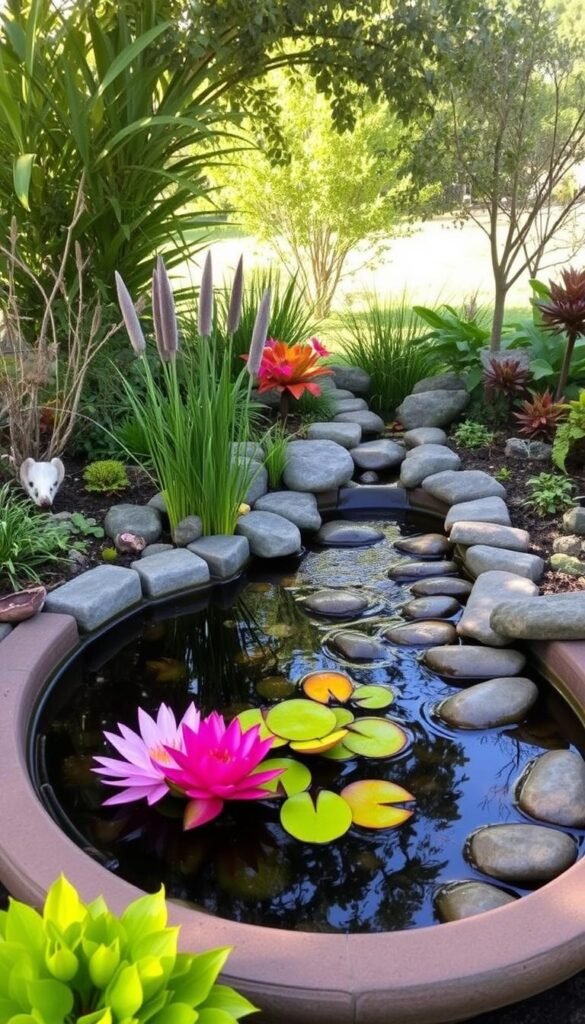
Limited space doesn’t mean you can’t enjoy liquid landscapes. Compact solutions bring movement and life to even the tiniest patios. Let’s dive into clever ways to add liquid charm without heavy construction.
Container Ponds for Small Yards
Turn a glazed pot or halved wine barrel into a thriving aquatic habitat. These mini ecosystems host goldfish and aquatic plants like dwarf water lilies. No digging needed—just place your container, add a small pump, and watch dragonflies visit.
Maintenance gets tricky in tight spaces. Algae grows faster, and debris collects easily. Use a turkey baster to spot-clean. For safety, add mesh covers if kids play nearby. Backyard water feature ideas often highlight these portable setups as starter projects.
Designing Man-Made Streams with Ease
Got room to roam? Streams meander through slopes, connecting ponds to waterfalls. Aim for 15 feet or longer—shorter runs look like ditches. Use flexible liners and hidden pumps to mimic natural flow.
Rocks along edges hide plumbing while creating ripples. Plant moisture-loving grasses nearby to soften banks. Remember: steeper drops mean louder sounds. Balance energy with calm pools where water rests before recirculating.
Design Tips to Enhance the Beauty of Your Water Feature
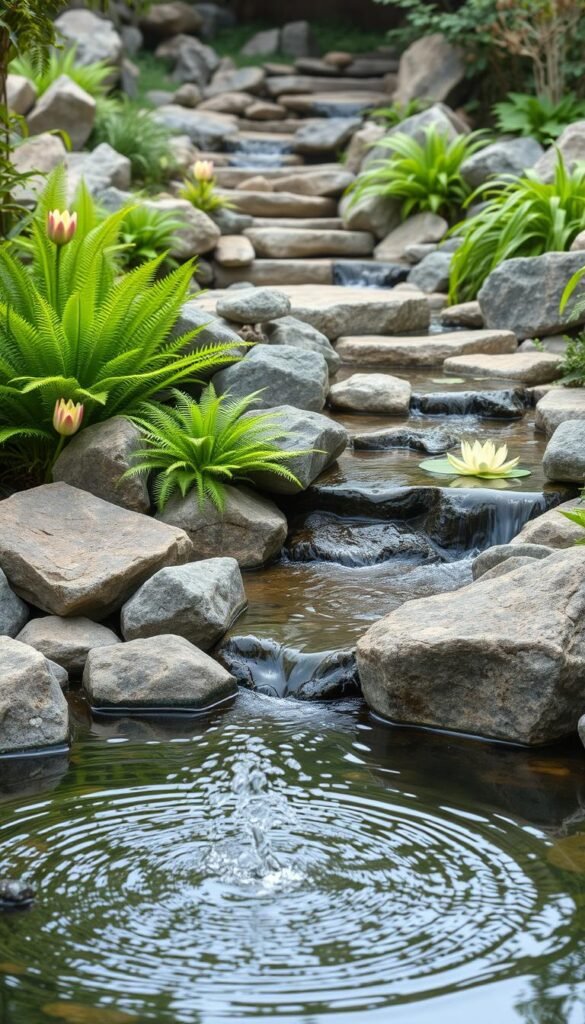
Transform your liquid landscape into a masterpiece by balancing natural elements with smart design choices. Let’s explore how thoughtful details elevate both form and function.
Selecting the Right Rocks and Plant Combinations
Mix large boulders with flat stones to create organic edges around ponds. Avoid cookie-cutter arrangements—nature prefers irregular shapes. Cluster rocks in groups of three or five for visual harmony.
Pair marginal plants like iris or cattails with submerged varieties. These clean the water while adding texture. Surrounding ferns or ornamental grasses soften hard edges, blending your feature into the landscape design.
Integrating Lighting and Sound for Ambience
Submersible LED spots make cascades glow at night. Position lights to cast shadows on textured rocks, creating depth. Solar-powered path markers guide eyes toward your focal point without wiring hassles.
Place features near seating areas to maximize sound benefits. The trickle over stones masks street noise naturally. Remember: elevation matters. Higher locations prevent runoff from muddying your crystal-clear display.
Incorporating The Impact of Water Features in Garden Design: Ponds, Fountains, and Streams
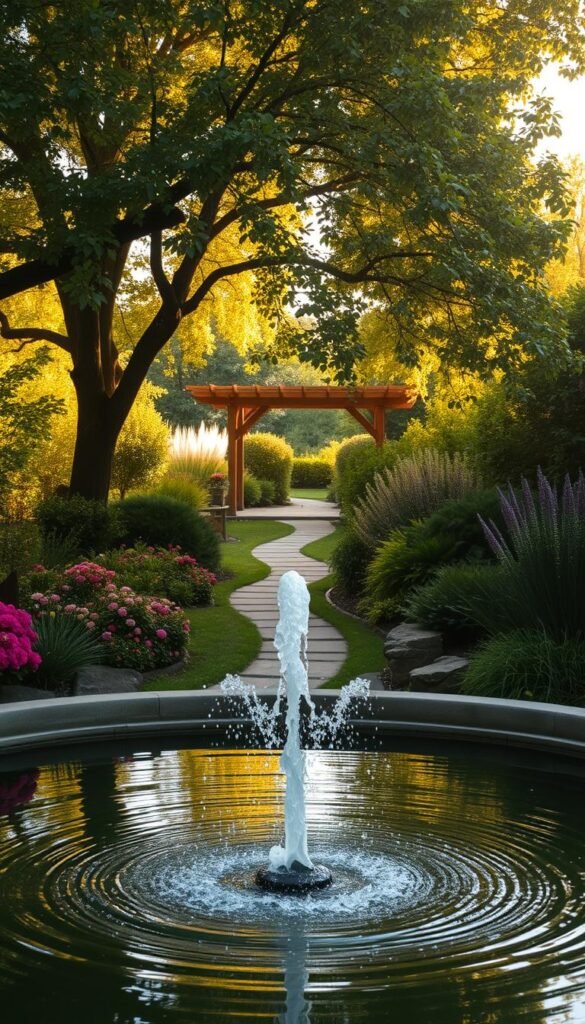
Your backyard can become more than just grass and flowerbeds. Thoughtful placement of flowing elements creates zones that balance activity with tranquility. Picture spaces where laughter mingles with quiet contemplation—all connected by liquid harmony.
Zones That Balance Form and Function
Divide your yard into areas that serve distinct purposes. A bubbling fountain near seating areas invites conversation, while a hidden pond surrounded by ferns offers solitude. These water features act as natural room dividers, guiding movement without walls.
Consider how placement affects microclimates. A stream running through sunny spots cools the air, letting heat-sensitive plants thrive. Homeowners in dry regions use these pockets to grow tropical species like banana trees or hibiscus.
| Benefit | Description | Impact |
|---|---|---|
| Property Value | Professionally installed elements | 5-15% price increase |
| Microclimate Creation | Cooler, humid zones | Expand plant options |
| Mindfulness Support | Soothing soundscapes | Stress reduction |
Even small additions boost curb appeal. Real estate agents note buyers linger longer at homes with landscape design that includes moving water. Maintenance matters—keep pumps clean and surfaces algae-free for lasting beauty.
Your garden’s rhythm emerges through strategic flow. Place a cascading waterfall where paths intersect, drawing visitors deeper into the space. Let quiet corners feature still pools that mirror passing clouds, inviting pause and reflection.
Practical Tips for Maintenance and Aftercare
Keeping your aquatic elements thriving requires simple routines. A little effort preserves their sparkle and function for years. Let’s break down key tasks to protect your investment.
Seasonal Considerations and Winter Care
Weekly checks matter most. Skim leaves and debris to prevent pump clogs. Trim overgrown plants that block flow—this keeps water clean and systems humming.
Winter demands extra attention. In freezing zones, drain shallow setups below 12 inches deep. Insulate pipes with foam sleeves. For fish-friendly ponds, use floating heaters to maintain oxygen.
Don’t forget filter care. Rinse sponges monthly; replace carbon cartridges quarterly. Natural solutions like barley straw help control algae without harming wildlife. Always run pumps—moving liquid deters mosquitoes.
Adjust routines with seasons. Spring calls for pump reactivation and liner checks. Summer needs frequent top-offs. Fall? Net fallen leaves before they sink. Your oasis stays vibrant with smart, timely actions.