Your outdoor space holds endless potential to become a cherished extension of your home. Imagine stepping into a vibrant oasis where every corner invites relaxation and connection with nature. This vision becomes reality through thoughtful planning and creative design choices that blend beauty with purpose.
Many homeowners, like Pennsylvania-based gardener Maria Hasenecz, have turned neglected yards into thriving retreats. Her 1890 farmhouse renovation proves even compact spaces can flourish with layered plants and cozy seating nooks. The secret lies in viewing your garden as a collection of intimate areas rather than one overwhelming plot.
Start by assessing sunlight patterns and soil quality – these determine which greenery thrives best. Pair evergreen shrubs with seasonal blooms for year-round color, and consider low-maintenance options if time is limited. For inspiration on combining practicality with style, explore our guide to elevating your space with a gardening.
The most successful transformations balance functionality with personal expression. Create distinct zones for dining, lounging, and quiet reflection using natural materials like stone pathways or wooden arbors. These elements establish rhythm while maintaining visual harmony across your entire yard.
With strategic plant selection and smart layout decisions, your outdoor area can evolve into a true sanctuary. Let’s explore how to craft spaces that feel like natural extensions of your indoor living areas, where memories grow as freely as your favorite plants.
Welcome to Your Backyard Transformation Journey
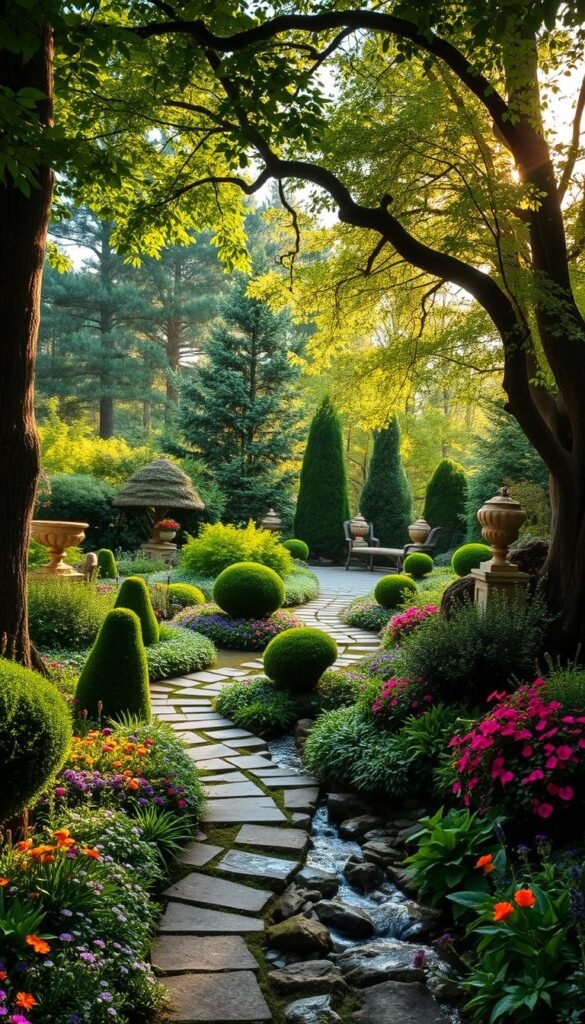
Unlocking your yard’s hidden potential begins with fresh perspective. Whether you’re working with sprawling lawns or compact corners, every space can evolve into a personal sanctuary that nourishes both body and mind.
Discover the Inspiration Behind Your New Retreat
Take cues from Maria Hasenecz’s remarkable makeover. She turned her barren lot into a thriving oasis using native plants and clever zoning. Like her, you can transform overlooked areas into vibrant gathering spots or quiet reflection nooks.
Nature connection isn’t just poetic – it’s science-backed. Studies show spending time among greenery:
- Boosts serotonin levels by 43%
- Reduces cortisol (stress hormone) production
- Improves focus and creativity
Understanding the Benefits of a Lush Outdoor Space
Your garden does more than look pretty. Strategic planting creates natural privacy screens that buffer street noise and prying eyes. Dense shrubs like arborvitae or flowering hydrangeas form living walls that mature beautifully over time.
For those drawn to whimsical charm, blending cottagecore aesthetic elements with functional design creates storybook appeal. Think curved pathways, clustered wildflowers, and weathered benches that invite lingering moments.
Remember: Your outdoor living area becomes what you design it to be – a social hub, meditation zone, or playground for curious paws. Start small, let ideas grow organically, and watch your sanctuary take root.
Essential Elements of Outdoor Design
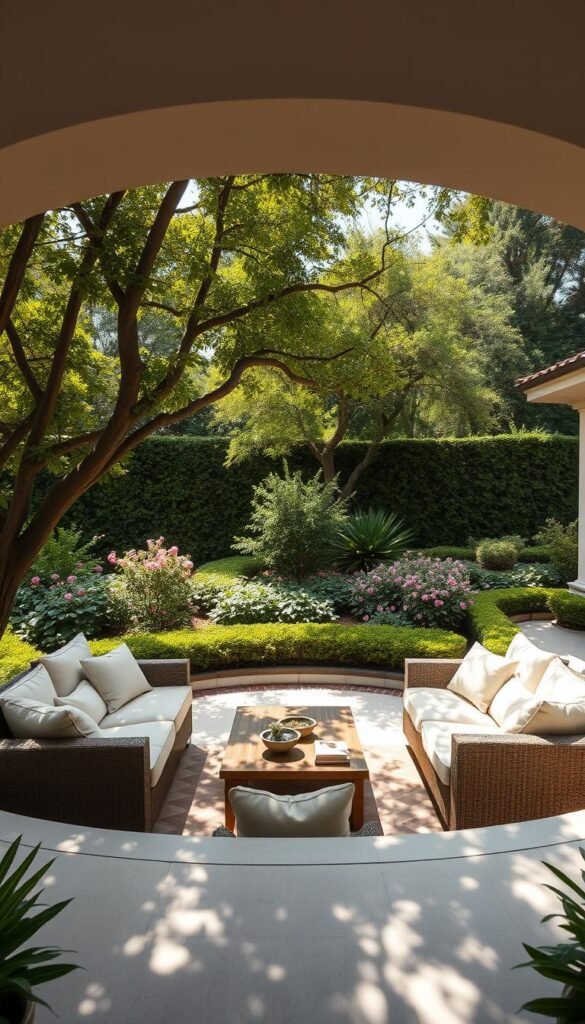
Crafting an inviting outdoor area requires balancing form and function through smart design choices. Let’s explore how curves, seating zones, and natural accents transform ordinary spaces into dynamic retreats.
Curves Create Flow, Seating Defines Purpose
Ditch rigid angles for organic shapes that mirror nature. Curved patio edges blend with slopes, creating smooth transitions between zones. This approach naturally carves out three distinct seating areas:
- A sunlit breakfast nook with bistro chairs
- A shaded lounge with deep-seated cushions
- A central gathering spot around a fire pit
| Design Type | Flow | Functionality | Aesthetic |
|---|---|---|---|
| Straight Lines | Formal | Single use | Structured |
| Gentle Curves | Natural | Multi-use | Relaxed |
Water Adds Movement, Focal Points Anchor Spaces
Strategic water features solve two problems: masking traffic noise and creating visual interest. A repurposed wine-barrel fountain provides gentle acoustics while serving as a centerpiece. Position smaller water elements where they’re visible from primary seating zones – near dining tables or lounge chairs.
Elevation changes enhance privacy without walls. Try these subtle shifts:
- Sunken conversation pits
- Raised planter borders
- Step-down pathways
Transforming a Simple Backyard Garden into a Lush Retreat: Planting and Decor
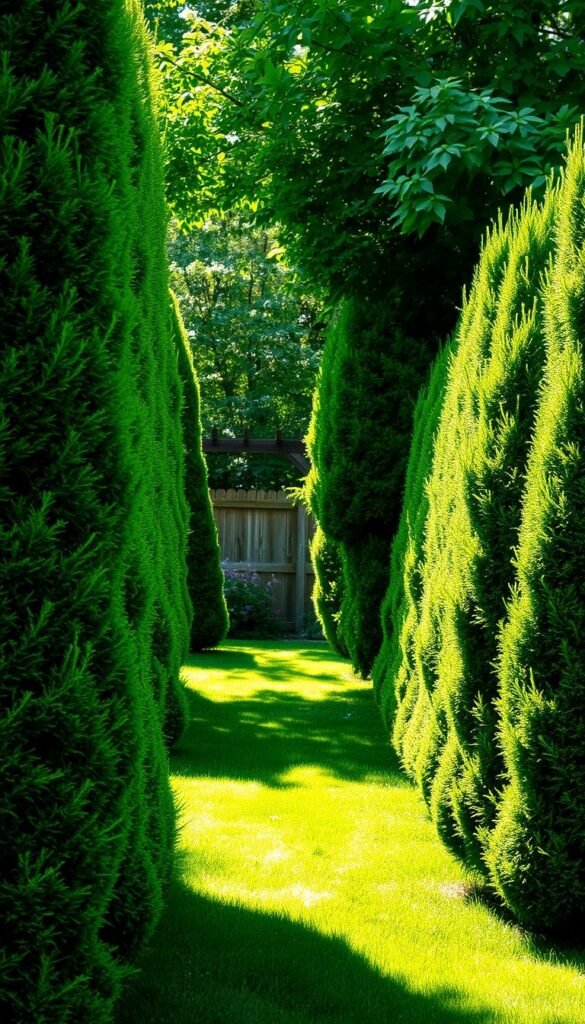
Elevate your outdoor sanctuary using vertical greenery that doubles as living architecture. Tall plantings like Mexican sunflower and ‘Lady in Red’ salvia form organic screens, reaching 2-3 feet to frame seating areas naturally. These botanical walls soften hardscapes while attracting pollinators with their vibrant blooms.
Healthy growth starts below the surface. Test your soil pH and amend it with compost to achieve slightly acidic, well-draining conditions woodland species crave. For gardening success, mix:
- 30% organic matter
- 50% native topsoil
- 20% sand for drainage
Self-seeding annuals like cosmos and poppies offer budget-friendly drama, returning yearly with minimal effort. Their spontaneous growth patterns create dynamic color blocks that feel intentionally wild. Discover more cost-effective planting strategies for lasting impact.
Native shrubs and trees form the backbone of ecologically rich spaces. Serviceberry and redbud varieties support over 40 butterfly species while providing four-season interest. Layer these with ornamental grasses and low-growing perennials to create depth that hides fences and defines pathways.
Remember: Effective planting combines aesthetics with habitat creation. Choose species that feed birds, shelter beneficial insects, and improve soil health through natural decomposition cycles. Your green retreat becomes a thriving ecosystem where beauty and function grow side by side.
Curating Intimate Spaces with Decorative Plantings and Furnishings
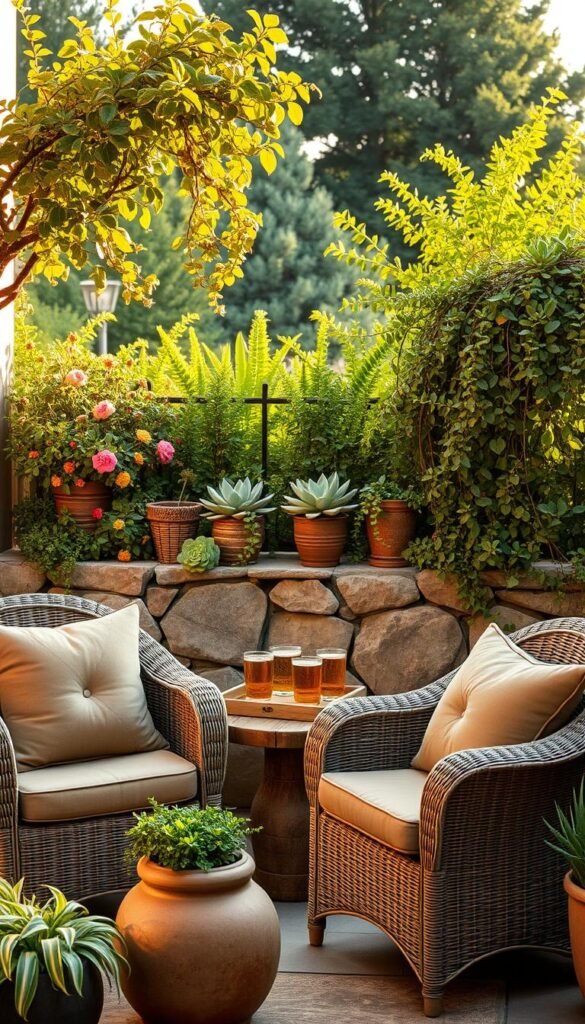
Small corners hold big magic when designed with intention. Picture morning sunlight filtering through cascading sweet potato vines as you sip coffee in your favorite spot – this is the power of purposeful outdoor styling.
Designing Inviting Patios and Cozy Nooks
Transform underused areas into cherished retreats. Two chairs flanking a overflowing planter create instant intimacy near your home’s foundation. Recessed paving in central patio zones forms natural alcoves, perfect for dining areas surrounded by lush greenery.
Choosing the Right Containers and Furniture
Tiered wire containers burst with color when layered with trailing vines and bold blooms. Select weather-resistant furniture that complements your home’s architecture – deep-seated wicker or powder-coated metal chairs invite lingering conversations. Leave 36 inches around tables for easy movement.
Mixing Plants for Visual Impact
Combine textures and hues for showstopping displays. Chartreuse sweet potato vine softens fiery red geraniums, while pink impatiens bridge the color spectrum. Cluster containers near seating zones to frame views and enhance privacy.
Personal touches turn patio spaces into extensions of your indoor room. Add throw pillows matching your interior palette or hang string lights above the dining area. For more patio container gardening strategies, explore our curated tips.
Designing Privacy, Vistas, and Bold Accents for Your Garden
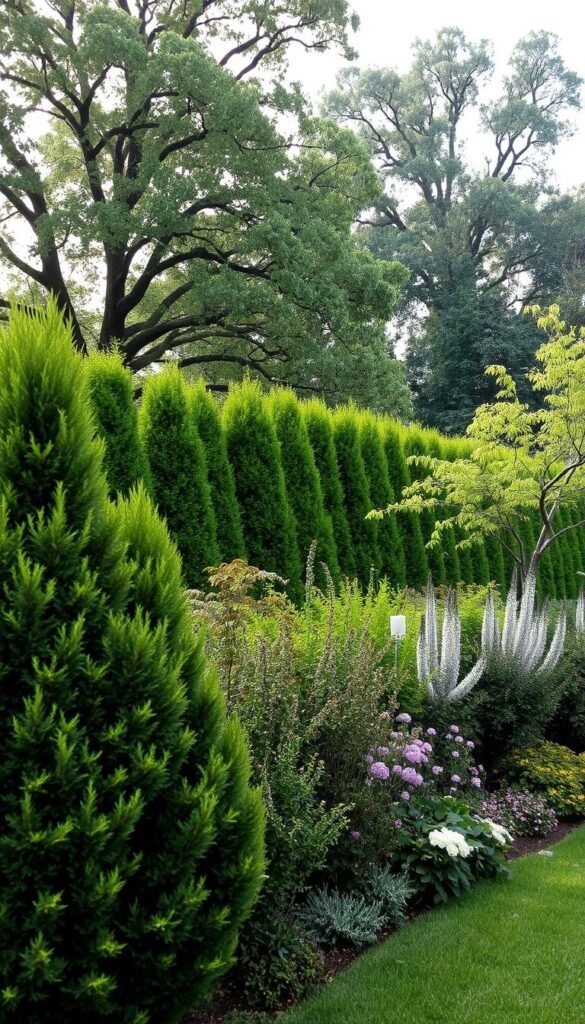
Crafting a private sanctuary starts with smart design choices that balance beauty and seclusion. Strategic plant placement and sensory details turn ordinary spaces into secluded escapes where you control what’s seen – and heard.
Layered Planting Strategies for Year-Round Privacy
Mix evergreen and deciduous trees to create natural screens that adapt through seasons. Leyland cypress forms rapid 8-foot barriers, while flowering cherry trees add spring color. For narrow spaces, columnar arborvitae blocks second-story views without crowding walkways.
| Plant Type | Growth Rate | Mature Height | Best Use |
|---|---|---|---|
| Leyland Cypress | Fast (3’/year) | 40-60’ | Property lines |
| Emerald Arborvitae | Moderate (1’/year) | 12-15’ | Driveway borders |
| Nellie Stevens Holly | Fast (2’/year) | 20-30’ | Noise buffers |
| Kwanzan Cherry | Moderate (1-2’/year) | 25-30’ | Decorative screens |
Rose-covered trellises solve two challenges: blocking neighbor views and adding vertical drama. Pair climbing ‘New Dawn’ roses with purple clematis for nine months of blooms. These living walls work beautifully near backyard patio design inspiration areas where you want visual separation.
Using Color, Light, and Sound to Enhance Ambience
White gardens glow at dusk. Plant snowball hydrangeas along pathways – their blooms reflect moonlight and pathway light. For daytime pop, place crimson bottlebrush plants near seating zones where their spiky flowers attract hummingbirds.
Low-voltage lighting transforms your yard after dark. Aim spotlights upward through Japanese maple canopies to create dappled shadows. Use warm LED string lights above dining areas to maintain cozy privacy while illuminating tabletops.
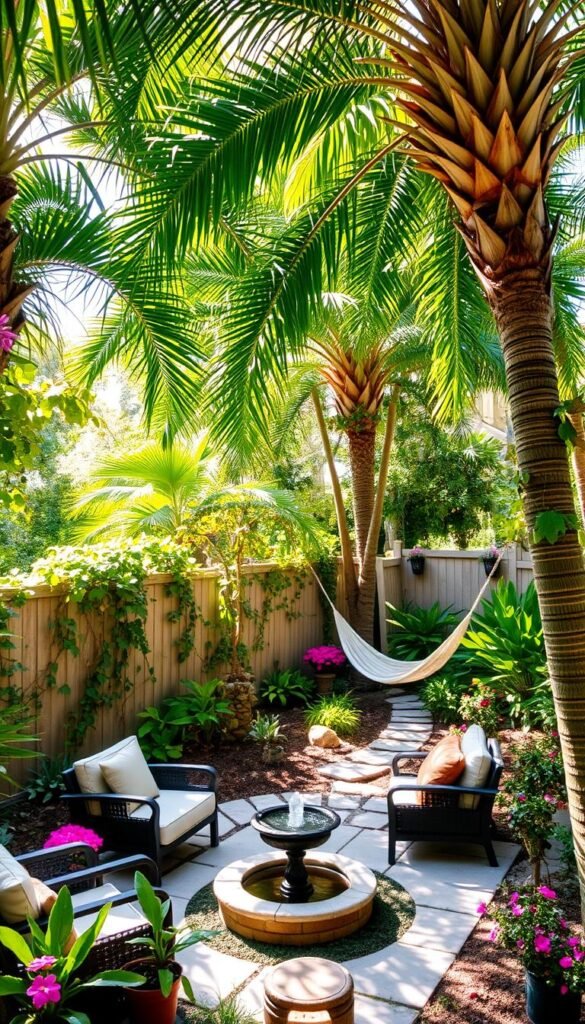
Add subtle soundscapes with trickling water features. A recirculating urn fountain near seating nooks masks street noise while doubling as a focal point. Combine these elements to engage all senses – your retreat becomes an immersive escape.
Incorporating Woodland Elements for a Natural Retreat
Nature’s blueprint offers the perfect foundation for crafting serene outdoor escapes. By blending native trees with thoughtful design, your space becomes a living ecosystem that evolves through seasons. This approach supports local wildlife while reducing maintenance – a win for both you and the environment.
Embracing Native Plants and Sustainable Practices
Start with canopy trees like oak or redbud that shelter smaller plants. Underplant with rhododendron or hydrangea for layered texture. Ground covers such as wild strawberry spread naturally, creating lush carpets that suppress weeds.
Let fallen leaves nourish your garden instead of raking them away. This free mulch protects new plants in winter and enriches soil as it breaks down. Add a birdbath near berry-producing shrubs to welcome feathered visitors seeking food and water.
Rustic Furnishings and Natural Materials
Twig benches or stone slabs make perfect seating beneath maple trees. Arrange Adirondack chairs where dappled light filters through leaves – ideal for morning coffee spots. Repurpose fallen logs as side tables to maintain the woodland vibe.
For year-round interest, mix evergreen ferns with spring-blooming hellebore. Discover budget-friendly approaches to blending function and wild beauty in your design. Your retreat becomes a habitat where birds nest and butterflies thrive, proving thoughtful planning yields lasting rewards.