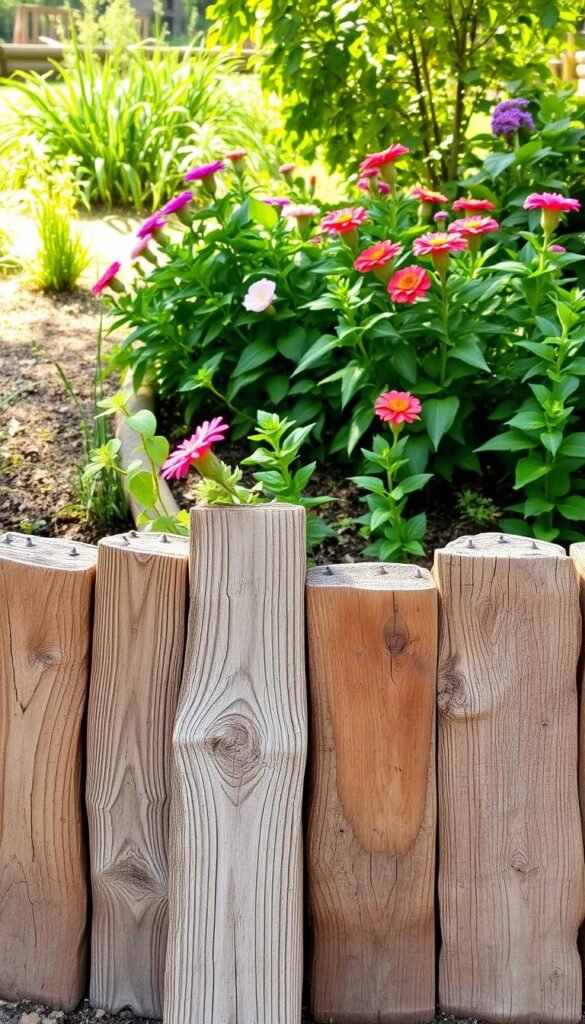
Looking to add character to your landscape without breaking the bank? Repurposing wood from unexpected sources offers a clever way to define planting areas while keeping costs low. Many businesses discard perfectly usable wooden shipping platforms, giving you access to sturdy materials at zero cost.
These versatile pieces can be cut to any size, letting you craft curved or straight boundaries that match your vision. A quick sanding smooths rough edges, while weatherproof sealants help them withstand rain and sun. The result? Charming, functional dividers that keep soil contained and create visual separation between grass and flowerbeds.
What makes this approach special is its dual benefit. You’re not just saving money – you’re keeping usable materials out of landfills. Local shops and warehouses often give away surplus stock, making it simple to start your project immediately. With basic tools and creativity, you can design borders that reflect your personal style while supporting eco-conscious practices.
Beyond the practical benefits, these natural barriers blend seamlessly with outdoor environments. Their earthy textures complement blooming plants better than plastic alternatives, creating a cohesive look that evolves beautifully over time. Ready to explore how simple cuts and arrangements can transform your yard? Let’s dive into techniques that turn overlooked resources into landscape highlights.
Introduction to Sustainable Garden Edging

Transforming your outdoor space starts with smart, earth-friendly choices. Garden edging offers a simple way to shape your landscape while making eco-conscious decisions. It turns messy flower beds into crisp, intentional designs that showcase your plants and reduce maintenance.
Why Repurposed Resources Matter
Every year, millions of tons of usable materials get discarded. By choosing second-life options for your borders, you help shrink this waste stream. One homeowner’s trash becomes your garden’s treasure through creative reuse projects.
Nature-Friendly Advantages You’ll Love
Recycled solutions outperform store-bought alternatives in unexpected ways. They often blend better with plants due to natural weathering, and their irregular shapes add rustic charm. As landscape designer Mara Hoffman notes: “Imperfections in repurposed items create visual interest that mass-produced products lack.”
You’ll also protect your soil. Clear boundaries prevent grass from invading flower beds and keep mulch where it belongs. For creative ways to use recycled materials, explore options like chipped ceramics or salvaged metal. These choices save money while giving your yard a one-of-a-kind look.
Best part? Your project inspires neighbors to rethink their own landscaping habits. Sustainable edges prove that style and environmental care grow hand in hand.
Environmental and Budget Benefits of Recycled Edging

Creating a beautiful yard doesn’t have to drain your wallet or harm the planet. Choosing recycled solutions for your landscape design tackles two challenges at once: trimming expenses and shrinking your environmental footprint. Let’s explore how this smart approach benefits both your finances and the Earth.
Reducing Waste and Lowering Costs
Every time you repurpose discarded items, you’re keeping them out of overflowing landfills. Construction sites and community networks often have surplus supplies they’ll happily give away. This resourceful mindset cuts demand for new products made through energy-heavy processes.
You’ll save significantly compared to buying retail garden edging. Many projects cost nothing beyond basic tools and creativity. For example, creative recycled garden edging ideas transform everyday items into functional art. Even when sourcing materials locally, you’re investing time rather than cash.
Durability often surprises first-time recyclers. Weathered wood or sturdy metal outlasts cheap plastic alternatives. As you experiment, you’ll develop sharper problem-solving skills—seeing potential where others see trash.
Your choice to reuse ripples beyond your property. Neighbors notice how attractive sustainable designs can be, sparking broader change. Pair these eco-friendly borders with budget-friendly raised beds for a cohesive, earth-conscious layout.
Upcycling reclaimed pallets or lumber for garden edges and borders

Transforming discarded resources into functional beauty starts with smart material choices. Whether crafting crisp lines around flower beds or organic curves along pathways, your project’s success depends on selecting safe, durable components that harmonize with nature.
Key Concepts and Material Choices
Always look for the “HT” stamp when sourcing wood platforms. This mark confirms heat treatment instead of chemical preservation. As landscape architect Theo Greenfield advises: “Untreated varieties weather gracefully while maintaining soil safety—critical for edible plant areas.”
Structural integrity matters. Reject pieces with deep cracks or rot, especially for ground-contact applications. A simple screwdriver test reveals soft spots—if the tool sinks easily, keep searching.
| Wood Type | Durability | Best Use | Maintenance |
|---|---|---|---|
| Pallet Planks | 2-5 years | Decorative borders | Annual sealant |
| Cedar | 10-15 years | High-moisture zones | None needed |
| Pressure-Treated Pine | 7-10 years | Structural supports | Avoid edible areas |
Basic tools unlock endless possibilities. A circular saw creates uniform planks, while hand tools preserve rustic charm. Mix widths and textures for visual depth—wider boards make bold statements, thin slats suit delicate plantings.
Your garden edging becomes art when combining multiple material sources. Try alternating smooth planks with rough-cut lumber for tactile contrast. These choices ensure your landscape tells a story of creativity meeting functionality.
DIY Upcycled Garden Edging Projects

Turn everyday materials into eye-catching landscape features with these hands-on techniques. Whether you prefer structured lines or free-flowing shapes, simple transformations can elevate your outdoor space while keeping costs minimal.
Rustic Pallet Wood Designs
Vertical arrangements create crisp divisions between lawn areas and flower beds. Cut planks to matching heights using a handsaw, then secure them with stakes driven into the soil. This method works beautifully for curved paths—just space boards closer on tighter turns.
For durability, rub beeswax mixed with linseed oil onto surfaces. This natural treatment protects against moisture without harmful chemicals. Landscape designer Eli Carter notes: “Rustic textures age gracefully, developing a silvery patina that complements greenery.”
Creative Log and Timber Arrangements
Slice fallen branches into 12-inch segments for charming mini borders. Bury them halfway in staggered rows to form playful barriers around vegetable patches. Larger logs laid horizontally make excellent seating edges along winding walkways.
Mix birch, oak, and maple pieces for visual contrast. Their varied bark patterns add depth to your edging ideas. To prevent shifting, anchor sections with rebar stakes hidden beneath soil level.
Complete your diy projects by tucking creeping thyme or moss between wood elements. These living accents soften edges while attracting pollinators—a perfect blend of function and natural beauty.
Exploring Recycled Materials: Wine Bottles, Tires, and More

Your backyard becomes a canvas for creativity when using unexpected items to shape outdoor spaces. Two standout options combine practicality with artistic flair while keeping waste out of landfills.
Charming Wine Bottle Edges
Transform empty glass bottles into sun-catching borders by burying them neck-down along pathways. This technique creates translucent barriers that sparkle at dawn and dusk. For cohesive designs, use amber or green bottles from one winery. Mix blues and clears for eclectic energy.
Local restaurants often save glass containers for crafters. Soak labels off with warm vinegar water, then rinse thoroughly. Arrange your collection in shallow trenches, packing soil tightly around each piece. The result? A durable border that outlasts plastic alternatives.
Innovative Tire Planter Ideas
Give worn-out tires new life as vibrant plant holders. Paint them cobalt blue or sunflower yellow using outdoor acrylics, then stack two-high for cascading blooms. Drill drainage holes in the bottom before filling with soil and trailing petunias.
Secure round planters by partially burying the base. This prevents rolling during storms while creating depth in your layout. As urban gardener Lila Chen shares: “Painted tires add playful pops of color that make visitors smile before they even see the flowers.”
Combine these edging ideas with stone paths or metal accents for layered textures. Your eco-friendly choices will spark conversations while nurturing both plants and planetary health.
Incorporating Vintage and Natural Elements in Your Design
Your landscape deserves a touch of history blended with rugged charm. Time-tested materials like aged bricks and weathered slate create borders that feel both intentional and organic. These elements bring character to your outdoor space while standing up to decades of use.
Old Brick and Reclaimed Slate Options
Hunt for bricks at demolition sites or neighborhood cleanouts. Their warm hues develop a mellow patina over time, perfect for defining planting zones. Landscape historian Clara Yates observes: “Century-old bricks often outlast modern concrete pavers due to their dense clay composition.”
Arrange stones and tiles in unexpected patterns. Try a zigzag brick layout for playful energy or lay slate pieces vertically like miniature standing stones. This approach turns functional borders into focal points.
| Material | Durability | Sourcing Tips | Maintenance |
|---|---|---|---|
| Clay Bricks | 50+ years | Check local masonry recyclers | Brush debris annually |
| Roof Slate | 30-40 years | Ask roofing contractors | Reset loose pieces |
| Field Stones | Lifetime | Farmland edges | None required |
Mix materials for textural contrast. Pair chunky stones with flat slate tiles along walkways. The varied surfaces catch light differently, creating depth in your border designs.
Clean finds with a stiff brush before installing. Bury bricks halfway for stability, leaving their weathered faces visible. Your look improves with age as moss fills crevices and sun highlights natural variations.
Outdoor Trends in Upcycled Garden Design
Today’s most exciting outdoor spaces blend environmental care with artistic vision. Modern trends focus on personal expression through sustainable choices, letting your garden reflect both style and ecological values. From zen-inspired layouts to cottage charm, these approaches prove eco-conscious design can be stunningly creative.
Minimalist arrangements dominate current preferences. Clean lines of salvaged metal or weathered stone create bold statements without clutter. “Less becomes more when materials have inherent character,” notes Boston-based designer Rachel Torres. This philosophy reduces visual noise while letting natural textures shine.
Mixing eras and materials sparks fresh energy. Combine industrial pipes with terracotta pots, or pair antique gates with geometric concrete planters. For inspiration, explore this vintage gardening makeover guide that blends old-world charm with modern functionality.
| Style | Key Materials | Color Palette | Signature Feature |
|---|---|---|---|
| Zen Minimalism | Recycled slate, bamboo | Neutrals + moss green | Raked gravel patterns |
| Mediterranean Mix | Wine barrel staves, terra cotta | Sunset oranges + sage | Herb spiral centers |
| Eclectic Fusion | Vintage signs, chipped tiles | Jewel tones + rust | Mismatched vertical planters |
Texture plays starring role in 2024’s top trends. Rough-hewn wood beside smooth river rocks adds tactile depth. Sun-bleached fabrics draped over repurposed ladders create breezy focal points. These details photograph beautifully, turning your yard into an Instagram magnet.
Your space becomes a conversation starter when embracing these ideas. As materials age gracefully, they tell stories of resourcefulness—proof that great design respects both aesthetics and Earth’s limits.
Installation and Maintenance Tips for Eco-Friendly Edging
Want your eco-friendly borders to stay crisp for seasons? Proper setup and care make all the difference. A well-planned approach ensures your edge stays functional while keeping its natural charm.
Proper Installation Techniques
Start by outlining your design with stakes and string. This visual guide helps create smooth curves or sharp angles. Dig a trench 3-5 inches deep—this depth prevents frost heave in colder climates.
Check the level as you place materials. Use a carpenter’s tool or smartphone app to confirm even alignment. Backfill gaps with compacted soil to lock pieces in place. Water the area thoroughly to settle the base.
Long-Term Care and Weatherproofing
Inspect your edge each spring and fall. Look for leaning sections or rot in wooden pieces. Apply eco-friendly sealants every two years to protect against moisture damage.
Clear debris from the trench to maintain proper drainage. Add fresh mulch around the soil line to suppress weeds and retain moisture. These simple steps keep your landscape looking polished with minimal effort.
Alternatives to Conventional Garden Borders
Break free from predictable landscape designs with resourceful solutions that redefine outdoor spaces. Modern materials and creative combinations let you craft borders as unique as your plant collection. These options prove functionality and style thrive when you think beyond traditional approaches.
Mixing Materials for Unique Styles
Recycled plastic construction blocks offer surprising versatility for raised beds. Brands like EcoBrick transform discarded containers into interlocking systems that withstand harsh weather. Stack them vertically for tiered herb gardens or arrange horizontally around flowering shrubs.
Cinder blocks bring industrial charm to your bed designs. Paint them muted greens to blend with foliage or bold reds for pop-art energy. Fill hollow centers with trailing succulents or compact strawberries—turning structural elements into planting pockets.
Salvaged corrugated metal adds rugged texture to borders. Cut reclaimed roofing panels into undulating waves along pathways. Their rust-resistant properties ensure longevity while creating striking visual contrast against soft greenery.
Unconventional finds spark true originality. Antique iron gates become trellis-borders for climbing roses. Vintage bed frames outline cutting gardens with whimsical flair. By blending materials, you create layered interest that evolves through seasons.
Your beds become conversation starters when mixing textures and heights. Pair smooth concrete blocks with rough-hewn stones for tactile depth. Remember: secure heavier items with landscape spikes and leave breathing room between different materials. These thoughtful touches ensure your eco-conscious borders stand strong for years.