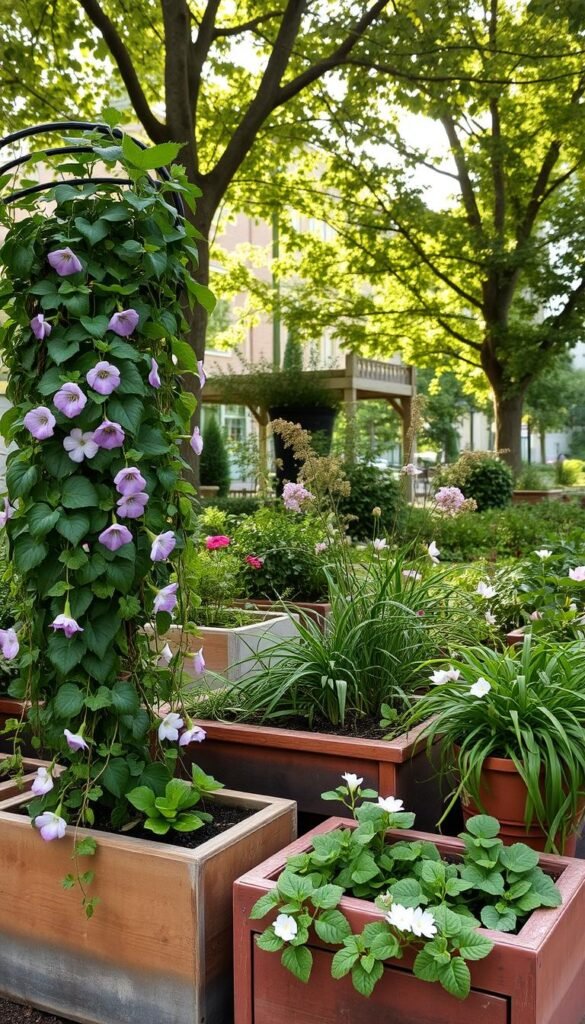
Living in a city doesn’t mean sacrificing your love of greenery. Many people face the challenge of transforming tight areas into thriving outdoor retreats. Whether you’re working with a balcony, patio, or narrow walkway, strategic arrangements can turn even the most compact spots into lively displays of nature.
Container setups provide unmatched flexibility compared to permanent beds. You can shift pots to chase sunlight or create seasonal arrangements without digging. This approach lets you experiment freely while avoiding common issues like poor soil quality or invasive weeds.
Choosing the right greenery makes all the difference. Focus on species that thrive in your local climate and light conditions. Mix textures and heights to add depth, making your area feel larger than it actually is. Proper drainage and soil mixes tailored to each plant’s needs ensure healthy growth year-round.
By thinking vertically and using multi-level stands, you’ll double your planting real estate. Hanging baskets and wall-mounted planters keep floors clear while adding visual interest. These techniques help craft polished, professional-looking displays that adapt as your needs evolve.
Ready to reimagine your outdoor space? This guide walks through every step – from selecting durable containers to arranging eye-catching combinations. Discover how to create borders that balance beauty with practicality, even in the heart of the city.
Understanding Your Space and Garden Design Principles
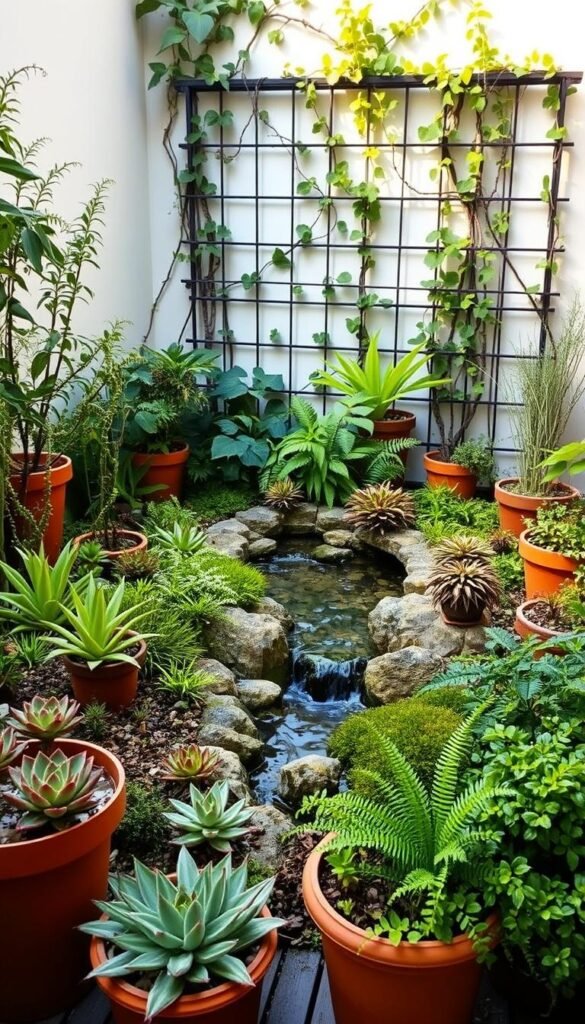
Successful green spaces begin with thoughtful evaluation of your environment. Before choosing plants or pots, map your area’s unique characteristics. Observe how sunlight moves across surfaces and note wind patterns affecting growth. These factors determine which species will thrive in your specific conditions.
Assessing Your Layout and Limitations
Measure every corner, including vertical surfaces. Check weight limits for elevated surfaces like rooftops – safety matters. For balconies, ensure proper drainage to prevent water damage. Pro tip: Use apps like Farmstand to track sunlight hours for smarter container arrangements.
Key Elements for Cohesive Borders
Aim for balance: 50% greenery and 50% walkable surfaces create harmony. Repeat colors or leaf shapes to build rhythm. Tall grasses behind low-growing blooms add depth. Focus on focal points – a vibrant ceramic pot or sculptural plant – to guide the eye through your layout.
Address challenges creatively. Brighten shady spots with variegated hostas. Use air-purifying ivy to combat pollution. With strategic planning, even tricky areas become thriving displays that evolve beautifully through seasons.
Urban small garden borders designed with space-saving container plants
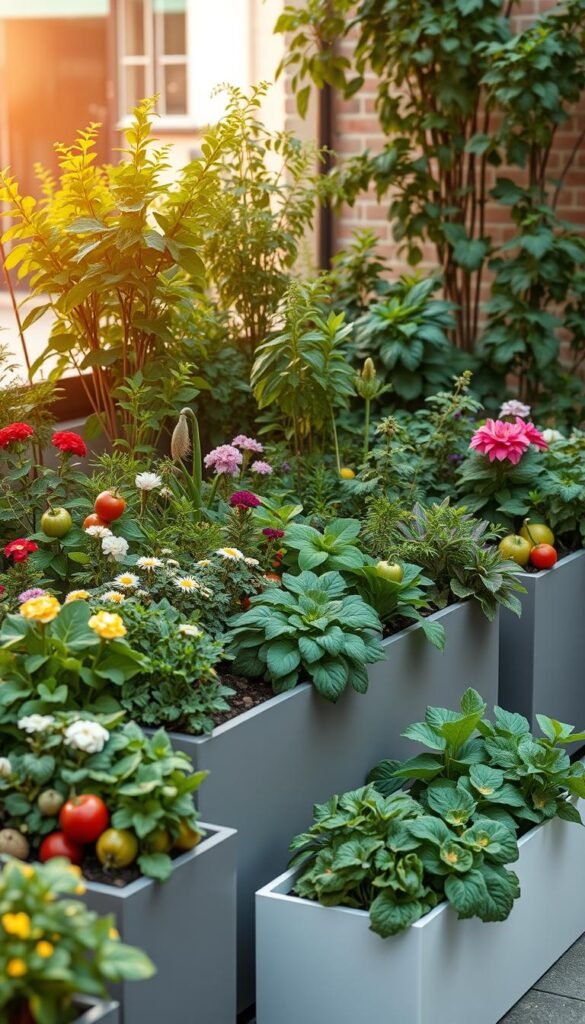
Flexibility reigns supreme when cultivating greenery in metropolitan environments. Containers let you rearrange layouts like puzzle pieces, adapting to shifting sunlight or spontaneous design ideas. This method turns gardening into a creative exercise where mistakes become opportunities to refine your vision.
Benefits of Container Gardening in Urban Settings
Why stick with fixed beds when portable pots let you rework layouts weekly? Group moisture-loving varieties near your watering can for convenience, while drought-tolerant ones bask in sunnier spots. During frost alerts, simply carry delicate specimens indoors—no frantic covering required.
Custom soil blends give finicky plants exactly what they crave. Orchids thrive in bark mixtures, while herbs prefer gritty compost. This precision prevents root rot and nutrient deficiencies, keeping your displays vibrant year-round.
Choosing the Right Containers for Your Space
Material matters more than you think. Lightweight resin works for fire escapes, while terracotta adds rustic charm to patios. Always prioritize drainage holes—roots drown faster than you’d expect.
| Material | Best For | Considerations |
|---|---|---|
| Resin | Rooftops & balconies | Lightweight, fade-resistant |
| Terracotta | Ground-level displays | Breathable, heavy when wet |
| Metal | Modern aesthetics | Heats up quickly in sun |
| Fabric | Root pruning | Requires frequent watering |
Match pot sizes to plant growth rates. Fast-growing mint needs room to spread, while compact succulents prefer snug homes. Rotate containers seasonally—spring tulips make way for summer geraniums without disturbing neighboring roots.
Maximizing Vertical Space and Creative Plant Arrangements
Height becomes your secret weapon when floor room runs short. By growing upward, you create lush layers that trick the eye into seeing expansiveness. This approach works wonders for adding personality to blank walls or narrow corners.
Utilizing Hanging Baskets and Trellises
Transform bare walls into living tapestries with climbing varieties. Jasmine or clematis on trellises soften hard surfaces while saving ground space for other favorites. For quick color bursts, try trailing petunias in hanging planters.
| Vertical Element | Best Plants | Maintenance Level |
|---|---|---|
| Wall planters | Herbs, succulents | Low |
| Freestanding trellis | Passionflower, beans | Moderate |
| Hanging baskets | Fuchsia, ivy | High |
Pair these with tall, slender specimens like bamboo palms. Their narrow profiles add height without hogging precious square footage. As one landscape designer notes: “Vertical gardening turns limitations into design opportunities.”
Layering Plants for Depth and Impact
Create immersive displays using three-tier arrangements. Place creeping thyme at pot bases, mid-height grasses in the middle, and statement trees as backdrops. This mimics natural landscapes in miniature form.
Ficus varieties work beautifully as mobile canopy layers. Their sculptural forms draw attention upward, making areas feel grander. Rotate pots seasonally to maintain visual intrigue at every level.
Selecting the Ideal Container Plants for Your Small Garden
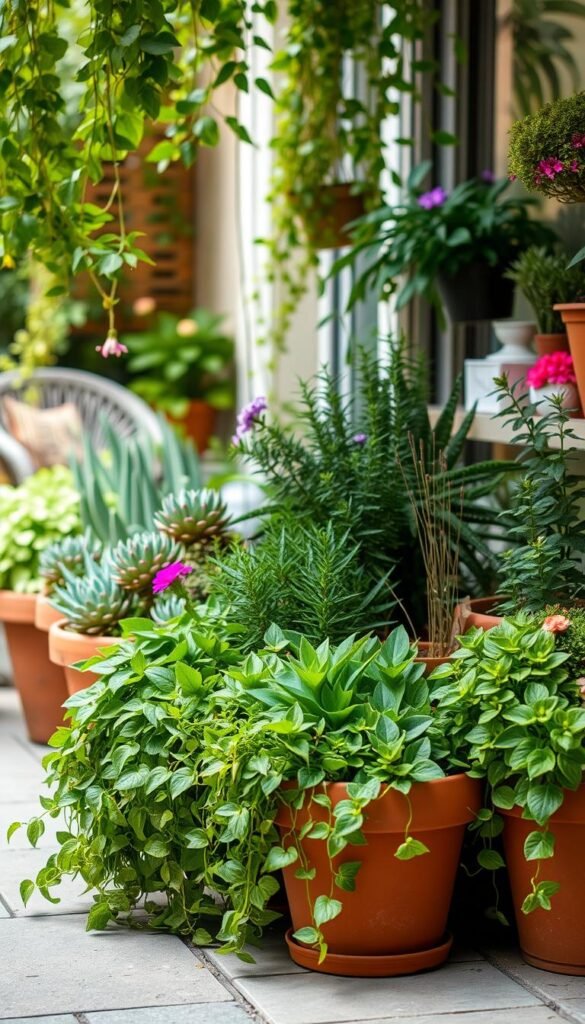
Your compact outdoor space deserves plants that work hard all year. Focus on varieties offering layered interest through flowers, textures, and seasonal transformations. This approach ensures your arrangement stays captivating even when individual specimens aren’t at peak bloom.
Low-Maintenance and Drought-Resistant Options
Start with resilient performers like lavender and sedum. These thrive in sunny spots with minimal watering – perfect for busy urbanites. For shaded corners, try hostas with variegated leaves that brighten dim areas naturally.
Consider these drought-tolerant stars:
- Russian sage: Silvery foliage with purple summer blooms
- Yucca: Sword-like leaves adding architectural drama
- Ornamental grasses: Movement and sound in breezy spots
Mixing Foliage with Seasonal Blooms
Pair evergreens like boxwood with colorful bloomers for year-round structure. Repeat-flowering roses like ‘Lady of Shalott’ deliver punches of color from June through frost. Hardy geraniums spill over container edges with months of delicate flowers.
For multi-season trees, Amelanchier lamarkii shines with:
- Spring blossoms
- Summer berries
- Autumn crimson leaves
Remember: “A well-chosen plant serves three purposes – beauty, function, and habitat,” notes landscape designer Emma Bryant. Rotate seasonal accents while keeping structural plants as your garden’s backbone.
Incorporating Design Elements and Hardscaping
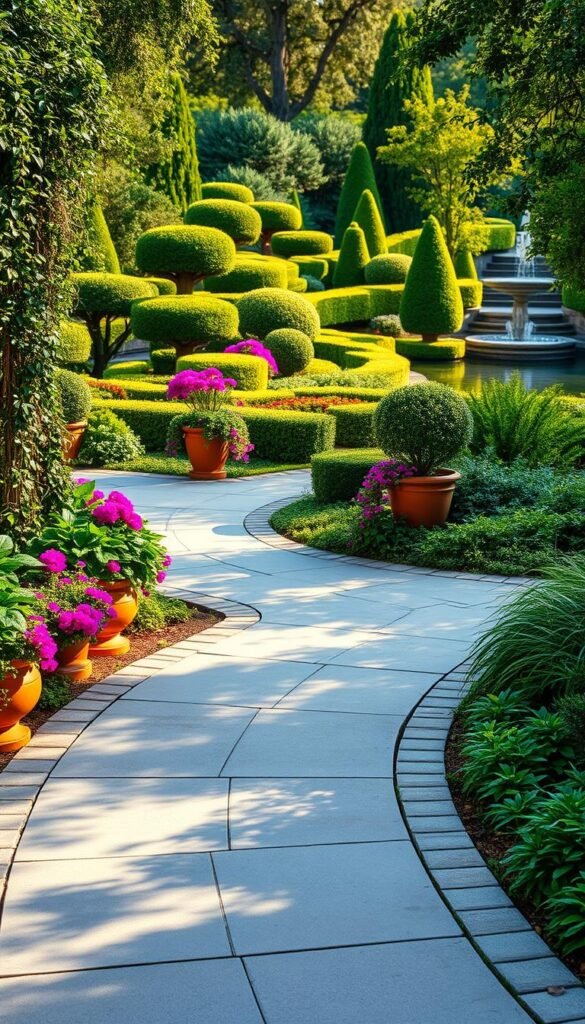
Great outdoor spaces tell stories through their layout. By blending natural forms with intentional design, you craft experiences that feel both planned and spontaneous. This approach works wonders in tight areas where every choice impacts how the space feels as much as how it functions.
Using Curved Paths and Organic Shapes
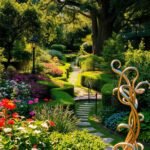
Straight lines often feel rigid in cozy settings. Gentle curves in walkways or planting beds create natural movement, guiding visitors to explore further. Imagine a gravel trail winding between containers – each bend reveals new textures or colors hidden from the starting point.
Circular stone patterns break up boxy patios beautifully. Try arranging pavers in arcs around focal points like dwarf trees. These shapes soften edges and distract from nearby walls or fences. As landscape architect Mia Fernandez notes: “Curves make compact areas feel expansive by delaying full visibility.”
Mix materials for layered interest. Pair smooth river rocks with jagged slate pieces along winding paths. Use low-growing thyme between stepping stones to blur hardscape lines. This technique adds depth while keeping maintenance simple.
For multi-season appeal, frame curved beds with evergreen shrubs. Their rounded forms echo the pathway’s flow year-round. In summer, let trailing lobelia spill over edges to enhance the organic feel. Come fall, swap them for ornamental kale that follows the same soft lines.
Utilizing Space-Saving Techniques for Urban Gardens
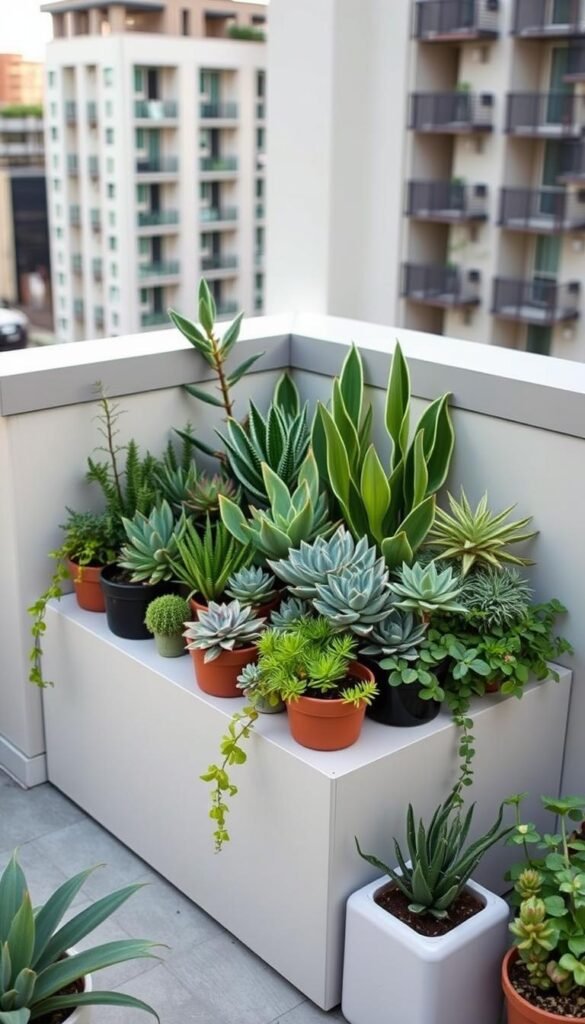
Transforming cramped areas into lush retreats starts with smart arrangement tactics. The secret lies in making grouped planters mimic natural landscapes while conserving every inch.
Mastering Visual Illusions
Combine large, medium, and petite pots to trick the eye. When clustered thoughtfully, these groupings hide their individual boundaries. Try repeating colors or leaf shapes across different-sized vessels to create rhythm.
| Grouping Strategy | Visual Effect | Best Plants |
|---|---|---|
| Triangular clusters | Dynamic energy | Ornamental grasses |
| Linear drifts | Calming flow | Trailing lobelia |
| Circular sweeps | Soft focal points | Dwarf hydrangeas |
Swap scattered small pots for bold statement pieces. A single oversized planter with layered greenery commands attention better than ten tiny ones. Landscape designer Rachel Park advises: “Think of containers as brushstrokes – fewer bold marks create clearer compositions.”
Elevate your staging game with tiered stands. These multi-level systems let you showcase more specimens without crowding floors. Place moisture-loving ferns on lower shelves and sun-seeking succulents up top for practical beauty.
Arrange plant communities that transition smoothly between heights and textures. Let creeping thyme spill into neighboring pots of upright lavender. This seamless flow makes curated displays feel wild yet intentional.
Practical Tips and Innovative Ideas for Your Urban Oasis
Creating an inviting retreat doesn’t require endless funds or hours. Smart choices can elevate your space while respecting your schedule and budget. Let’s explore clever upgrades that deliver maximum impact with minimal effort.
Budget-Friendly Enhancements and DIY Projects
Swap pricey pavers for gravel – it costs less and adds rustic charm to pathways. Solar-powered spotlights ($15-$40) create magical evening ambiance without wiring. Choose warm yellow tones to protect nocturnal wildlife while highlighting your favorite plants make a statement.
Upcycle old crates into vertical herb planters. Line them with landscape fabric, add drainage holes, and stack them against walls. This simple project adds gardening space while recycling materials you already own.
Seasonal Planting Tactics and Ongoing Care
Keep harvests coming with succession planting. Sow quick-growing radishes between slower crops like carrots. Come fall, replace spent annuals with ornamental kale for winter color. A thin mulch layer helps retain moisture and suppresses weeds during hot months.
Rotate potted trees and shrubs yearly to ensure even growth. Prune strategically – removing just 20% of foliage makes a visible difference in plant health. With these timed interventions, your green haven stays vibrant through every season.