
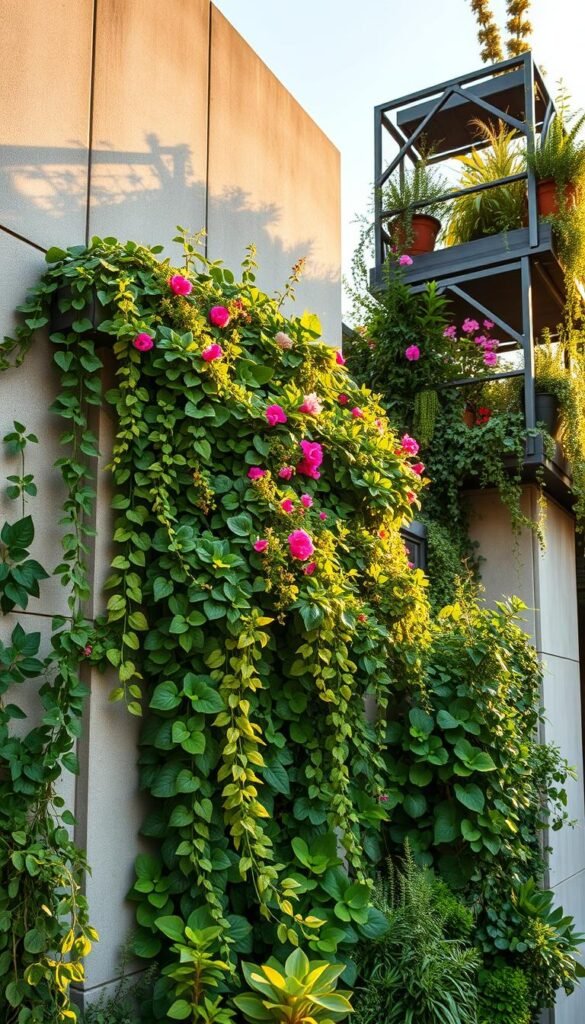
Transform your outdoor space by thinking upward instead of outward. Clever use of vertical structures like trellises, living walls, and tiered planters lets you grow more while making small areas feel spacious. This approach isn’t just practical – it turns bland walls and fences into living art that catches the eye.
Whether you’re working with a cozy balcony or sprawling backyard, these solutions help overcome common challenges. You’ll gain extra room for herbs, flowers, or veggies while creating natural privacy screens. Studies show vertical setups can boost plant health and yields compared to traditional methods.
Discover how different structures serve unique purposes. A simple freestanding trellis supports climbing roses, while modular systems let you cultivate herbs like basil with vertical container gardening hacks. Proper drainage and plant choices make these features thrive year after year.
Beyond beauty, these designs improve air quality and reduce pest issues. They let you experiment with textures and colors in ways flat gardens can’t match. Ready to reimagine your space? Let’s explore how to build greenery that grows upward, not just outward.
Introduction to Vertical Elements in Garden Design

Turn walls and fences into blooming masterpieces with smart vertical solutions. This approach lets you grow herbs, flowers, or veggies while solving common outdoor issues. It’s not just about saving ground space – it’s about reimagining how greenery interacts with your surroundings.
Why Go Vertical? The Core Advantages
Vertical gardening transforms unused surfaces into thriving ecosystems. You’ll enjoy these key benefits:
- Space efficiency: Grow 3x more plants in the same footprint compared to traditional beds
- Natural privacy: Create living screens that block wind and prying eyes
- Healthier plants: Better air circulation reduces mold and pest issues
These installations do more than look pretty. They cool hot patios by up to 10°F in summer and trap rainwater during storms. Your vertical garden becomes a habitat for pollinators while cleaning the air you breathe.
Homeowners report feeling calmer when surrounded by upward-growing greenery. It’s like bringing forest therapy to your backyard. Best part? Many systems use recycled materials, making them eco-friendly and budget-conscious.
Embracing the Concept of Vertical Gardening

Revolutionize how you grow plants by looking beyond horizontal surfaces. This approach turns blank walls and tight corners into lush displays that save space while making bold statements. Whether you’re dressing up a balcony or rethinking backyard layouts, vertical systems let you grow smarter, not harder.
Optimizing Space and Enhancing Visual Appeal
Small areas become powerhouses with smart vertical setups. Stack herbs in pocket planters on sunny walls or train jasmine vines along railings for natural curtains. Mix trailing ivy with bright petunias to create living rainbows that shift colors through seasons.
Three rules for eye-catching arrangements:
- Vary heights: Use tall climbers at the base, mid-size blooms at eye level
- Play with textures: Combine fuzzy lamb’s ear with glossy begonias
- Rotate seasonally: Swap pansies for geraniums as temperatures change
Key Elements and Materials
Durable materials make or break your vertical garden. Powder-coated steel stands up to rain, while cedar resists rot naturally. For creative garden displays, try repurposed gutters or fabric pouches that breathe.
| System Type | Best Materials | Ideal Plants | Space Efficiency |
|---|---|---|---|
| Modular Panels | Recycled plastic | Succulents, strawberries | 15 plants/sq ft |
| Tiered Planters | Galvanized metal | Basil, marigolds | 12 plants/sq ft |
| Living Walls | Geotextile fabric | Ferns, philodendrons | 18 plants/sq ft |
Remember: Proper drainage holes and UV-stable hardware keep installations thriving. Start small with a 2’x3′ panel before tackling larger projects. Your vertical garden will grow with your skills!
Designing Your Outdoor Space with Vertical Elements
Breathe new life into your yard by blending function and artistry through vertical features. These structures create depth while solving practical challenges – from hiding unsightly AC units to softening harsh concrete surfaces.
Incorporating Trellises, Arbors, and Living Walls
Classic trellises transform blank walls into blooming canvases. Train sweet peas along metal grids for summer color, or let grapevines cascade over wooden lattices. Arbors make perfect entryways – imagine wisteria draping over curved iron frames.
Living walls pack multiple benefits into small footprints. A 4’x6′ installation can absorb 40% of street noise while cooling nearby seating areas. “Vertical gardens turn sterile spaces into oxygen factories,” notes landscape designer Mara Chen. Herbs like thyme thrive in these setups, releasing fresh scents when brushed.
DIY Projects with Recycled Materials
Turn discarded items into garden gold. Old pallets become strawberry towers when lined with landscape fabric. Mount gutters horizontally under windows for cascading petunias. For crafting DIY trellises, use salvaged copper pipes – they develop a beautiful patina over time.
| Structure | Best Plants | Materials | Key Benefits |
|---|---|---|---|
| Trellis | Clematis, beans | Cedar, powder-coated steel | Improves air circulation |
| Arbor | Roses, grapes | Redwood, wrought iron | Defines pathways |
| Living Wall | Ferns, succulents | Recycled plastic modules | Reduces urban heat |
Mix materials for visual contrast – pair rough brick with smooth metal planters. Always test weight limits before installing wall-mounted systems. Your vertical paradise awaits!
Enhancing Garden Visual Interest Through Creative Arrangements

Unlock hidden potential in overlooked areas by reimagining vertical surfaces as living canvases. Even the tiniest balcony or narrow side yard becomes a stage for artistic expression when approached with fresh eyes. Let’s explore how to craft eye-catching displays that turn limitations into design advantages.
Strategies for Small Spaces and Balconies
Compact areas demand smart solutions. Try these three approaches:
- Color-blocked planters: Group matching hues in stacked containers for bold visual punches
- Mobile greenery: Use wheeled stands to rotate sun-loving and shade plants throughout the day
- Mirror magic: Position reflective surfaces to double the appearance of your plant collection
Seasonal rotations keep arrangements lively year-round. Pair spring tulips with summer nasturtiums, then transition to autumn ornamental kale. Evergreen herbs like rosemary maintain structure during colder months.
Depth creates dimension in tight spaces. Hang trailing ivy above bushy lavender, with tall ornamental grasses peeking behind. This layered effect makes small gardens feel richly textured. Pro tip: Use light-colored planters to brighten shady corners.
Personal touches transform functional spaces into extensions of your style. Try painting patterns on trellises or adding whimsical garden markers. These details invite closer inspection while maintaining cohesive design principles. Your vertical display becomes a conversation starter that reflects your unique vision.
Practical Tips for Maintaining Your Vertical Garden

Keep your living wall thriving with smart maintenance strategies. Success starts with choosing the right plants and understanding their needs. You’ll want to balance aesthetics with practicality while managing water, nutrients, and light exposure.
Plant Selection and Soil Essentials
Pick species that naturally grow upward or cascade. Herbs like thyme and oregano work beautifully, along with ferns and trailing petunias. Shallow-rooted plants adapt best to vertical systems, preventing overcrowding.
Your soil mix matters more than you think. Use a blend of potting soil, perlite, and compost for drainage and nutrients. Avoid dense garden dirt – it compacts in containers, suffocating roots. Refresh the top layer every spring to replenish organic matter.
Watering, Lighting, and Routine Care
Vertical setups dry out faster than ground beds. Install drip irrigation with a timer, or water thoroughly until it drains from the bottom. Check soil moisture daily in summer – stick your finger an inch deep.
| Plant Type | Sunlight Needs | Water Frequency |
|---|---|---|
| Herbs | 6+ hours | Every 2 days |
| Ferns | Shade | 3x weekly |
| Succulents | 4-6 hours | Weekly |
Rotate planters monthly for even light distribution. Use LED grow lights if sunlight is limited. Pro tip: Group plants with similar needs to simplify care.
“Consistency is key – establish a weekly checkup routine for pruning and pest inspections.”
Trim dead leaves promptly and fertilize monthly during growing seasons. Watch for yellowing leaves – they signal overwatering or nutrient gaps. With these practices, your green wall stays vibrant year-round.
Using Vertical Elements to Elevate Your Garden Design

Bring your green dreams to life with a foolproof setup process. A well-planned installation ensures your plants thrive while keeping walls safe. Let’s break down the essentials for building structures that last.
Step-by-Step Guide to Installation
Start by measuring your wall’s width and height. Use painter’s tape to mark boundaries, leaving 6 inches clear from rooflines. Check for cracks or moisture – these issues must be fixed first. Pro tip: Test wall strength by gently pulling on existing fixtures.
Choose materials based on your climate. Powder-coated metal resists rust in humid areas, while cedar works well in dry regions. For creative vertical gardening ideas, try repurposed shelves or modular panels. Always use wall anchors rated for twice your system’s weight.
- Essential tools: Level, drill, safety goggles, measuring tape
- Key steps: Mark drill points, secure frame, connect irrigation lines
- Safety first: Wear gloves when handling sharp edges
Install drainage trays before adding plants. Slope them slightly forward so water flows away from walls. Use drip lines with adjustable emitters – they prevent overwatering while reaching every root zone. Test the system for 48 hours before planting.
| Material | Weight Capacity | Best For |
|---|---|---|
| Steel Grid | 50 lbs | Heavy vines |
| Plastic Panels | 25 lbs | Herbs & flowers |
| Wooden Trellis | 35 lbs | Climbing veggies |
After planting, water deeply and monitor soil daily. Adjust ties as plants grow – loose supports prevent stem damage. Your living wall will flourish with this solid foundation!
Expanding Your Creative Palette with Innovative Vertical Structures
Reinvent your outdoor canvas by merging architecture with nature’s flow. Combine climbing foliage with sculptural elements to craft spaces that delight the senses while solving practical needs. This approach transforms blank surfaces into dynamic living walls that clean air and soften urban noise.
Mixing Plants with Structural Elements
Pair functional frameworks with vigorous growers for year-round interest. Metal pergolas draped in passionflower vines create shaded seating areas, while wooden screens host edible vegetables like pole beans. Artistic ironwork becomes a living sculpture when threaded with clematis blooms.
Three ways to blend hardscape and greenery:
- Train kiwi vines across steel arbors for edible shade
- Mount herb planters on geometric wall grids
- Suspend air plants inside copper wire sculptures
| Structure | Best Plants | Key Function |
|---|---|---|
| Pergola | Grapes, wisteria | Sun protection |
| Privacy Screen | Bamboo, ivy | Visual barrier |
| Art Frame | Succulents, moss | Decorative focus |
Integrating Vertical Water Features for Added Drama
Elevate your landscape with flowing water elements that cool and calm. Recirculating wall fountains create soothing white noise, while cascading water sheets add shimmering movement. These installations work beautifully beside container gardens, especially in tight city spaces.
| Feature Type | Sound Level | Maintenance |
|---|---|---|
| Wall Fountain | Gentle trickle | Monthly cleaning |
| Water Wall | Soft cascade | Seasonal pump check |
| Bubbling Column | Subtle murmur | Weekly water top-up |
Combine water and greenery for maximum impact. Ferns thrive near misting features, while watercress grows directly in shallow streams. These elements reduce ambient temperatures by 5-7°F, making patios usable during summer heat.
Final Reflections on Transforming Your Outdoor Space
Reimagining your backyard as a layered retreat brings depth and purpose to every corner. Thoughtful design choices—like strategic lighting or cascading planters—turn ordinary areas into inviting zones that serve both beauty and function. Your space becomes a living extension of your personality, evolving with the seasons.
Consider how custom garden design specialists can amplify your vision. They blend practicality with creativity, ensuring your environment thrives year-round. Even small updates, like adding solar-powered accents or mixing textures, refresh your oasis without overwhelming it.
Gardening isn’t just about plants—it’s crafting experiences. A bench nestled under flowering vines becomes a reading nook. Herbs grown vertically near the kitchen simplify cooking. These touches make your backyard feel intentional, not accidental.
For inspiration, explore gardening aesthetic tips that balance sustainability and style. Whether you’re enhancing curb appeal or creating a private retreat, your efforts yield lasting rewards. Every choice, from plant selection to material finishes, writes the next chapter of your outdoor story.