
Imagine stepping into an outdoor area where bursts of color mingle with buzzing bees and fluttering butterflies. This style of planting draws inspiration from centuries-old English traditions, where practicality met beauty near rural homes. Families once grew fruits, herbs, and vegetables alongside blooms meant for decoration—a balance that shaped today’s relaxed, romantic aesthetic.
Modern interpretations focus on creating lively displays through layered textures and hues. Unlike formal landscapes, these spaces thrive on organized chaos, blending perennials, annuals, and shrubs in free-flowing arrangements. You don’t need strict rules—just a love for mixing fragrant roses with cheerful daisies or salvias.
What makes this approach special? It’s accessible to everyone, whether you’re a seasoned grower or just starting out. By grouping native species like coneflowers and milkweed, you’ll naturally attract beneficial insects. Even small spaces can make a difference—a 3×3-foot bed might host over 15 pollinator species!
Ready to craft your own slice of paradise while supporting local ecosystems? Discover how to design habitats that nurture both beauty and. We’ll guide you through selecting blooms that offer nectar through multiple seasons, ensuring your yard remains a buzzing hub of activity.
Embracing the Cozy Cottage Garden Aesthetic
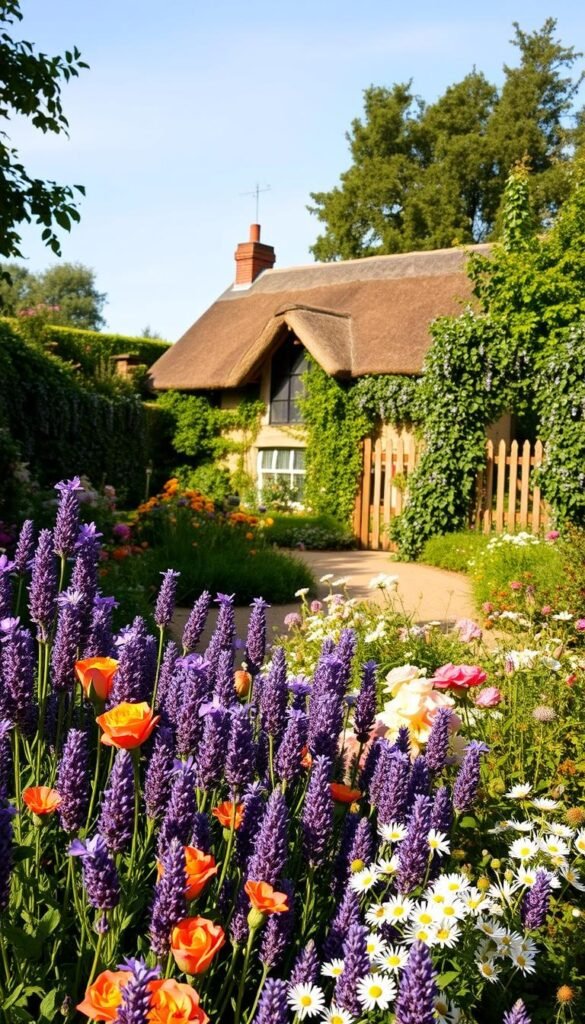
Visualize a backyard transformed into a haven of natural elegance and abundance. This approach to outdoor spaces blends historical inspiration with personal creativity, offering both visual delight and ecological value. Let’s explore how to capture that effortless magic.
Understanding the English Cottage Garden Tradition
Centuries ago, rural households combined edible crops with ornamental blooms to maximize limited land. This practical approach birthed a distinctive style—overflowing beds of foxgloves, lavender, and thyme spilling over weathered stone paths. Structures like wooden arches or iron gates weren’t just decorative; they supported climbing roses and beans.
Today’s interpretations honor that heritage. “A true cottage garden feels discovered, not designed,” notes landscape historian Margaret Owens. By mixing heights and bloom times, you create year-round interest while maintaining that cherished lived-in charm.
Infusing Romantic Charm into Your Backyard
Start by choosing plants that spill and sway, like delphiniums or sweet peas. Allow hollyhocks to tower beside low-growing thyme, creating dynamic layers. Add vintage-inspired touches—a wrought-iron bench or ceramic birdbath—to anchor the space without stiffness.
Embrace imperfections. Let poppies self-seed between paving stones, and permit clematis to wander through shrub branches. This relaxed approach fosters biodiversity while crafting a space that feels both curated and wild.
Selecting Pollinator-Friendly Flowering Plants
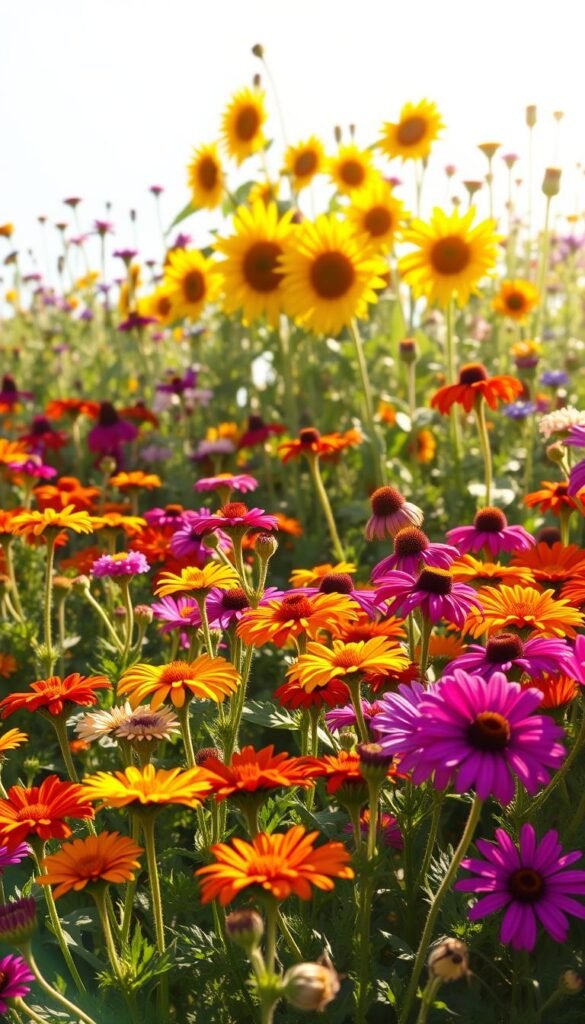
Transform your outdoor space into a lively sanctuary by picking blooms that dazzle the eye and nourish local wildlife. Strategic choices create a ripple effect—supporting ecosystems while boosting your garden’s productivity. If you’re starting out, consider beginner-friendly flowers for easy color and pollinator appeal.
Benefits of Attracting Bees and Butterflies
Bees improve fruit yields by up to 71% in edible gardens, while butterflies indicate a healthy environment. These visitors also add motion and wonder—like nature’s living confetti. Bee balm shines here, offering minty foliage and tubular blooms that hummingbirds adore.
Black-eyed Susan delivers golden cheer from midsummer through frost. Its sturdy stems withstand wind, making it ideal for open areas. You’ll notice more birds too, as seed heads provide winter snacks.
Choosing Varieties That Thrive in Full Sun
Butterfly bush thrives in sunny spots, producing purple spikes that act as insect landing pads. Prioritize drought-tolerant species like lavender or yarrow for low-maintenance beauty. Well-drained soil prevents root rot, ensuring years of growth.
Rotate bloom times to keep nectar flowing. Pair early-season lilacs with late-blooming sedum. This approach sustains pollinators while keeping your display fresh. Remember: diversity attracts more species than single-plant monocultures.
Must-Have Cottage Garden Plant Varieties
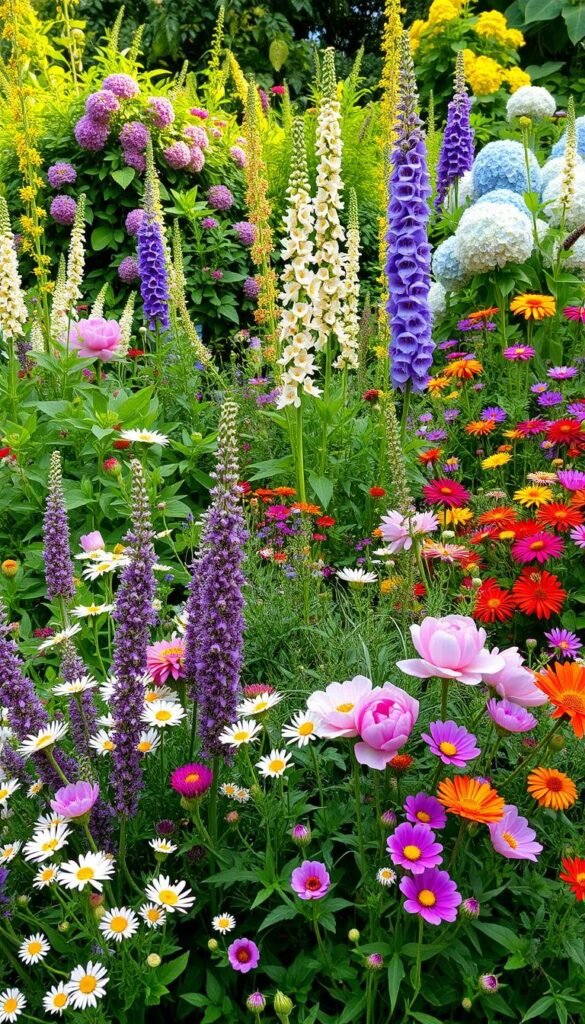
Certain blooms have anchored backyard designs for generations, blending timeless appeal with effortless growth. Classic perennials like bleeding heart and columbine create nostalgic charm, their arching stems and bell-shaped flowers nodding in breezes. Delphiniums add vertical drama with spire-like blooms reaching 5 feet tall, while peonies deliver lush petals in sunset hues.
Phlox steals the spotlight with clusters of starry flowers that perfume evening air. Available in creeping or upright forms, these time-tested cottage garden plants thrive for months. Dianthus—often called “pinks”—offers spicy-scented blossoms in raspberry, white, and coral. Their fringed edges look hand-cut with pinking shears.
No curated space feels complete without roses climbing fences or spilling from borders. Modern shrub types like ‘Bonica’ provide disease resistance alongside their vintage-inspired beauty. Pair them with Shasta daisies for cheerful contrast—their white petals and golden centers pop against green foliage.
- Yarrow: Drought-tolerant with feathery leaves and flat flower clusters
- Shasta daisy: Long-lasting cut flowers for container arrangements
- Peony: Fragrant doubles that return yearly with minimal care
These selections work together to build depth and movement. By mixing heights and bloom times, you’ll craft a living tapestry that evolves from spring frost to autumn’s first chill.
Designing Vibrant cottage garden borders with pollinator-friendly flowering plants
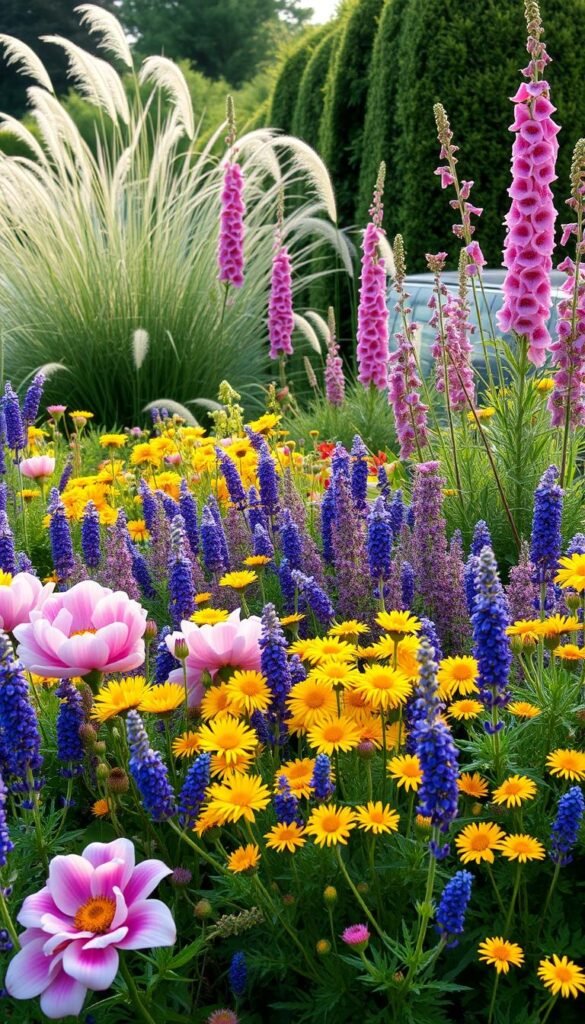
Picture a living tapestry where every petal plays a role in nature’s orchestra. Strategic arrangement turns ordinary edges into thriving ecosystems bursting with movement and color. The secret? Balancing visual drama with creature comforts for winged visitors.
How to Arrange Blooms for Maximum Impact
Start by building height tiers. Taller specimens like Joe-Pye weed form a green curtain behind your display. Mid-height flowering plants such as salvia or coreopsis fill the middle ground. Let creeping thyme or sedum spill over front edges like living lace.
| Height Tier | Plant Examples | Bloom Period | Pollinator Appeal |
|---|---|---|---|
| Back (3-6 ft) | Echinacea, Hollyhocks | Summer-Fall | Butterflies, Bumblebees |
| Middle (1-3 ft) | Catmint, Shasta Daisies | Spring-Fall | Honeybees, Hoverflies |
| Front (6-12 in) | Creeping Phlox, Alyssum | Early-Late Season | Solitary Bees, Beetles |
Mix flower shapes to guide both eyes and insects. Spiky lupines contrast beautifully with round zinnias. Flat yarrow clusters give tired wings a landing pad. “Layering isn’t just visual—it creates microhabitats,” explains landscape designer Sarah Thompson.
Leave space for self-seeding varieties to wander. Poppies popping up between stones or cosmos leaning into paths add that carefree charm. This approach ensures continuous blooms while letting nature share design duties.
Layering Colors and Textures in Garden Borders
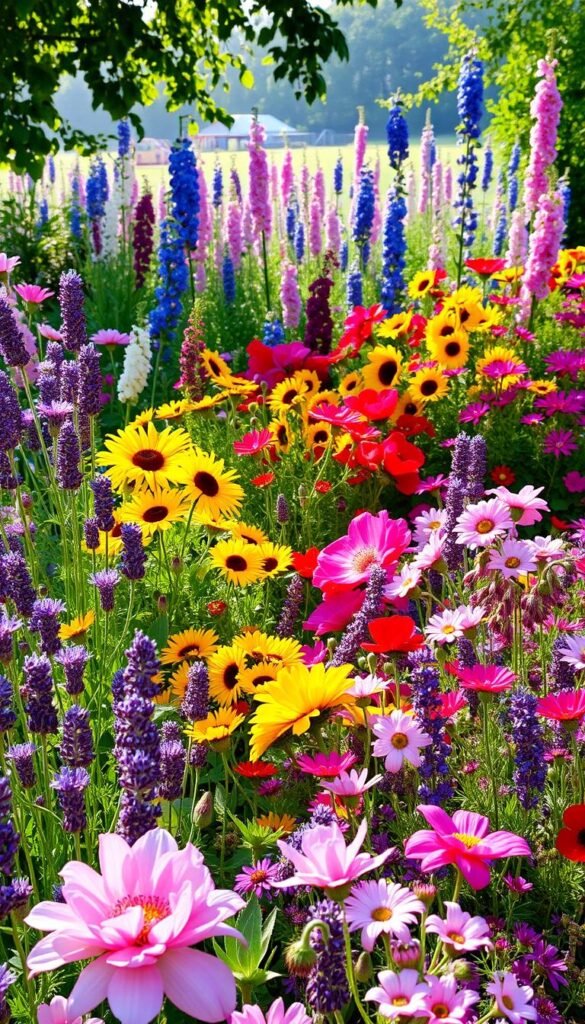
Your backyard becomes a canvas where every hue and leaf shape tells a story. There’s no strict formula—only opportunities to play with light, scent, and form. Let’s explore how to craft spaces that delight both eyes and noses.
Mixing Soft Pastels with Bold Hues
Start with airy pinks and lavenders for a soothing base. Then weave in fiery red salvias or golden coreopsis for pops of energy. “Contrast creates depth,” says floral designer Emily Carter. Try pairing silvery artemisia with plum-colored heuchera—the metallic leaves amplify darker tones.
Incorporating Fragrance and Foliage Contrast
Add scented stars like jasmine or stock near seating areas. Their perfume enhances the experience while velvety leaves contrast with spiky iris blades. Coral bells steal the show with burgundy or peach foliage that makes nearby blooms glow.
Balance is key. Use feathery ferns to soften bold hydrangea clusters. Rough stonecrop leaves ground delicate cosmos. This layered approach keeps borders lively from spring frost to autumn’s first chill.
Integrating Perennials, Shrubs, and Annuals
Think of your outdoor space as a living collage that changes with the seasons. By blending reliable perennials, sturdy shrubs, and cheerful annuals, you create layers that evolve naturally. This approach builds depth while keeping maintenance manageable.
Advantages of a Mixed Plant Palette
Perennials like daylilies or catmint form your garden’s backbone, returning yearly with minimal effort. Flowering shrubs such as hydrangeas add height and structure—their blooms mark seasonal shifts like nature’s calendar. Annuals like zinnias fill gaps with bursts of color when other plants rest.
Native species thrive best. Stonecrop and yarrow handle dry spells, while iris adapts to wetter spots. This mix reduces watering and pest issues. You’ll enjoy constant blooms from spring’s first lilacs to autumn’s golden sedum.
Experiment freely. Swap annuals yearly for fresh looks while keeping shrubs as anchors. Over time, your space becomes a dynamic tapestry that supports wildlife and delights the senses—no rigid rules required.