
Growing healthy crops in elevated planters requires more than just sunlight and good soil. Unlike traditional gardens, these structures dry out faster due to their design, demanding smarter hydration strategies. Missing even one session in hot climates can stress your greens, leaving them vulnerable to pests or stunted growth.
Why does timing matter so much? Early morning (think 4-5 AM) is ideal because cooler temperatures let moisture soak deep into roots before evaporation kicks in. If you’ve followed our step-by-step guide to building raised beds, you’re already ahead—now let’s keep those plants happy.
The elevated setup changes everything. Soil warms quicker, which helps seeds sprout but also means water disappears faster. You’ll need to balance consistent moisture with avoiding soggy roots. Tools like drip systems or soaker hoses work wonders here, delivering hydration right where it’s needed.
Master these techniques, and you’ll see stronger roots, bigger harvests, and fewer wasted resources. Let’s dive into the methods that turn guesswork into growth.
Understanding Your Raised Bed Garden’s Watering Needs

Keeping your elevated planters productive starts with mastering their unique hydration patterns. Three key factors determine success: soil type, sunlight exposure, and plant variety. Let’s break down how these elements work together.
Soil and Evaporation Factors
Loose, well-draining mixes in elevated setups dry 30% faster than ground-level dirt. Sandy soils lose moisture quickly, while clay-heavy blends might trap too much. Try this test: squeeze a handful of damp earth. If it crumbles immediately, you’ll need to hydrate daily during heatwaves.
Plant-Specific Requirements
Tomatoes crave consistent sips, while rosemary thrives on neglect. Group leafy greens together in shadier zones and cluster drought-tolerant herbs near sunnier edges. Watch for curled leaves—they’re your first clue that schedules need adjusting.
Morning checks help you stay ahead. Stick your finger two inches deep near plant bases. Moisture at this depth means roots are drinking well. If it’s bone-dry, it’s time for a targeted soak around stems, not leaves.
Essential Tools and Irrigation Systems for Raised Beds
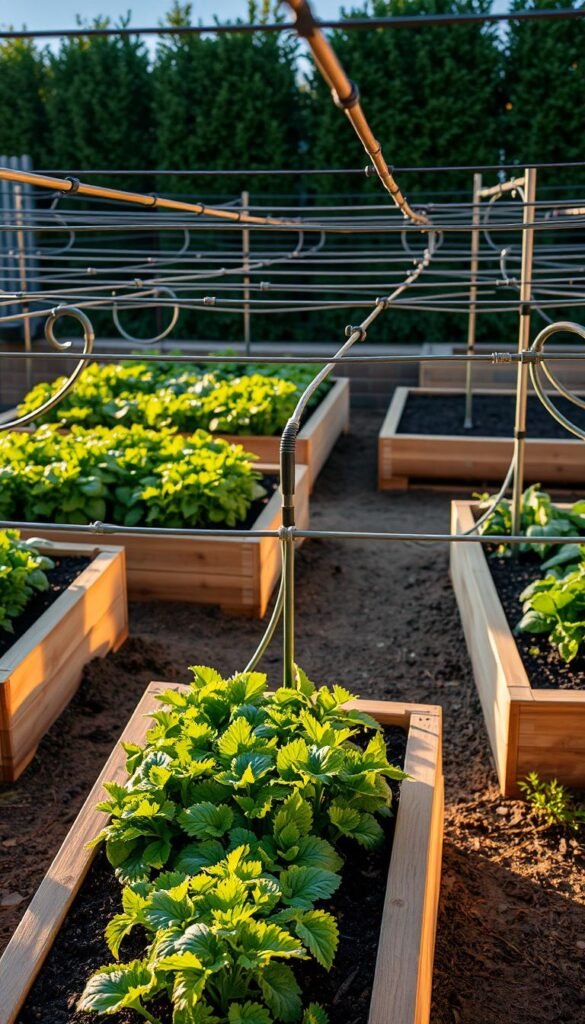
Choosing the right hydration tools can make or break your gardening success. Let’s unpack which options keep roots happy without wasting resources.
Hand-Watering Versus Automated Systems
A trusty watering can works for small setups. You control where every drop goes—perfect for seedlings or delicate herbs. But bending over multiple beds daily gets old fast. Automated systems shine here, especially when paired with timers. They’re lifesavers during vacations or heatwaves.
Comparing Drip Irrigation, Soaker Hoses, and Sprinklers
Drip systems win for precision. Tiny emitters deliver water straight to roots, cutting usage by 60% versus sprinklers. They’re ideal for thirsty veggies like tomatoes. Soaker hoses seem simple but often clog or crack after one season. Sprinklers? Great for lawns, risky for edibles. Wet leaves invite mildew, and midday sun steals half their water through evaporation.
Here’s the breakdown:
- Drip irrigation: High upfront cost, low water waste
- Soaker hoses: Affordable but inconsistent
- Sprinklers: Quick coverage, high evaporation rates
Start with manual watering for a few plants. Upgrade to drip lines as your garden expands. Match your tools to crop types and local weather patterns—desert climates demand different solutions than humid regions.
Watering Raised Garden Beds: Efficient Methods for Thriving Plants
Timing is everything when keeping plants hydrated. While your setup and tools matter, when you deliver moisture determines how well roots absorb it. Let’s crack the code on scheduling.
Timing Your Watering for Maximum Benefit
Early risers win here. Watering between 4-5 AM gives plants a head start. Cooler temps let moisture sink deep before sun exposure. Automated timers handle this effortlessly—perfect for busy gardeners or vacations.
Midday watering? Skip it. Hot soil causes rapid evaporation, wasting 50% of your effort. Roots get little benefit, and sudden temperature changes stress plants. If leaves droop in afternoon heat, wait until evening but avoid soaking foliage.
| Time | Evaporation Rate | Plant Stress | Disease Risk |
|---|---|---|---|
| 4-5 AM | Low (30%) | None | Minimal |
| Noon | High (70%) | High | Moderate |
| 6-7 PM | Medium (40%) | Low | High* |
*If leaves stay wet overnight
Evening watering works during heatwaves but focus on soil, not leaves. Pair this with smart watering techniques like drip lines to minimize risks. Adjust schedules weekly—seedlings need more frequent sips than established crops.
Consistency builds resilience. Plants develop deeper roots when they know when to expect hydration. Watch weather apps and tweak timers seasonally—your greens will thank you with lush growth.
Implementing Drip Irrigation and Soaker Hose Techniques
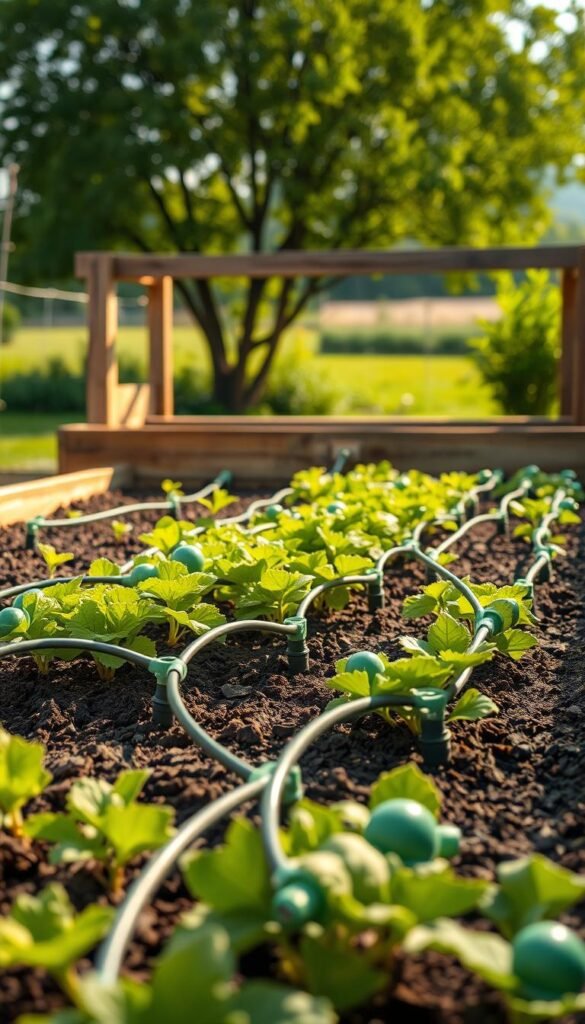
Smart hydration solutions transform how plants receive moisture while saving time and resources. Whether you’re growing tomatoes or herbs, these methods deliver water directly to roots with minimal waste.
Setting Up a DIY Drip System on a Budget
Build a custom system for under $50 using these components:
- Timer & pressure regulator: Automate schedules and protect equipment
- ½-inch main tubing: Run along bed edges for easy access
- ¼-inch feeder lines: Connect to individual plants
Position emitters 6 inches from stems for young plants. Space them 12 inches apart for mature crops. This low-cost irrigation solution reduces water bills by 40% compared to sprinklers.
Maintaining Consistent Soil Moisture
Check tubing weekly for kinks or animal damage. Flush filters monthly to prevent clogs. If emitters slow down:
- Remove debris with a pin
- Soak in vinegar for mineral deposits
- Replace if cracked
Test soil weekly with a moisture meter. Adjust timer settings when temperatures spike—most veggies thrive at 1-2 inches of water weekly. Upgrade feeder lines as your garden expands for hassle-free growth.
Enhancing Water Efficiency with Mulching and Soil Amendments
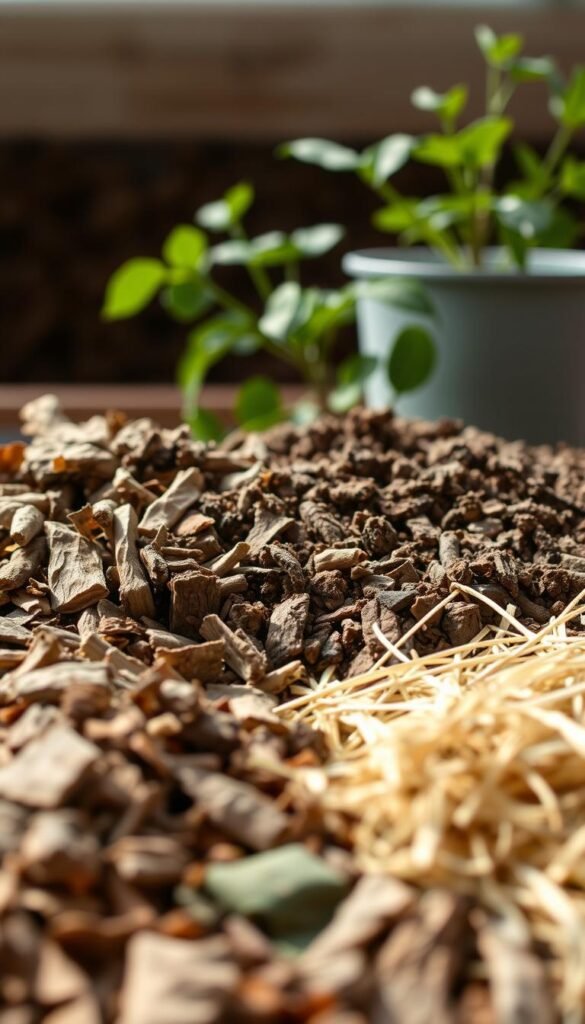
Locking moisture into your garden starts with smart layering techniques. Organic materials and soil boosters create a protective barrier while improving earth structure. This dual approach keeps roots hydrated longer and reduces maintenance.
Choosing the Right Organic Mulch Options
Not all mulches work equally. Straw and wood chips form air pockets that slow evaporation when spread 3-4 inches deep. Finer materials like shredded leaves need just 2 inches to prevent soil crusting.
| Material | Depth | Water Retention | Best For |
|---|---|---|---|
| Straw | 3-4″ | 50% reduction | Vegetables |
| Wood Chips | 3-4″ | 50% reduction | Perennials |
| Shredded Leaves | 2″ | 40% reduction | Flower beds |
| Grass Clippings | 2″ | 30% reduction | Pathways |
Incorporating Compost and Clay-Based Amendments
Mix 2 inches of compost into beds each spring—it acts like a sponge, holding 10 times its weight in water. For sandy soils, add bentonite clay at 5-10 pounds per 100 sq ft. This combo creates moisture-rich zones that survive dry spells.
Water-absorbing crystals offer backup hydration during droughts. Bury them 6 inches deep near root zones. Pair these methods with raised bed efficiency strategies for gardens that thrive with less effort.
Designing Smart Plant Spacing and Grouping Strategies

Strategic plant placement turns your garden into a water-saving powerhouse. By organizing crops based on their hydration needs, you create micro-environments that slash evaporation and boost growth. Let’s explore how smart zoning keeps roots happy while cutting your workload.
Creating Hydrozones for Targeted Watering
Group thirsty greens like lettuce and spinach in shaded corners. Meanwhile, drought-tolerant herbs like rosemary or thyme thrive in sunnier spots. This approach cuts water use by 30% because you’re not overwatering plants that prefer drier soil.
Tall crops become natural umbrellas. Plant corn or sunflowers west of delicate greens to block afternoon heat. Their leaves create humidity pockets that reduce evaporation by 25%, giving moisture-loving varieties a cozy habitat.
| Plant Type | Water Needs | Companion Plants | Spacing |
|---|---|---|---|
| Tomatoes | High | Basil, Marigolds | 24-36″ |
| Carrots | Medium | Chives, Onions | 2-3″ |
| Lavender | Low | Sage, Thyme | 12-18″ |
Overcrowding steals moisture from roots. Leave enough space between plants so water reaches soil instead of pooling on leaves. For vining crops like cucumbers, use vertical trellises to improve air flow and direct hydration to base stems.
Design beds with accessibility in mind. Place high-demand zones near irrigation lines for easy adjustments. Cluster root vegetables together in deeper soil areas where moisture lingers longer. Your garden becomes both efficient and visually organized when every plant has its perfect spot.
Harnessing Rainwater Harvesting for Sustainable Irrigation
What if your plants could drink pure rainwater instead of tap water? A single storm can fill your storage containers with enough hydration for weeks. Just one inch of rainfall on a 1,000-square-foot roof collects 600 gallons—enough to sustain most gardens through dry spells.
Simple Collection Methods and Installation Tips
Start by directing roof runoff using gutters and downspouts. Food-grade barrels or repurposed containers catch the flow effortlessly. Elevate them on cinder blocks or platforms—every foot of height adds 0.43 PSI pressure for gravity-fed systems.
| Storage Option | Capacity | Cost | Best Use |
|---|---|---|---|
| Plastic Barrel | 55 gal | $30-$60 | Small gardens |
| Repurposed Trash Can | 32 gal | Free-$20 | Budget setups |
| Commercial Rain Barrel | 80 gal | $100-$200 | Large systems |
Prevent mosquitoes by adding mesh screens to openings. Include overflow pipes to redirect excess water during heavy storms—connect them to secondary containers or drainage areas.
Connecting Collected Water to Your Irrigation Setup
Link your rain barrel to drip lines using a standard garden hose adapter. Follow these steps:
- Install a spigot near the barrel’s base
- Attach a filter to catch debris
- Connect to your existing irrigation system
Vegetables need cleaner water than flowers. Use a fine mesh filter for edibles and basic screens for ornamentals. During droughts, supplement with tap water but prioritize rainwater for acid-loving plants like tomatoes.
Exploring Innovative Wicking Bed Solutions
What if your garden could water itself? Wicking beds use a clever science trick—capillary action—to pull moisture upward from a hidden reservoir. This sub-irrigation system slashes water use by 50% compared to traditional methods while keeping roots perfectly hydrated.
Transform Your Existing Setup
Convert standard beds into self-watering powerhouses with a few upgrades. Start by adding a watertight liner to create a reservoir at the base. Fill it with gravel or sand, then layer landscape fabric to separate the reservoir from soil. A vertical PVC pipe acts as your refill point.
Plants draw moisture through a wicking material like cotton rope or felt strips buried in the soil. This system delivers steady hydration without drowning roots. Studies show crops like peppers produce 20% more fruit with these setups over three years.
Pair your converted bed with DIY self-watering setups for complete automation. During heatwaves, reservoirs provide backup moisture, while rainy periods let excess water drain freely. You’ll spend less time hauling hoses and more time harvesting.
Test soil moisture weekly until you find the perfect balance. Most plants thrive when reservoirs get refilled every 5-7 days. This hands-off approach keeps greens lush even during vacations or unexpected dry spells.